
Field guide / Morocco · Marrakech · 9 min read
Marrakech Food Tours: What to Taste in the Medina
Most first-timers eat at Jemaa el-Fna, find it loud and a bit chaotic, and leave thinking that is Marrakech food. It is one part of it. The better meals tend to be a few lanes away, at stalls with no menu and a queue of locals. A food walk is a quick way to find them, but only if the route really goes beyond the square.
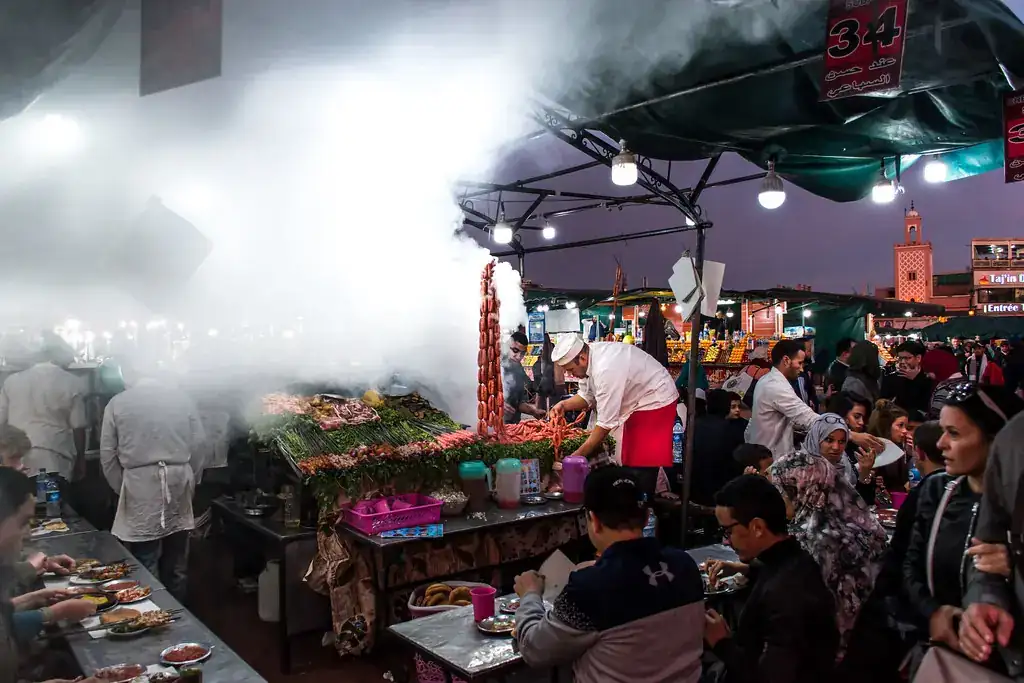
Photo: Ralf Steinberger (CC BY 2.0) / Flickr
Is a Marrakech food tour worth it?
For a first visit, usually yes. The medina is hard to read on your first evening: lanes split, stalls have no signs, and the touts around Jemaa el-Fna are working hard to steer you to their tables. A guide removes most of that friction and tells you what you are eating, which makes the second and third evenings easier on your own.
It is less useful if you already know Moroccan food or prefer one long meal to ten small ones. In that case, spend the money on a good riad dinner and wander the square afterwards. And if you only have one night, choose one or the other. Trying to fit a tasting walk and a full dinner into the same evening rarely works.
What should you eat in Marrakech?
Tagine is everywhere, but it is not the dish people remember. Harira, a thick tomato and lentil soup, is cheap, filling and eaten by locals all year, though it is closely tied to breaking the fast during Ramadan. Briouates are small fried pastries, savory or sweet. Msemen, a square flaky flatbread, turns up at breakfast and as a snack. Mint tea comes sweet unless you ask otherwise.
Tanjia is the dish most closely linked to Marrakech itself: meat slow-cooked in a clay urn, traditionally in the embers of a hammam furnace. It is different from tagine and worth asking for by name. Snail soup, sold from steaming carts in the evening, is the dare most visitors either love or skip. Couscous is often a Friday dish in Moroccan homes, so do not be surprised if you see it less on other days.
Does the tour go beyond Jemaa el-Fna?
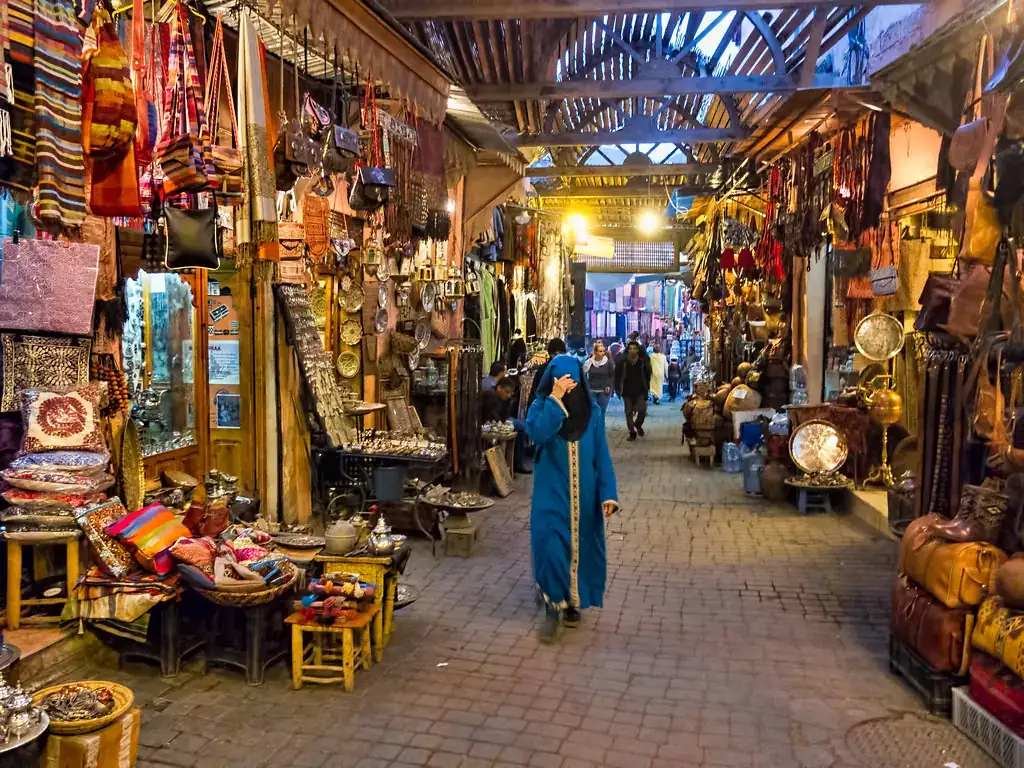
Jemaa el-Fna is the landmark everyone uses, and its grill stalls are a spectacle after dark. But the food walks worth paying for spend most of their time elsewhere: the lanes running north toward the souks, Rahba Kedima, and quieter corners of the Mouassine and Bab Doukkala areas where locals actually buy bread and grilled meat. If a listing only mentions the square, assume that is where you will be.
Taxis cannot drive into most of the medina, so the meeting point is usually at a gate, a café or the edge of the square. Ask for a map pin and walk there in daylight if you can. Evening walks often end somewhere other than where they start; know how you are getting back to your riad, especially if it sits deep in the lanes.
How do you choose between Marrakech food tours?
Read the inclusions line by line. 'Ten tastings' can mean ten mouthfuls or a proper dinner, and listings do not always say which. Group size matters more than people expect: a narrow lane with fifteen people in it means half the group never hears the guide. Recent reviews that mention specific dishes or the guide's name are more useful than a star average.
Vegetarians can eat well in Marrakech, but many street snacks contain meat or are cooked alongside it. Ask the operator which stops can be adapted before you book. The same goes for serious allergies, where shared grills and oil are the real risk. Check the cancellation terms too, in case your arrival flight slips.
How to plan the evening
Eat a light lunch and arrive a little early. Evening walks tend to start around sunset, when the stalls fire up. Do not fill up at the first stop, however good it is; the best bites often come late. Take a photo of anything you want to find again, because medina stalls are almost impossible to locate from memory.
During Ramadan the rhythm changes: daytime eating stalls are mostly closed, and the medina comes alive after the evening meal that breaks the fast. Some walks run later or pause entirely, so look at the dates. With children or limited mobility, ask about total walking distance and whether there is seating at the stops. Some routes involve a lot of standing.
A place to start
Small-group medina food walk
Usually an evening outing
Good for a first night, when the lanes are still confusing. Pick a listing that names its stops or at least the dishes, keeps the group small, and says plainly whether you will leave full.
Plan the next step
Activities in Marrakech
Browse current GetYourGuide and Viator listings for Marrakech. Compare the route, meeting point, inclusions and cancellation terms before booking.
Disclosure: these are GetYourGuide and Viator partner links. If you book through them, Real Morocco Guide may earn a commission at no extra cost to you. Listings, prices and reviews come from the providers, not from us. How we work
Also on GetYourGuide
Plan your time
Before the walk
Arrive hungry
- Skip a big lunch
- Send allergies and dietary needs to the operator in writing
- Carry small notes in dirhams for extra tea or sweets
During the walk
Taste beyond the obvious
- Ask what each dish is called so you can order it again
- Try harira or tanjia if they come up
- Pace yourself; the early stops are rarely the last
Afterward
Return on your own
- Drop a map pin at the stall you liked most
- Go back a day later, ideally at the same hour
- Book a slower riad dinner for another night
More ways to explore
These are types of experiences to compare, not specific tours we have reviewed. Open current search results and confirm the details before paying.
Marrakech street food walk
Short walk
Lots of small bites in different places. Suits grazers more than people who want one proper sit-down meal.
Explore optionsMoroccan cooking class and market visit
Half-day option
You shop for ingredients, then cook. Slower than a tasting walk, and you learn a dish you can actually make at home.
Explore optionsEvening food and souk tour
Evening option
The medina changes after sunset, when the grills and soup stalls come out. A good format if you are only in town for one night.
Explore optionsGood to know
- Small cash matters. Street stalls rarely take cards.
- Serious allergy? Message the operator before paying, not on the night.
- Medina lanes are uneven and shared with motorbikes. Wear proper shoes.
Compare available experiences
Check current inclusions, reviews and cancellation terms with the provider.
Frequently asked questions
Do Marrakech food tours include dinner?
Some do, most offer a string of tastings that add up to roughly a meal. If you want to know whether you will need dinner afterwards, ask the operator directly.
Can vegetarians join a medina food walk?
Often, but not every stop works. Bread, soups, pastries, olives and sweets are easy; grill stalls are not. Tell the operator before booking.
Is Jemaa el-Fna the only place to eat in the medina?
No. The square is the easiest landmark, but many locals eat in the surrounding lanes and neighborhoods. A good walk spends most of its time there.
Further reading
Background on destinations and cuisine. Check tour details directly with the operator.
Trusted resources
Official sources worth checking before you travel. We are not affiliated with them.
Keep exploring

Merzouga · 9 min read
Merzouga Desert Safari: Planning an Erg Chebbi Stay
How far Merzouga really is, how sunset trips, camp nights and multi-day tours differ, and what to pack for a night in the Erg Chebbi dunes.
Read guide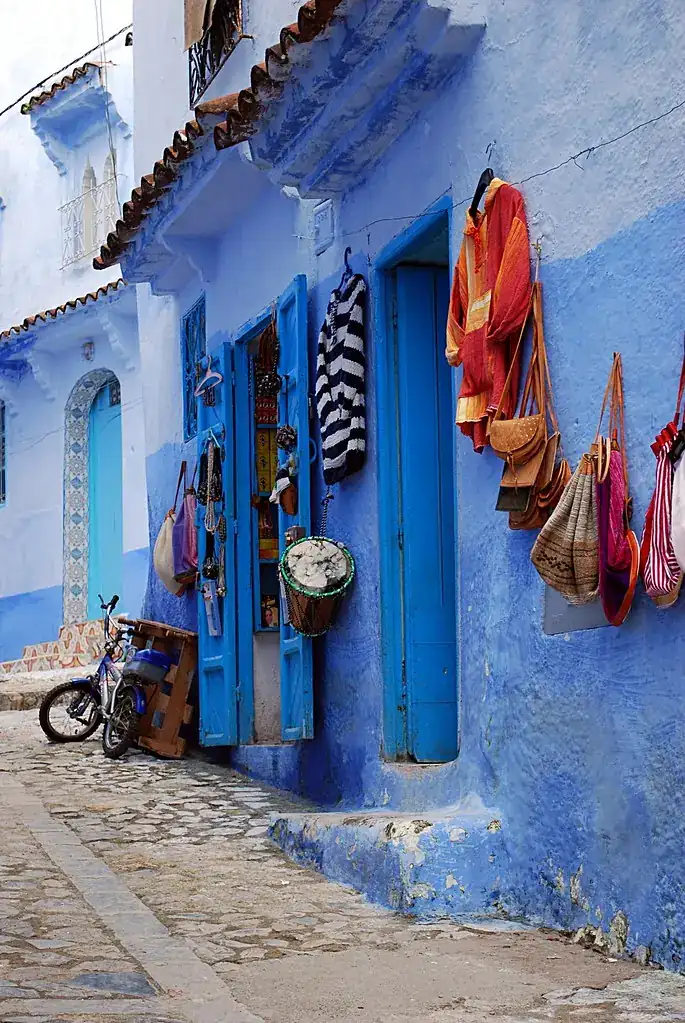
Chefchaouen · 9 min read
Chefchaouen Day Trip: How to See the Blue Medina
Whether Chefchaouen works as a day trip from Fes or Tangier, how much time you really get in the blue medina, and when staying the night is the better call.
Read guide