
Field guide / Morocco · Aït Benhaddou · 6 min read
Should You Stay Overnight in Aït Benhaddou or Ouarzazate?
The choice is less about which place deserves a visit than what you want after the sightseeing ends. Aït Benhaddou gives you an evening beside an earthen ksar, with quieter lanes and dinner usually close to your room. Ouarzazate gives you more restaurants, easier vehicle access and better prospects for arranging onward transport. Both work as stops between Marrakech and Merzouga, but neither makes the remaining drive to the dunes a short hop. Your transport arrangements should carry as much weight as the view.
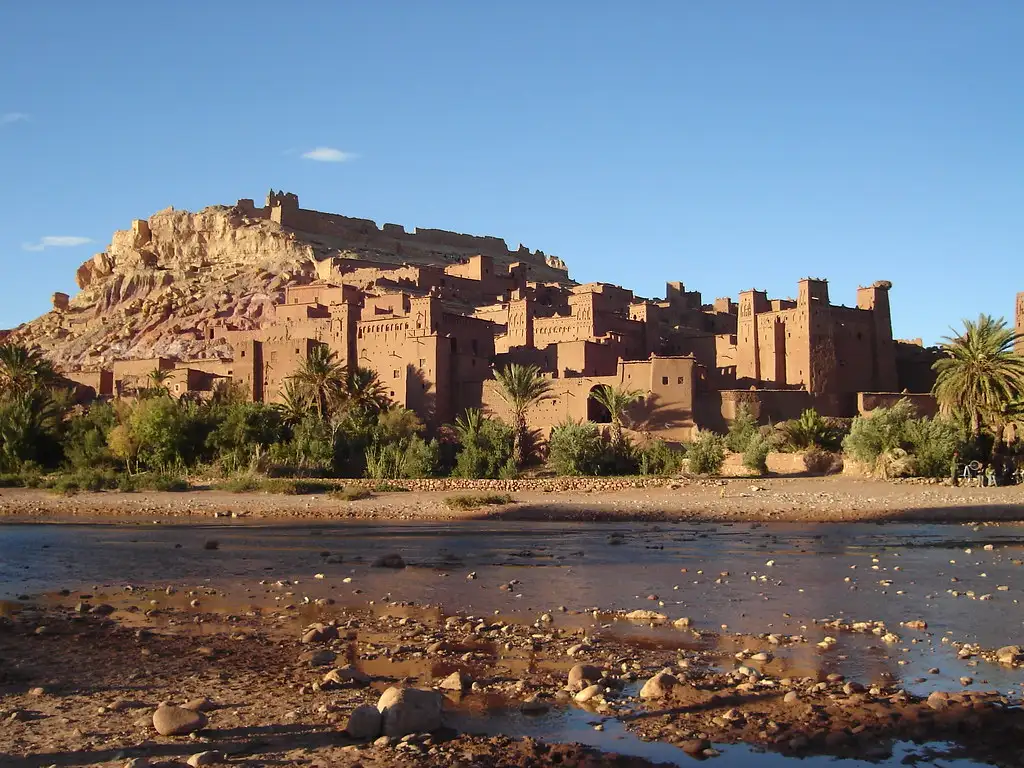
How do the two bases fit into the Marrakech–Merzouga journey?
Coming from Marrakech, you cross the High Atlas on the Tizi n’Tichka route before reaching the turn towards Aït Benhaddou. The ksar sits off the main road, beside the Ounila River; Ouarzazate lies farther along the main route to the southeast. Driving between the two generally takes around half an hour, depending on your accommodation and traffic. That makes it perfectly practical to visit Aït Benhaddou and sleep in Ouarzazate. From Marrakech, allow much of the day if you want meal stops, mountain viewpoints and an unhurried visit rather than simply covering the road.
Beyond Ouarzazate, the usual touring route towards Merzouga follows the road through the Skoura area and the Dadès and Todra region before continuing towards Erfoud and Rissani. Merzouga remains a substantial day’s drive away, especially with sightseeing. Aït Benhaddou is not a desert-camp base, and Ouarzazate is not just outside the dunes. If your plan includes both gorges and an arrival at Erg Chebbi before sunset, an additional overnight farther east is more comfortable than trying to squeeze everything into one day.
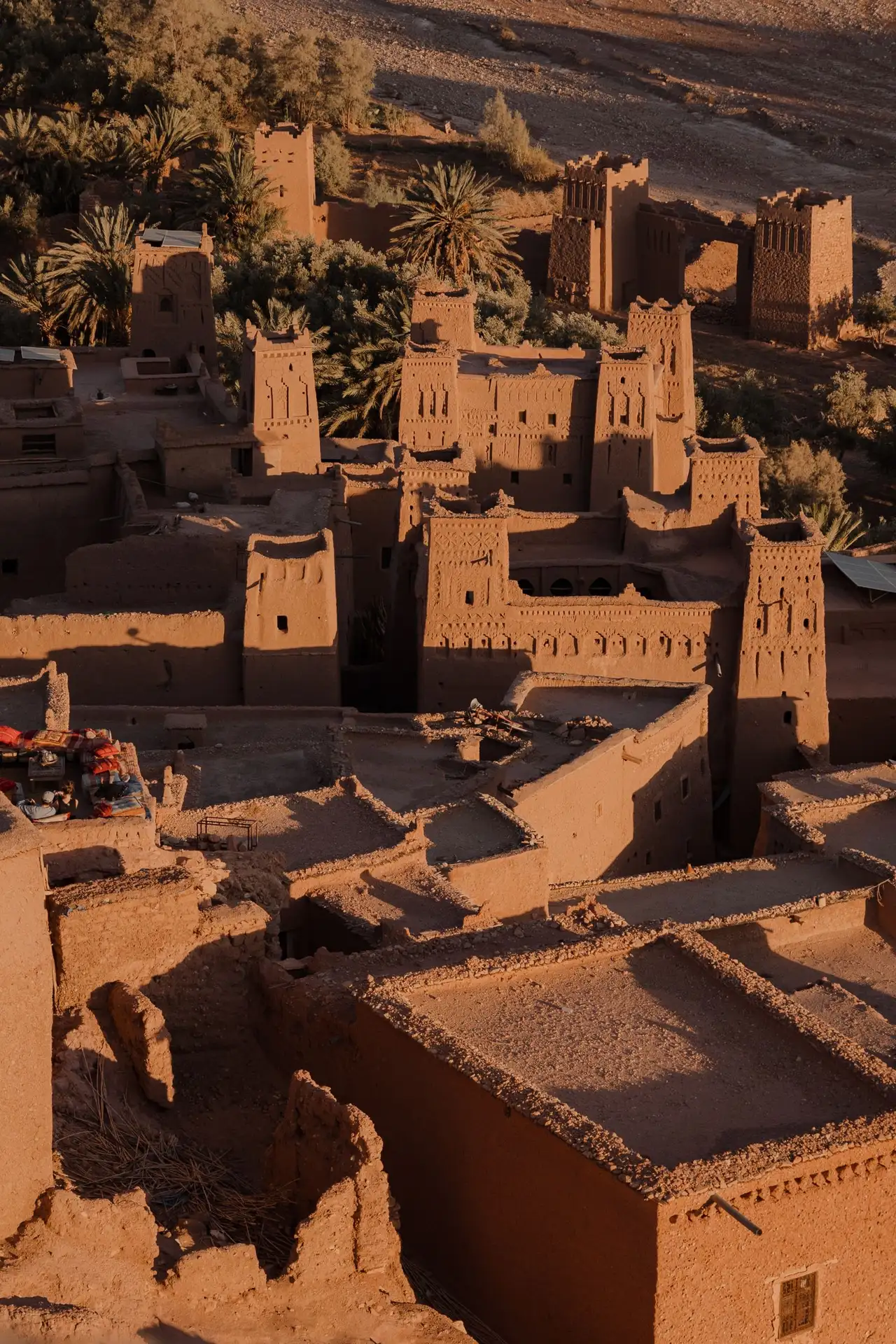
Which place feels better after the day visitors leave?
Aït Benhaddou has the stronger case if atmosphere is your priority. Its clustered earthen buildings climb a hillside across the river from the newer village, where much of the visitor accommodation sits. Once excursion groups move on, the approaches tend to become quieter, and the changing light is a good reason not to rush away. Don’t expect an evening entertainment scene inside the ksar. The appeal is a slow walk, a terrace facing the hillside and a night with little on the agenda.
Ouarzazate feels like a working town rather than an extended monument visit. Around its central squares and commercial streets, cafés, shops and everyday errands give you somewhere to wander after dinner. It is spread out, though: a hotel described as being in Ouarzazate may still leave you needing a taxi for your evening meal. Choose Aït Benhaddou for stillness and a setting you can enjoy from your accommodation. Choose a central Ouarzazate address if your idea of a pleasant evening involves deciding where to eat after you step outside.
Can a taxi reach your accommodation door?
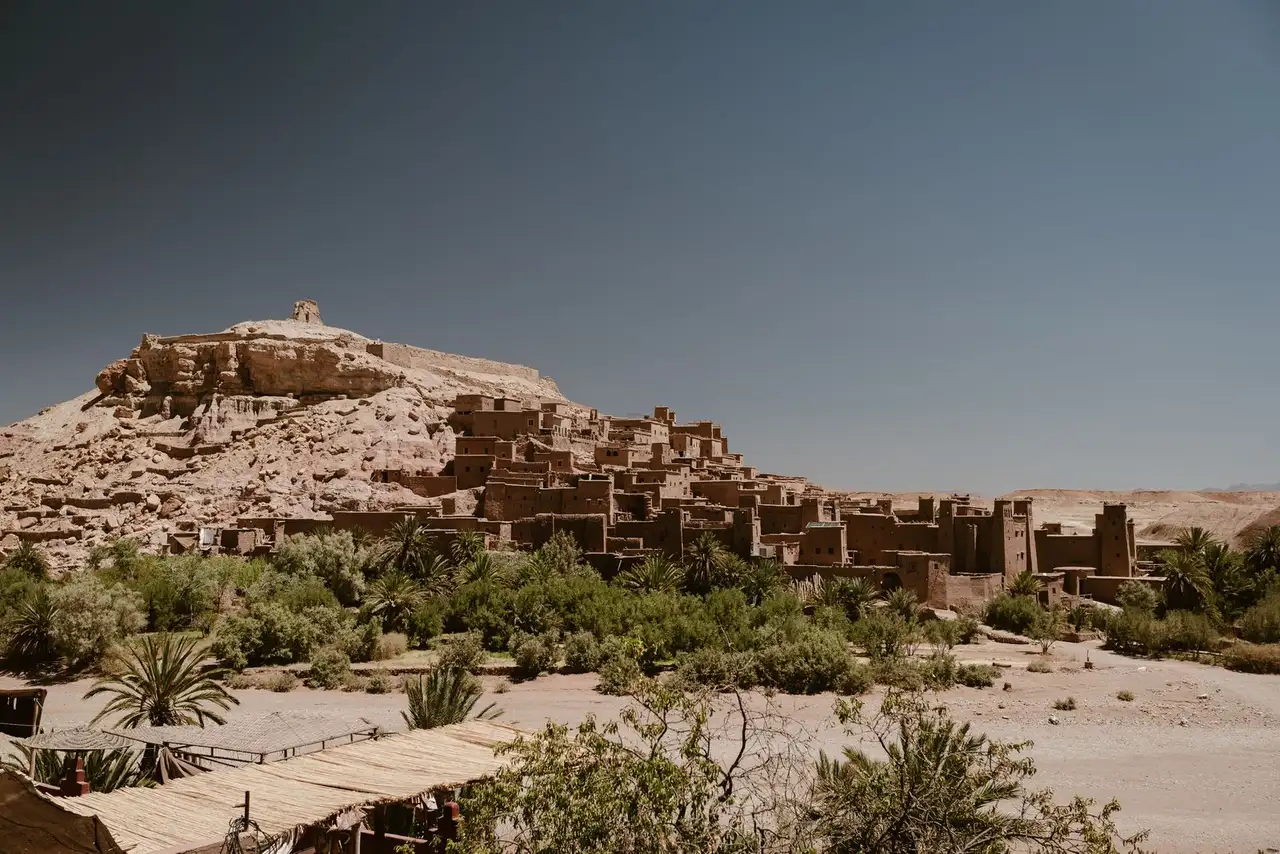
In Aït Benhaddou, the distinction between the old ksar and the newer village matters more than a hotel’s romantic description. Vehicles can reach many properties on the newer side, but they cannot drive through the ksar’s narrow, stepped lanes. Accommodation within the old settlement can involve carrying bags across the river approach and uphill over uneven ground. Ask the property for its actual drop-off point and the walking route from there. A riverside or hillside view does not necessarily mean you are sleeping inside the ksar.
For limited mobility, heavy luggage or arrival after dark, a road-accessible property in the newer village is usually simpler. Ouarzazate generally offers more straightforward taxi access, although stairs and the absence of lifts can still matter in smaller guesthouses. At Aït Benhaddou, use the pedestrian bridge rather than planning around stepping stones or a dry riverbed; water conditions change. The climb through the ksar is uneven and can be tiring in heat. Wear shoes with grip, carry a small torch for dim approaches and ask about heating for cold-season nights rather than assuming desert-edge Morocco stays warm.
Will you have a choice of dinner?
Aït Benhaddou has restaurants, but its evening dining choices are narrower than the daytime visitor traffic might suggest. Some businesses concentrate on lunch groups, and walking between scattered accommodation after dark is not always appealing. Booking dinner at your guesthouse is often the easiest arrangement, particularly for a late arrival. Ask what will be served and mention dietary needs beforehand: a small kitchen may shop and cook for the guests it expects. A terrace view is lovely; knowing that dinner is actually available matters more after a mountain drive.
Ouarzazate gives you more freedom to choose between cafés, simple grills, hotel dining and other restaurants without committing before arrival. During Ramadan, daytime food options can be reduced in both places, while service patterns shift around the sunset meal. Arrange a late-afternoon arrival with some patience rather than expecting immediate service as staff break their fast. Friday can also mean a slower spell around midday prayers and family lunch, not a townwide closure. Carry dirhams in smaller notes for meals and taxis; Ouarzazate is the more practical place to replenish cash before continuing east.
How much time does Aït Benhaddou need, and is a guide useful?
Allow a couple of hours for the approaches, lanes and climb, with more time if you want to stop for tea or photograph the site without hurrying. Early morning or later afternoon is usually more comfortable than midday in hot weather, and overnight guests can take advantage of the quieter edges of the day. Sunset is not a reason to descend unfamiliar steps in darkness. Winter mornings can be sharply cold; summer visits need water, sun protection and a slower pace. Loose clothing covering shoulders and knees is a considerate, practical choice around homes.
You can explore the main lanes independently. A guide genuinely helps if you want to understand earthen construction, distinguish domestic spaces from visitor businesses or hear context beyond the film-location associations. Agree the duration and total fee before starting, and ask whether any interior visits cost extra. Someone offering directions is not automatically a guide you have hired. This is also a lived-in place: a photogenic doorway is not permission to enter, and residents are not part of the scenery. Ask before photographing people, especially children, and respect a refusal without bargaining.
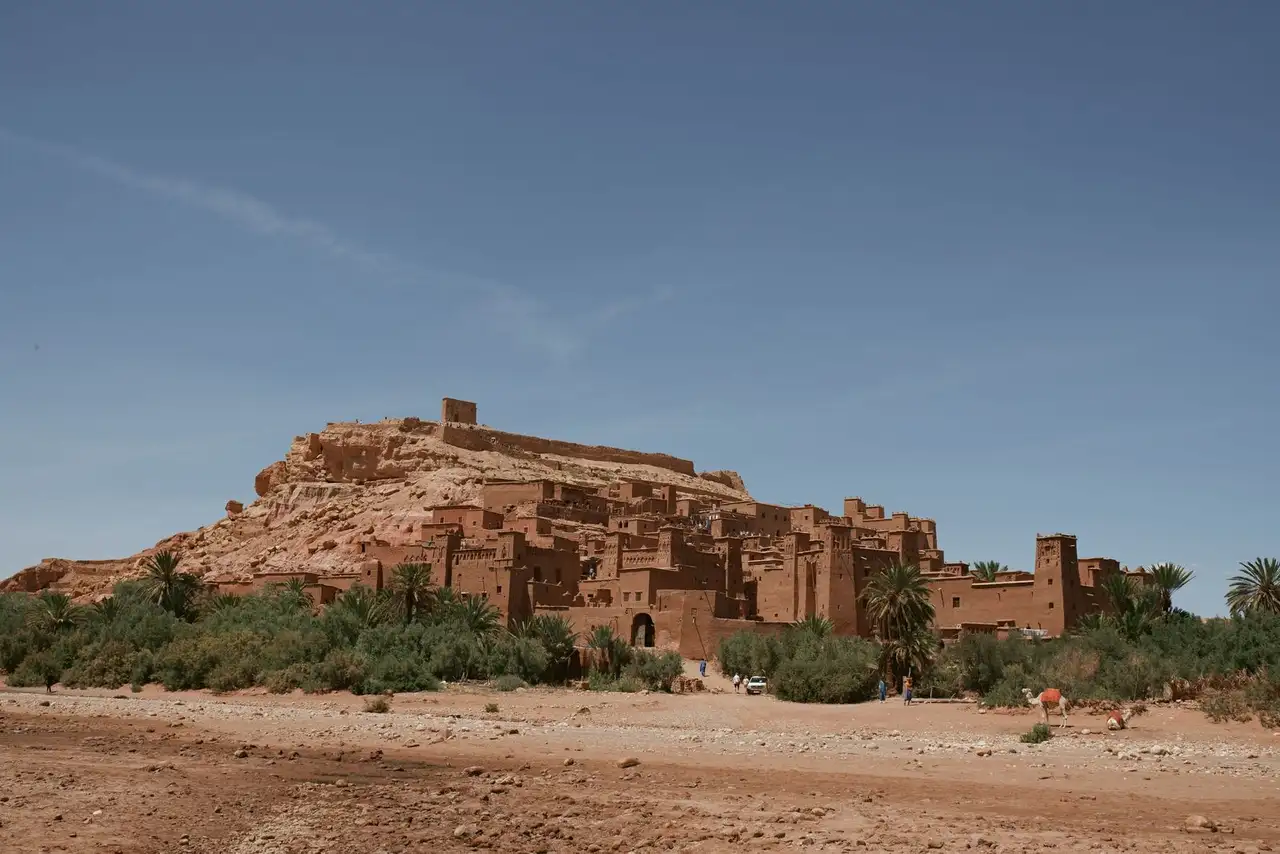
Which base makes onward transport less complicated?
With a rental car or a prearranged driver, the difference is modest: stay where you prefer the evening and leave with enough daylight for the next stage. Without private transport, Ouarzazate is the stronger base because it has more intercity connections and taxis. Aït Benhaddou is not an equivalent transport hub. Shared-taxi travel may involve reaching the main-road junction and changing vehicles, with departures dependent on demand. A private transfer is simpler but needs a clearly agreed destination and fare. Do not rely on finding an onward seat outside your guesthouse when you are ready to leave.
For travel towards Merzouga, establish the actual service, departure point and final stop before building your day around it; reaching a regional town is not the same as reaching accommodation beside Erg Chebbi. A small-group tour can suit travellers who want mountain stops and onward desert transport without managing transfers, but it trades independence for a fixed pace. Ask where the overnight accommodation is located, how much time is allocated to Aït Benhaddou and whether meals are included. For independent travel, keep your next property’s location and telephone number available offline, especially if your arrival requires a final transfer from town.
A place to start
Experiences in Aït Benhaddou
Browse current activities and check the route, meeting point, inclusions and cancellation terms before booking. This is a search, not a personally reviewed tour.
Local operators · Aït Benhaddou
Vet before you bookBook with people who live here
These links open live listings from local operators. We have not inspected each one, so compare group size, vehicle, camp type and cancellation terms. Good operators answer questions about the route before you pay.
Desert camp operators
Overnight camel treks and camps run by Berber families near the dunes.
Compare listingsPrivate driver-guides
Multi-day 4x4 routes with a local driver who knows the passes and pistes.
Compare listingsAdventure & off-road
Quad, buggy and guided enduro outings with safety kit included.
Compare listings- Licensed guide or registered agency named in the listing
- Group size and vehicle type stated clearly
- Camp has private or shared toilets: ask which
- Free cancellation at least 24 hours ahead
Driving yourself? Use the desert drive calculator and the Sahara packing planner.
Plan the next step
Activities in Aït Benhaddou
Browse current GetYourGuide and Viator listings for Aït Benhaddou. Compare the route, meeting point, inclusions and cancellation terms before booking.
Disclosure: these are GetYourGuide and Viator partner links. If you book through them, Real Morocco Guide may earn a commission at no extra cost to you. Listings, prices and reviews come from the providers, not from us. How we work
Also on GetYourGuide
Plan your time
Before you go
Choose what matters most
Use the chapters above to decide what you want to see, then check current access and travel arrangements.
When comparing
Allow for the full journey
Compare meeting points, time on the road and time at the destination, not only the advertised duration.
Before paying
Confirm the details
Read the current provider listing for inclusions, accessibility needs and cancellation terms.
More ways to explore
Choose between exploring independently and comparing guided experiences. Search results are not selected or reviewed tours; confirm all details with the provider.
Explore independently
Use the planning notes above, then verify transport, access and opening details directly before setting out.
Compare guided options
Check what each listing actually includes, the meeting point and how much free time is available.
Explore options ↗Good to know
- Check current transport and access details before leaving.
- Ask the operator about any mobility or dietary needs before booking.
- Keep time in your schedule for changes to the route or weather.
Compare available experiences
Check current inclusions, reviews and cancellation terms with the provider.
Frequently asked questions
Should I book an experience in advance?
It depends on your travel dates and the activity. Check current availability and cancellation rules directly with the provider.
What should I check before reserving?
Confirm the meeting point, what is included, total time commitment, accessibility arrangements and the latest cancellation policy.
Further reading
Background reading, not verification of individual tour listings.
Trusted resources
Official sources worth checking before you travel. We are not affiliated with them.
Keep exploring
Marrakech · 9 min read
Marrakech Food Tours: What to Taste in the Medina
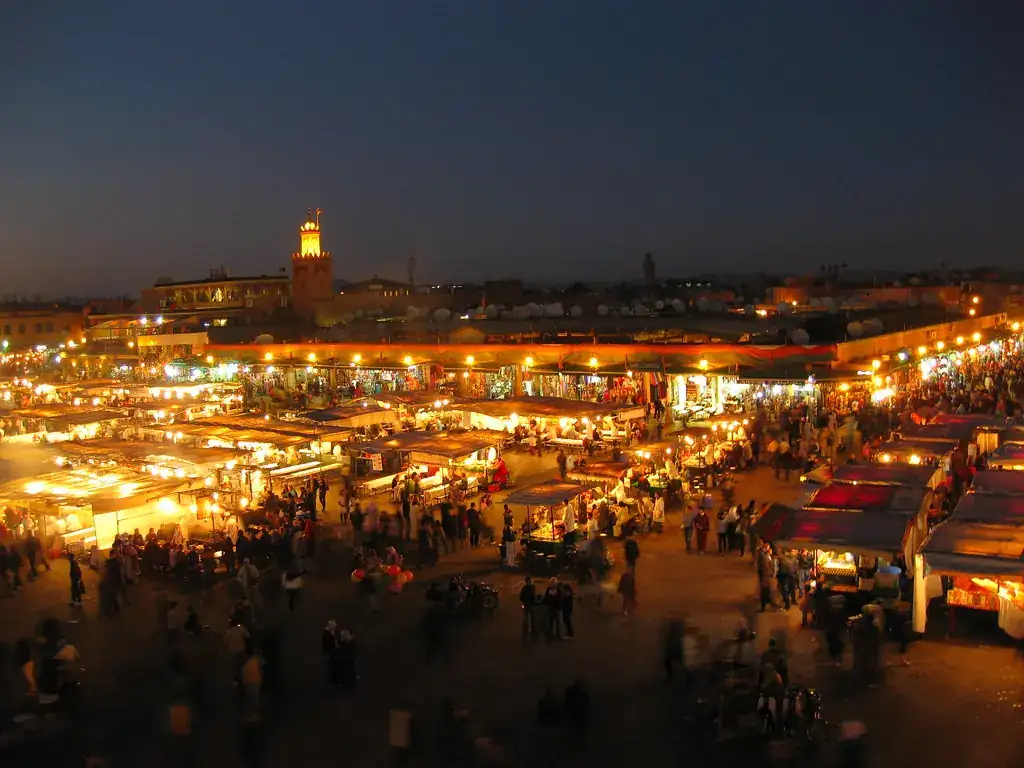
What to eat in the Marrakech medina, how a tasting walk differs from a cooking class, and how to tell whether a food tour actually leaves Jemaa el-Fna.
Read guide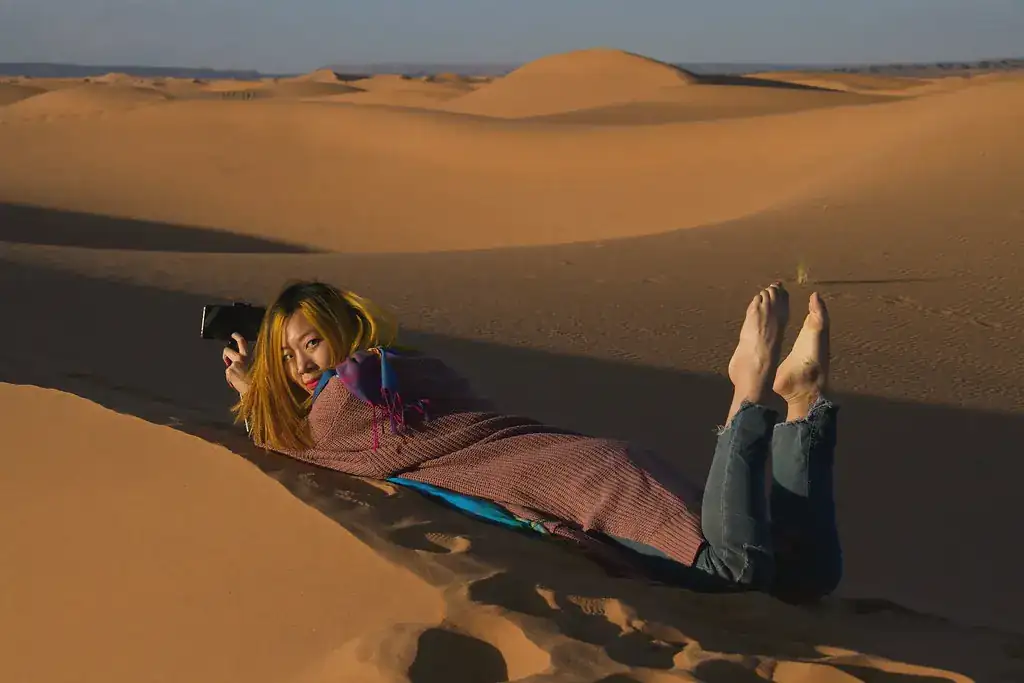
Merzouga · 9 min read
Merzouga Desert Safari: Planning an Erg Chebbi Stay
How far Merzouga really is, how sunset trips, camp nights and multi-day tours differ, and what to pack for a night in the Erg Chebbi dunes.
Read guide