
Field guide / Morocco · Aït Benhaddou · 6 min read
Visiting Aït Benhaddou
The main decision at Aït Benhaddou is not which lane to follow. It is how much driving you want to put around a fairly short, sometimes steep walk. From Marrakech, this can become a long road day with a hurried climb in the middle; from Ouarzazate, it is a much easier outing. Arrange your transport first, then give the historic ksar enough time to be more than a photograph from across the river. Its earthen walls enclose homes and working spaces, not simply a film set.
Should you come from Marrakech or Ouarzazate?
Aït Benhaddou lies northwest of Ouarzazate, off the main road linking that city with Marrakech. From Ouarzazate, allow roughly half an hour to an hour by car, depending on your starting point and stops. From Marrakech, the journey crosses the High Atlas via the Tizi n’Tichka pass and generally takes around four hours each way, sometimes longer. Mountain bends, traffic and weather matter more than the distance looks on a map. A day trip is possible, but expect much of it to happen through a windscreen.
An overnight stay in the modern village opposite the ksar gives you quieter walking time before or after the main excursion groups. Staying in Ouarzazate makes sense if you also need its wider choice of transport and services. A shared excursion from Marrakech suits travelers who want the logistics handled and accept a fixed pace. Read the actual itinerary: combining Aït Benhaddou with several other stops can leave little time here. A private driver helps if you need breaks, flexibility or an onward journey, rather than just a quick return.
How do you arrange the last stretch and the return?
For independent travelers, a hired car or prearranged taxi is usually the simplest approach. Intercity buses serve Ouarzazate, but do not assume your bus will take you to the village entrance. Shared grand taxis can involve waiting for passengers or changing vehicles; they work better when your schedule has room for uncertainty. For a dedicated taxi, agree on the full journey before leaving: one way or return, waiting time, pickup location and any extra stops. Keep the agreement clear rather than relying on a vague promise to sort it out later.
Vehicles reach the modern settlement and its parking areas, not the historic ksar’s narrow lanes and upper terraces. Ask your driver to identify the return meeting point before you walk away, particularly if you are arriving with luggage or traveling onward. Mobile contact is useful, but a named café or accommodation is a better plan than ‘by the entrance.’ Carry cash in smaller denominations for incidental purchases, guides and any separately charged visits. Do not build a tight bus connection around an optimistic taxi return time.
Which way do you walk into the ksar?
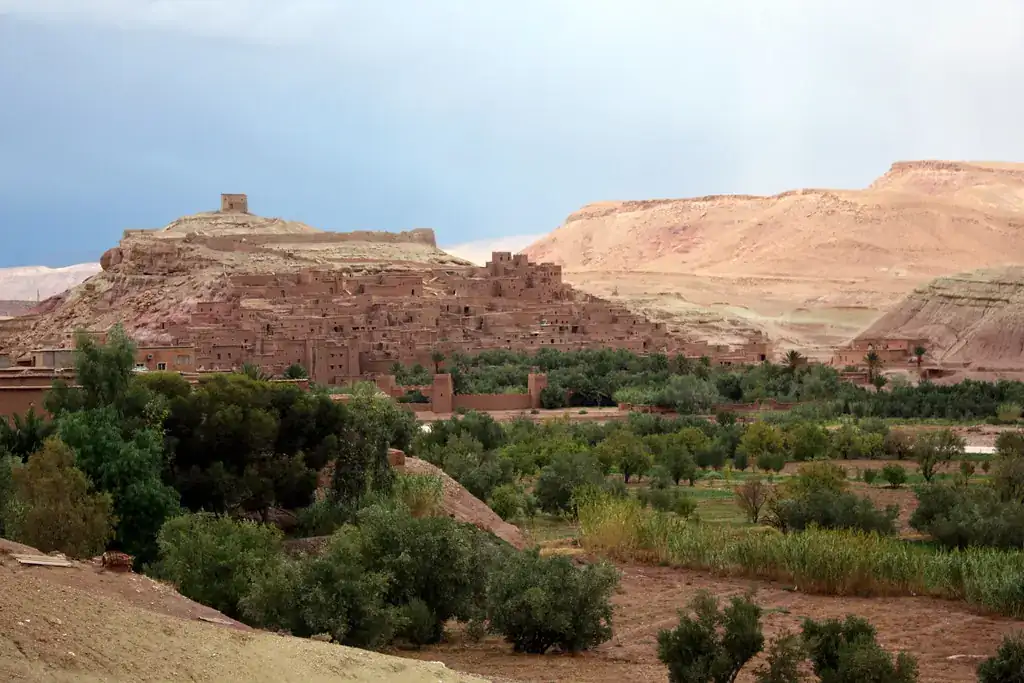
The modern village and the historic settlement face each other across the Ounila River. Use the pedestrian bridge for a straightforward approach. Depending on water levels, you may see people crossing nearer the riverbed, but stepping stones are not a dependable route, especially after rain. Pause on the modern-village side to understand the layout: the fortified earthen buildings gather on the slope, with lanes climbing toward the higher viewpoint. The familiar broad view comes from across the river; you do not need to reach the summit to appreciate it.
Allow about two hours for a relaxed walk with stops, longer if you want a guide, a meal or time to draw or photograph. The climb itself is not a major hike, but uneven steps, loose surfaces and steep sections make it more demanding than a flat village stroll. Wear shoes with grip and keep your hands free. Wheelchair users and travelers who cannot manage steps will find much of the historic interior difficult or inaccessible. The modern side provides viewpoints, though individual paths, terraces and toilets can also have steps.
What are you actually visiting, and is a guide useful?
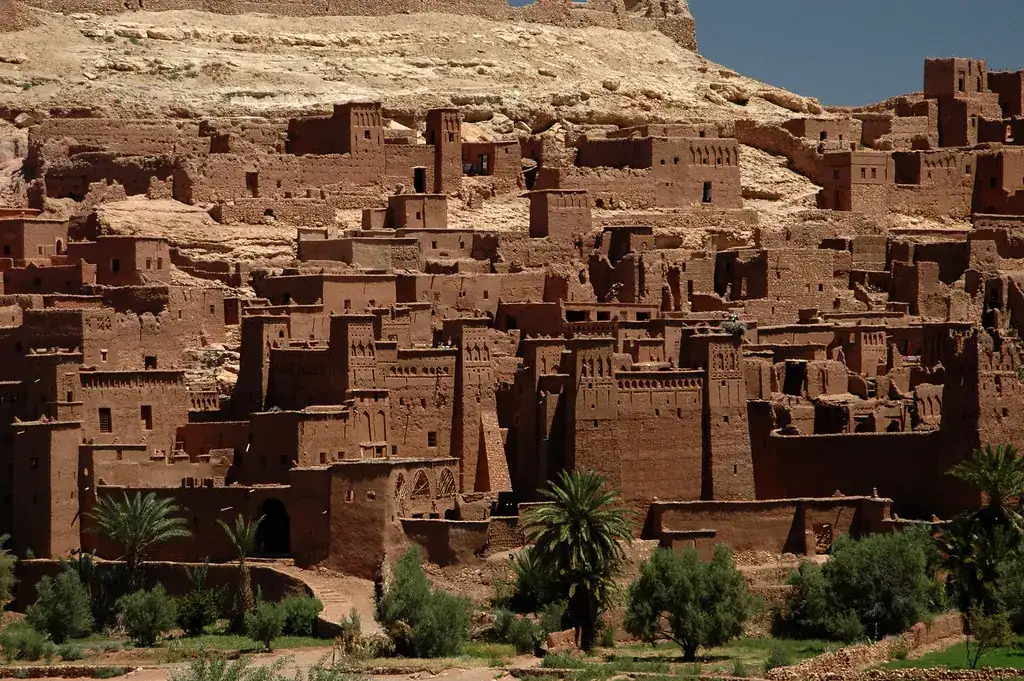
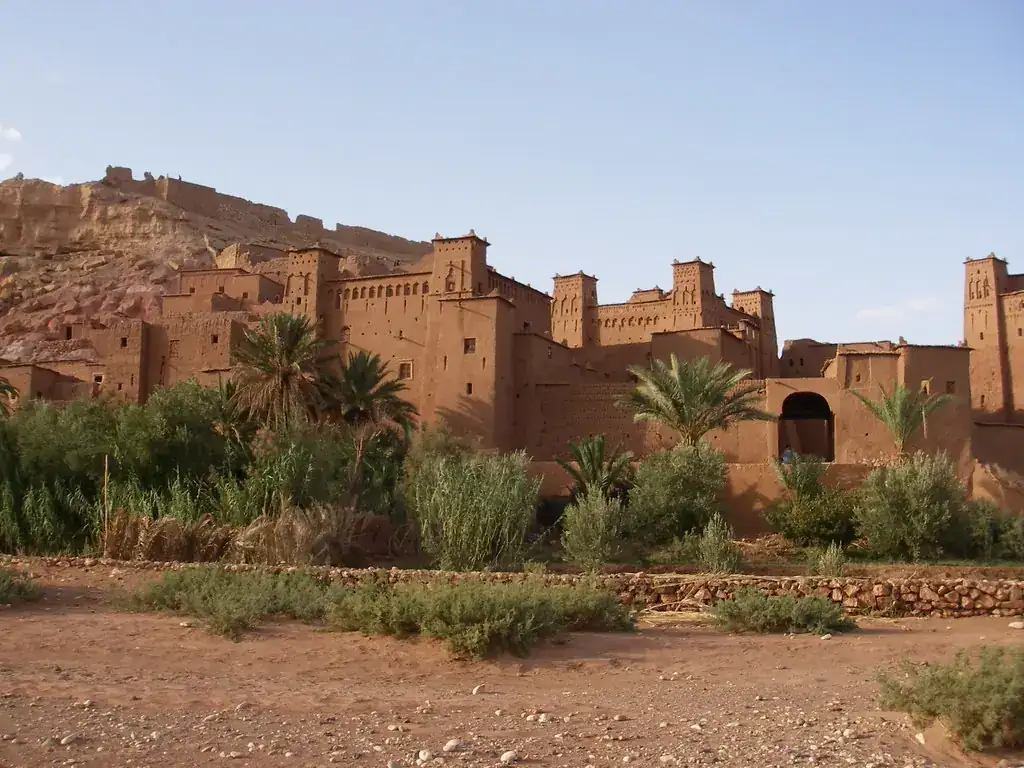
A common misunderstanding is to call the whole place a kasbah. Aït Benhaddou is a ksar: a fortified settlement containing multiple buildings, including substantial houses often described as kasbahs. It is a UNESCO World Heritage site, but that does not make every doorway a public entrance. Film associations draw plenty of visitors; the more revealing details are the earthen construction, decorated façades and the way passages connect homes and communal spaces. Avoid treating every picturesque room or staircase as part of an open-air attraction.
You can make a straightforward walk independently. A guide genuinely helps if you want to understand building techniques, conservation and the distinction between public lanes and spaces entered by permission. Arrange the scope, language, duration and total price before starting. If someone begins walking beside you and explaining things, say promptly if you do not want guiding. Claims that you cannot proceed without a guide deserve scrutiny. Equally, a charge to enter a particular house or terrace is not necessarily a charge for the entire ksar; ask what the payment covers.
How do you visit without intruding?
Some households remain connected to the historic settlement, while shops and visitor-facing spaces operate along the walking routes. Stay out of closed doors, unmarked domestic rooms and courtyards unless invited. Ask before photographing people, especially close portraits, and accept refusal without negotiation. A purchase does not automatically buy permission for a photograph. Keep voices low near homes and let residents, workers and anyone carrying goods pass on narrow steps. Do not climb walls or lean heavily on fragile edges for a better camera angle.
Loose clothing covering shoulders and knees is a considerate choice and also useful sun protection. During Ramadan, some cafés and services may start later or operate differently, and drivers may want to be home for the sunset meal. Arrange longer journeys with that rhythm in mind and carry water for your own needs. Friday midday prayers can briefly change shop and service availability; the settlement does not simply close for the day. Allow people time rather than treating a shuttered stall or an absent shopkeeper as a problem to solve.
What time should you walk, and what should you carry?
Early morning generally gives you cooler walking conditions and fewer day-trip groups. Late afternoon can also be pleasant, particularly if you are staying nearby, but leave enough daylight for the uneven descent. In summer, exposed slopes and lanes can become punishingly hot; take water, a hat and sunscreen rather than counting on shade. Winter mornings can be cold, and wind makes exposed viewpoints less comfortable. Rain can leave earthen surfaces slippery, while snow or severe weather in the High Atlas can complicate the Marrakech road journey.
Carry a light layer outside the hottest months and a small bag that will not knock against walls or merchandise. Use a café or your accommodation’s toilet before beginning the climb, with permission where appropriate; facilities inside the historic lanes are not something to rely on. For lunch before a long drive, allow time for food to be prepared rather than ordering just before your pickup. If you are returning to Marrakech, ask about current mountain-road conditions before departure and keep the evening free of reservations that depend on arriving at a precise hour.
A place to start
Experiences in Aït Benhaddou
Browse current activities and check the route, meeting point, inclusions and cancellation terms before booking. This is a search, not a personally reviewed tour.
Local operators · Aït Benhaddou
Vet before you bookBook with people who live here
These links open live listings from local operators. We have not inspected each one, so compare group size, vehicle, camp type and cancellation terms. Good operators answer questions about the route before you pay.
Desert camp operators
Overnight camel treks and camps run by Berber families near the dunes.
Compare listingsPrivate driver-guides
Multi-day 4x4 routes with a local driver who knows the passes and pistes.
Compare listingsAdventure & off-road
Quad, buggy and guided enduro outings with safety kit included.
Compare listings- Licensed guide or registered agency named in the listing
- Group size and vehicle type stated clearly
- Camp has private or shared toilets: ask which
- Free cancellation at least 24 hours ahead
Driving yourself? Use the desert drive calculator and the Sahara packing planner.
Plan the next step
Activities in Aït Benhaddou
Browse current GetYourGuide and Viator listings for Aït Benhaddou. Compare the route, meeting point, inclusions and cancellation terms before booking.
Disclosure: these are GetYourGuide and Viator partner links. If you book through them, Real Morocco Guide may earn a commission at no extra cost to you. Listings, prices and reviews come from the providers, not from us. How we work
Also on GetYourGuide
Plan your time
Before you go
Choose what matters most
Use the chapters above to decide what you want to see, then check current access and travel arrangements.
When comparing
Allow for the full journey
Compare meeting points, time on the road and time at the destination, not only the advertised duration.
Before paying
Confirm the details
Read the current provider listing for inclusions, accessibility needs and cancellation terms.
More ways to explore
Choose between exploring independently and comparing guided experiences. Search results are not selected or reviewed tours; confirm all details with the provider.
Explore independently
Use the planning notes above, then verify transport, access and opening details directly before setting out.
Compare guided options
Check what each listing actually includes, the meeting point and how much free time is available.
Explore options ↗Good to know
- Check current transport and access details before leaving.
- Ask the operator about any mobility or dietary needs before booking.
- Keep time in your schedule for changes to the route or weather.
Compare available experiences
Check current inclusions, reviews and cancellation terms with the provider.
Frequently asked questions
Should I book an experience in advance?
It depends on your travel dates and the activity. Check current availability and cancellation rules directly with the provider.
What should I check before reserving?
Confirm the meeting point, what is included, total time commitment, accessibility arrangements and the latest cancellation policy.
Further reading
Background reading, not verification of individual tour listings.
Trusted resources
Official sources worth checking before you travel. We are not affiliated with them.
Keep exploring
Marrakech · 9 min read
Marrakech Food Tours: What to Taste in the Medina
What to eat in the Marrakech medina, how a tasting walk differs from a cooking class, and how to tell whether a food tour actually leaves Jemaa el-Fna.
Read guide
Merzouga · 9 min read
Merzouga Desert Safari: Planning an Erg Chebbi Stay
How far Merzouga really is, how sunset trips, camp nights and multi-day tours differ, and what to pack for a night in the Erg Chebbi dunes.
Read guide