
Field guide / Morocco · Chefchaouen · 6 min read
Staying Overnight in Chefchaouen
A day trip to Chefchaouen can leave you with more time on the road than you expected and less time in town than you wanted. You arrive, climb into the medina, follow the busiest blue lanes and start watching the clock. Staying overnight changes that balance. It gives you an evening after many excursion groups leave, a morning before the main rush, and permission to stop climbing whenever your legs ask. The question is less whether there is enough to fill two days than how much travelling you want wrapped around a few hours of walking.
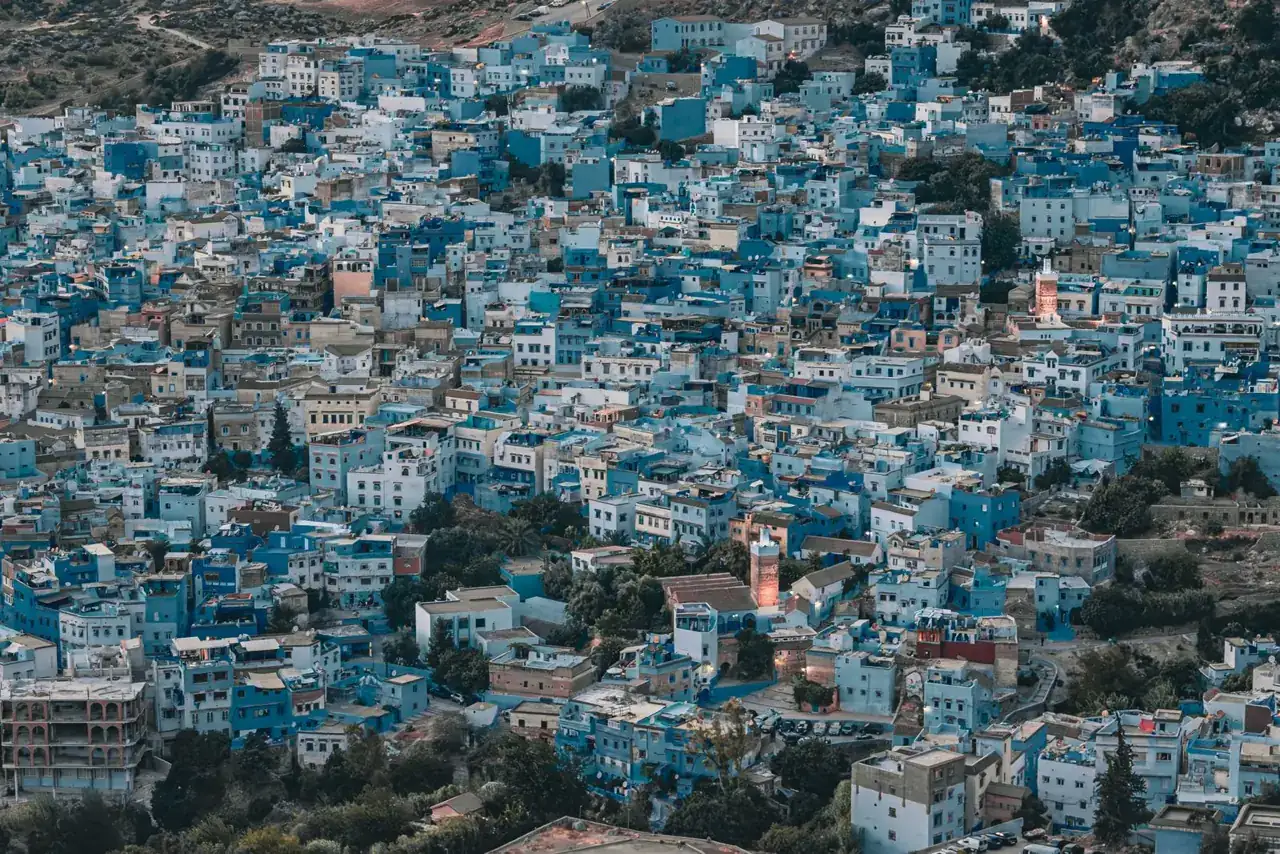
Is the journey too long for a day trip?
From Tangier, allow roughly two to three hours each way by road, depending on traffic, transport and stops. Tetouan is closer, usually around an hour and a half away. From Fes, the journey commonly takes around four hours or more each way, making a return excursion a long day with a narrow sightseeing window. These are planning estimates, not guaranteed journey times; shared transport can add waiting, and bus journeys need time at both ends.
A day trip is reasonable from Tetouan if you mainly want a walk, lunch and a look at the medina. An organised excursion can suit travellers who would rather avoid coordinating transport, though a fixed departure time limits lingering. From Fes, an overnight stay is usually the more comfortable choice. One night allows an afternoon, evening and early walk; two nights make sense if you want a genuinely slow day or a separate outing into the surrounding mountains.
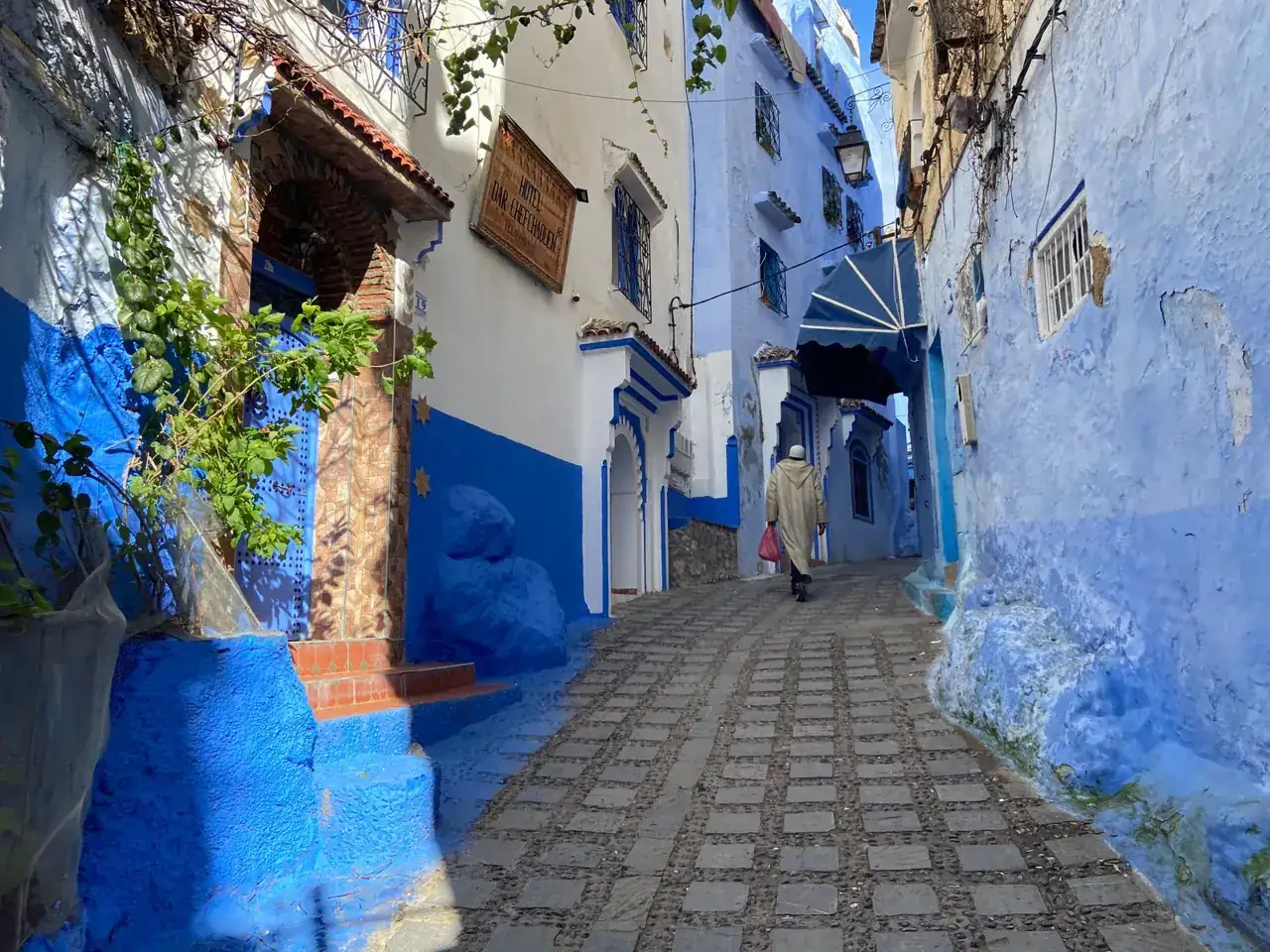
What does an overnight stay actually change?
Chefchaouen’s appeal is partly in small shifts: a lane that felt congested at midday becomes easier to walk, shop displays come down, and the evening gathers around Place Outa el Hammam. This central square, beside the kasbah and the Grand Mosque, is a useful anchor when the lanes start looking alike. Sleeping nearby means you can sit over dinner without calculating a long return drive. Expect company, though. Chefchaouen is a lived-in town and a popular place to stay, not a deserted set once the coaches leave.
The following morning is the stronger argument for staying. Head out before the busiest sightseeing period and you can appreciate the steep passages without constantly stepping aside for photographs. Not every café or shop will be open early, so separate your walking plans from your breakfast expectations. Busy weekends and holiday periods can still bring plenty of visitors. Overnight buys flexibility and quieter intervals, not exclusive access to the blue streets.
Where should you sleep if you dislike stairs?
Choose accommodation by its approach, not just its roof terrace. The old medina rises up the hillside, with steps, sloping cobbles and narrow passages that cars cannot reach. A room described as central may still involve a steep walk with luggage. Around the lower approaches and Bab el Ain, access can be simpler than in the upper lanes, but the exact doorway matters. Ask the property which vehicle-accessible drop-off to use and whether the route from there includes steps.
Taxis can bring you to accessible streets and medina entrances, not through the pedestrian passages to every guesthouse. The bus station lies below the old town, so a taxi is sensible with bags rather than starting your visit with an uphill haul. Inside traditional houses, bedrooms and breakfast terraces may be reached by several flights of stairs. Travellers with limited mobility should request specific details about step-free access, bathrooms and lifts; staying outside the medina may be more practical, even if it sacrifices the doorstep atmosphere.
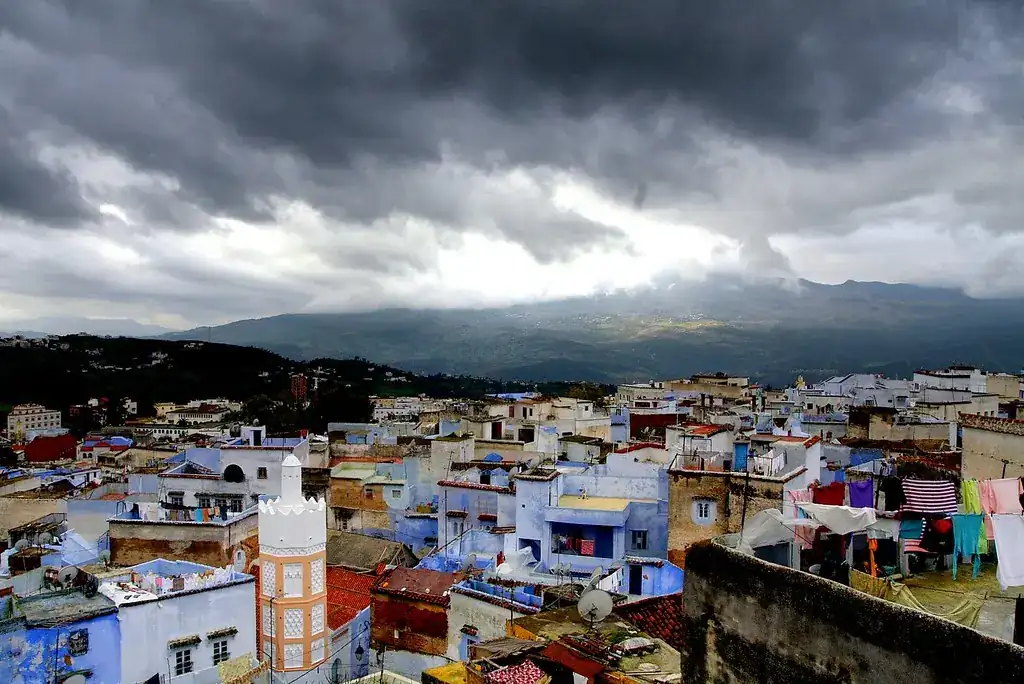
How should you divide the walking?
Use your arrival afternoon for the central medina rather than attempting every viewpoint. Begin around Place Outa el Hammam, then wander into the lanes above and around it. Chefchaouen is more manageable for independent wandering than the larger medinas of Fes or Marrakech, although stairs and similar-looking turns can make a short route surprisingly tiring. Save your accommodation location offline. A licensed guide is most useful if you want context and a purposeful introduction, not simply someone to lead you between photo spots.
For a longer walk, work towards Ras el Maa at the eastern edge of the medina, where water emerges beside the town. From that side, a path climbs towards the Spanish Mosque viewpoint on the opposite hillside. Allow roughly half an hour uphill from the Ras el Maa area, longer with pauses or reduced mobility. The view takes in the town against its mountain setting, but sunset draws a crowd. Wear shoes with grip, carry water, and bring a light if you expect to descend after dark.
How do you photograph the blue lanes respectfully?
The blue-painted medina is also a residential neighbourhood. Doorways, stairs and narrow passages may be someone’s daily route home, even when they resemble a carefully arranged photograph. Keep entrances clear, avoid moving plants or other objects, and ask before photographing people, especially children. A quiet lane is not an invitation to peer through an open door. Some staged photo corners may involve a charge; establish that before posing rather than assuming every decorated staircase is public space.
Loose clothing that covers shoulders and knees is a considerate choice and works well for walking in the sun. You do not need special dress for ordinary medina sightseeing. If someone insists that you need them to find your accommodation, use the directions supplied by your host rather than accepting an unsolicited escort. Agree on payment before accepting guiding or carrying help. Most encounters need no suspicion, just clear boundaries and an understanding that offered assistance is not always free.
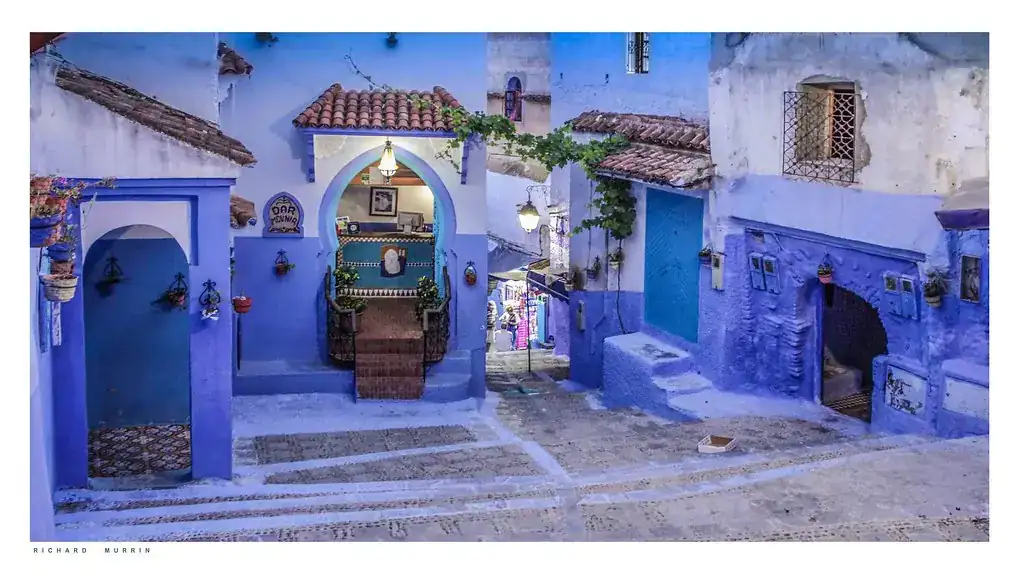
What should you arrange before settling in?
Pack for the hills, not an imagined year-round Moroccan heat. Summer afternoons can make climbs uncomfortable, while winter can be cold and wet; shaded paving becomes slippery in rain. In cooler months, ask about room heating rather than judging comfort from sunny terrace photographs. Carry some cash for small purchases and transport, since card acceptance is uneven. If you need an early departure, look up the current bus schedule and ticket availability before planning a leisurely final morning.
During Ramadan, daytime food choices can narrow and activity shifts towards the evening; arrange breakfast with your accommodation if you want an early start. On Fridays, some businesses pause or open later around communal prayers, though the town does not close as a whole. Leave room for those rhythms rather than building your day around a tight shopping circuit. For a taxi pickup, use a named gate or accessible street agreed with the driver, and allow enough time to walk there with your luggage.
A place to start
Experiences in Chefchaouen
Browse current activities and check the route, meeting point, inclusions and cancellation terms before booking. This is a search, not a personally reviewed tour.
Plan the next step
Activities in Chefchaouen
Browse current GetYourGuide and Viator listings for Chefchaouen. Compare the route, meeting point, inclusions and cancellation terms before booking.
Disclosure: these are GetYourGuide and Viator partner links. If you book through them, Real Morocco Guide may earn a commission at no extra cost to you. Listings, prices and reviews come from the providers, not from us. How we work
Also on GetYourGuide
Plan your time
Before you go
Choose what matters most
Use the chapters above to decide what you want to see, then check current access and travel arrangements.
When comparing
Allow for the full journey
Compare meeting points, time on the road and time at the destination, not only the advertised duration.
Before paying
Confirm the details
Read the current provider listing for inclusions, accessibility needs and cancellation terms.
More ways to explore
Choose between exploring independently and comparing guided experiences. Search results are not selected or reviewed tours; confirm all details with the provider.
Explore independently
Use the planning notes above, then verify transport, access and opening details directly before setting out.
Compare guided options
Check what each listing actually includes, the meeting point and how much free time is available.
Explore options ↗Good to know
- Check current transport and access details before leaving.
- Ask the operator about any mobility or dietary needs before booking.
- Keep time in your schedule for changes to the route or weather.
Compare available experiences
Check current inclusions, reviews and cancellation terms with the provider.
Frequently asked questions
Should I book an experience in advance?
It depends on your travel dates and the activity. Check current availability and cancellation rules directly with the provider.
What should I check before reserving?
Confirm the meeting point, what is included, total time commitment, accessibility arrangements and the latest cancellation policy.
Further reading
Background reading, not verification of individual tour listings.
Trusted resources
Official sources worth checking before you travel. We are not affiliated with them.
Keep exploring
Marrakech · 9 min read
Marrakech Food Tours: What to Taste in the Medina
What to eat in the Marrakech medina, how a tasting walk differs from a cooking class, and how to tell whether a food tour actually leaves Jemaa el-Fna.
Read guide
Merzouga · 9 min read
Merzouga Desert Safari: Planning an Erg Chebbi Stay
How far Merzouga really is, how sunset trips, camp nights and multi-day tours differ, and what to pack for a night in the Erg Chebbi dunes.
Read guide