
Field guide / Morocco · El Jadida · 6 min read
El Jadida Portuguese City Walking Plan
The trick with El Jadida’s Portuguese City is not fitting everything in. It is avoiding a plan that depends on the cistern being open, underestimating the rampart steps, or spending so long inside the walls that the waterfront becomes an afterthought. Keep the historic quarter compact: enter from the modern town, explore the central lanes, add an accessible monument or rampart section, then finish beside the sea. Allow roughly half a day with rests rather than treating it as a quick photo stop.
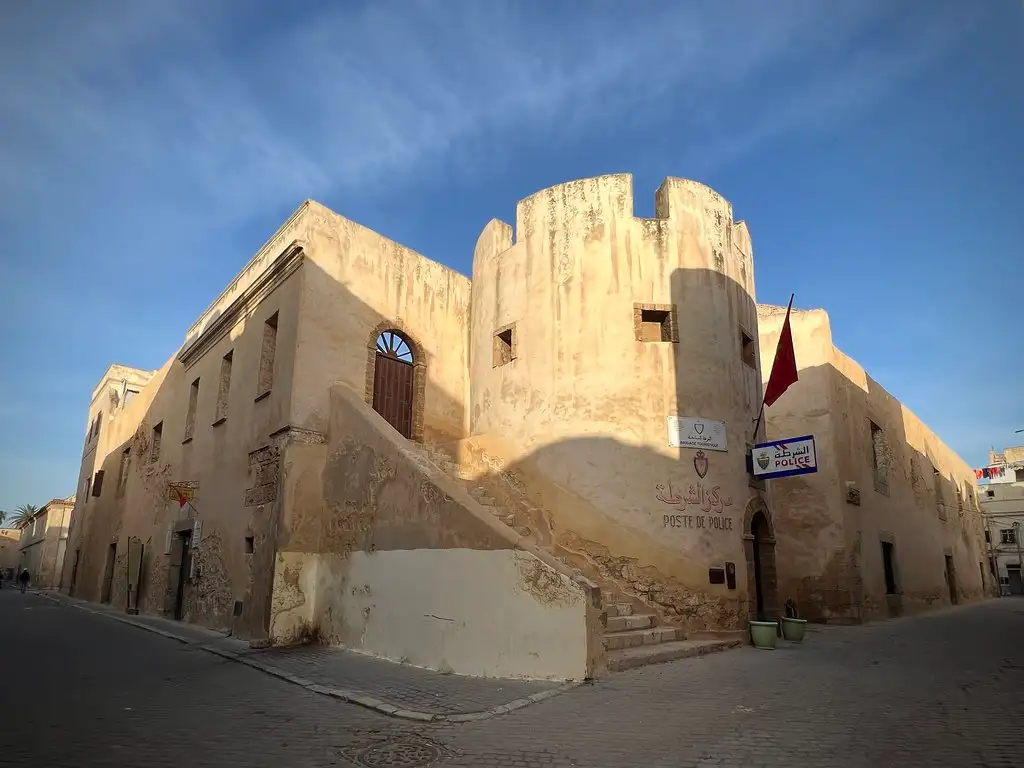
Where should you start the Portuguese City walk?
Start at the main landward entrance to the Portuguese City, also called the Cité Portugaise or historic Mazagan. The walled quarter sits between modern El Jadida and the Atlantic, with the port alongside it and the town beach extending beyond the port area. This makes a straightforward route possible: old town first, waterfront afterwards. If arriving by taxi, ask for the Cité Portugaise entrance rather than an address deep inside. Some lanes take local vehicles, but narrow passages, parked cars and pedestrian activity make an interior drop-off less useful than it sounds.
Give the quarter around two hours if you want pauses, photographs and a possible visit inside a monument; allow longer for a guide or a slow lunch. The walking distance is modest, but the effort depends on your route. A ground-level circuit is quite different from climbing onto the fortifications. El Jadida’s railway station is outside the historic centre, so arriving by train involves a separate transfer. For a day trip from Casablanca, leave room for that connection and the return journey instead of measuring the outing by train time alone.
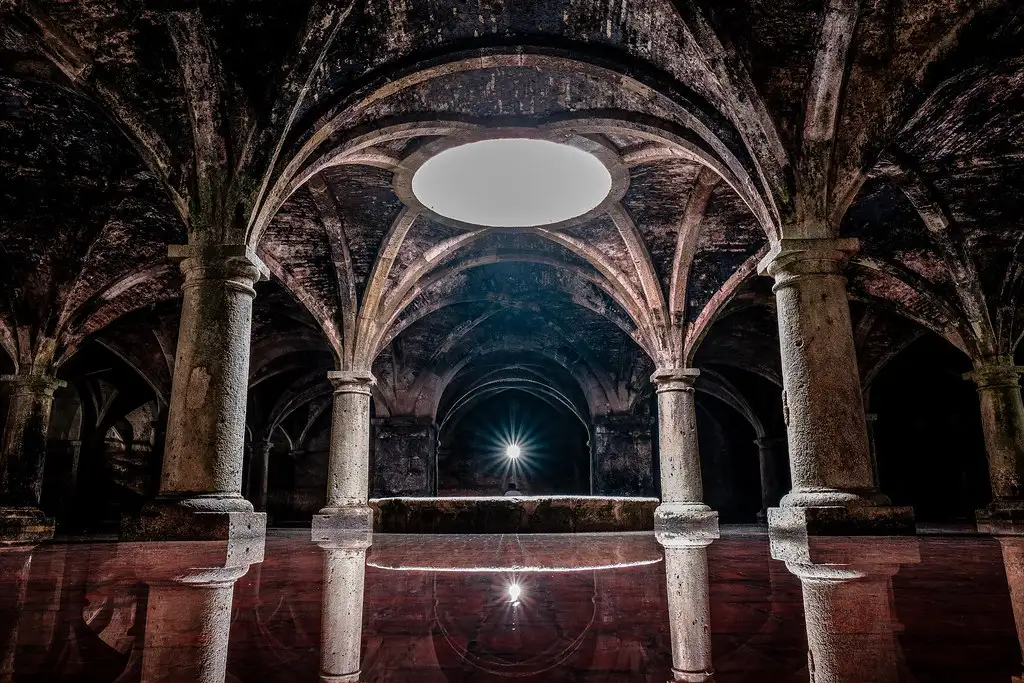
How do you plan around cistern and monument access?
The Portuguese Cistern is often the reason people come, particularly after seeing photographs of its columns reflected in shallow water. Do not make it the load-bearing part of your day. Access has been subject to closure, and old articles, map listings and travellers’ photographs do not establish whether visitors can enter now. Check current opening arrangements shortly before your visit through a locally informed accommodation host or the monument’s visitor entrance. If you receive conflicting answers, keep the walking plan intact and regard an interior visit as an addition, not a promise.
From the landward entrance, follow the principal lane into the quarter towards the cistern area and the former Church of the Assumption. These are useful reference points before you turn into smaller residential lanes. Treat church access and rampart entry as separate from cistern access; one open door does not establish the status of the others. Where admission is operating, ask about the current fee and payment method before entering. Carry some small-denomination dirhams, but do not hand money to someone merely claiming they can get you through a closed entrance.
A compact route through the lanes and onto the walls
After the central monuments, make a loose circuit through the lanes towards the seaward side rather than trying to follow every passage. The Portuguese fortifications explain the quarter’s shape, but this is also a lived-in neighbourhood. Doorways, washing, small businesses and occasional vehicles share the limited space. Keep junctions clear when stopping for photographs. You do not need to pursue a supposed secret viewpoint down a residential passage: the relationship between houses, defensive walls and sea becomes clear without turning the walk into a treasure hunt.
Add a rampart section only where public access is open and the approach looks manageable. Steps can be steep or irregular, and exposed stone needs more attention than the flat route below. Wear shoes with a dependable sole and keep children close near edges. Wind can make a wall-top pause less comfortable than it looked from the lane. Do not assume that every visible stretch forms a continuous public circuit, or that a sea-facing gate provides an exit to the promenade. Return through an established public route rather than scrambling around a barrier.
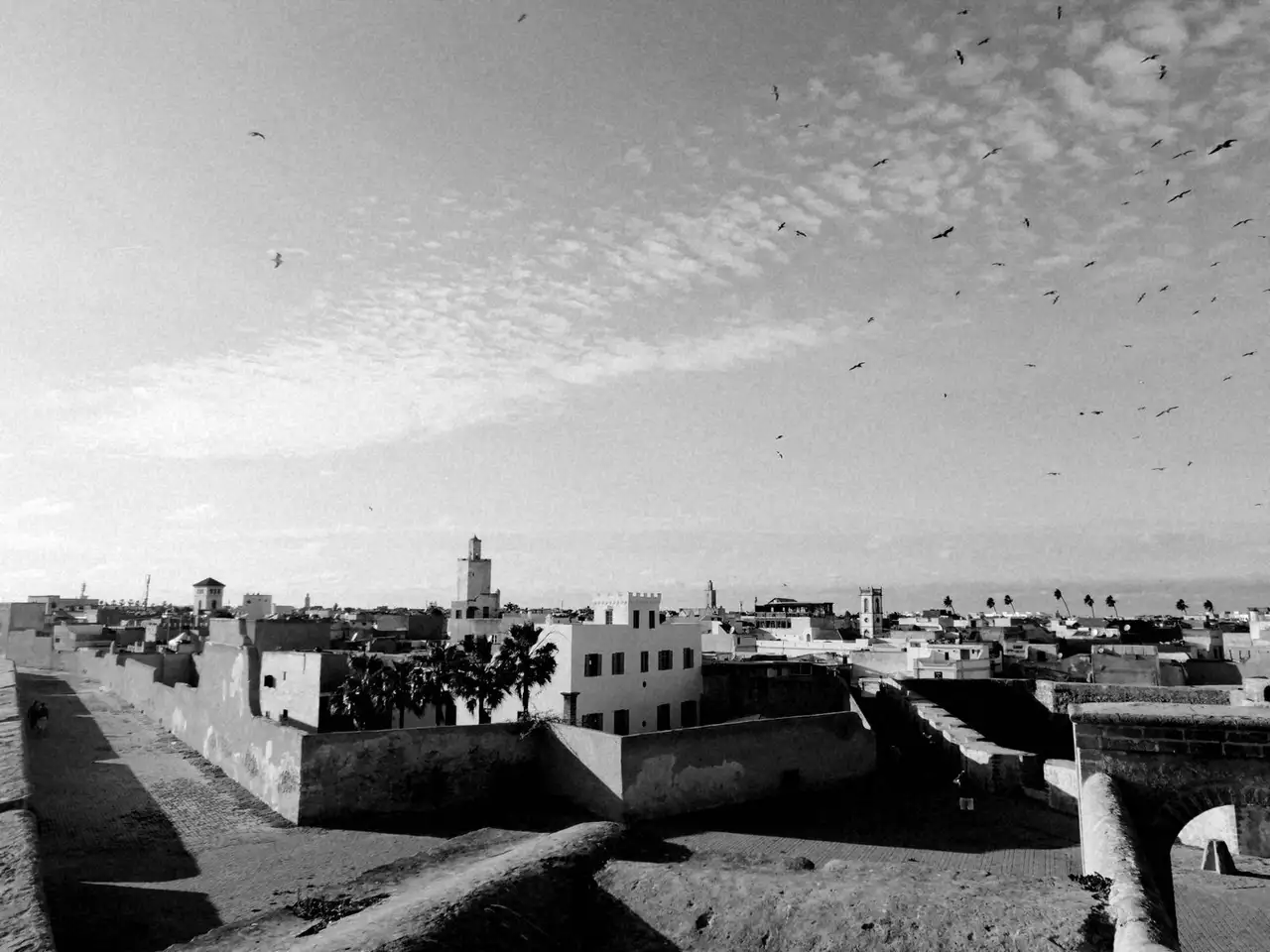
What if stairs or uneven paving are a problem?
For a lower-effort El Jadida Portuguese City walking plan, stay at street level, take the main lane in both directions and add only the side lanes that look comfortable. Historic paving, patched surfaces, thresholds and drainage changes can interrupt otherwise easy ground. A walking stick may help with balance, but there is no reason to force a rampart climb for the sake of completing a route. The architecture and the daily life of the quarter remain interesting from below. Stop before fatigue turns the return over uneven ground into the hardest part.
Wheelchair users and travellers with limited mobility should not interpret the quarter’s small size as a guarantee of step-free access. Ask specifically about steps, doorway widths and the approach to any interior you want to visit; a general description of a place as accessible is not enough. For a taxi pickup, arrange a recognisable point outside the walls rather than relying on a driver reaching a particular lane. With a pushchair, a compact model is easier to manoeuvre, though cobbles and steps may still mean retracing your route.
When do timing and a guide make a difference?
Morning is often comfortable for the enclosed lanes, while later light can suit the waterfront. Neither guarantees quiet. Weekends and holiday periods can bring more visitors, especially around the beach. Atlantic wind may feel cool even under strong sun, so bring a light layer as well as sun protection. After rain, take extra care on smooth stone. During Ramadan, daytime food options may be reduced and activity shifts towards evening. Friday prayers can temporarily change the rhythm around the mosque and nearby businesses; leave space for worshippers and avoid photographing people at prayer.
A guide genuinely helps if you want the fortifications and surviving buildings explained, or if limited time makes a pre-arranged, paced visit useful. Navigation alone rarely justifies a lengthy tour of this compact quarter. Agree on the duration, price, stairs and any shopping stops before starting. Independent walkers can keep to the same simple circuit without accepting unsolicited directions as a paid service. Comfortable, reasonably modest clothing suits the residential setting. Ask before taking close photographs of residents or shop interiors, and move on graciously if someone declines.
Save the final hour for the waterfront
Leave through the landward side and work around towards the port-side streets, then continue towards the promenade along the town beach. The port and the beach are distinct parts of the waterfront, not a single uninterrupted leisure path around the outside of the old walls. Follow public streets and keep clear of working areas, vehicles and restricted access. This change of setting is part of the point: after enclosed lanes and defensive masonry, you have room to walk beside the bay or simply sit.
Reserve at least forty-five minutes to an hour here, more if you want a meal. Choose a table according to shelter as much as the view; a breezy terrace can become tiring after a wall-top walk. For fish sold by weight, establish the weight, preparation charge and included sides before ordering. If catching a train afterwards, arrange your departure from the central waterfront or another clear roadside meeting point, with enough margin for the taxi journey to the station. Keep your light layer handy for the wait beside the sea.
A place to start
Experiences in El Jadida
Browse current activities and check the route, meeting point, inclusions and cancellation terms before booking. This is a search, not a personally reviewed tour.
Plan the next step
Activities in El Jadida
Browse current GetYourGuide and Viator listings for El Jadida. Compare the route, meeting point, inclusions and cancellation terms before booking.
Disclosure: these are GetYourGuide and Viator partner links. If you book through them, Real Morocco Guide may earn a commission at no extra cost to you. Listings, prices and reviews come from the providers, not from us. How we work
Also on GetYourGuide
Plan your time
Before you go
Choose what matters most
Use the chapters above to decide what you want to see, then check current access and travel arrangements.
When comparing
Allow for the full journey
Compare meeting points, time on the road and time at the destination, not only the advertised duration.
Before paying
Confirm the details
Read the current provider listing for inclusions, accessibility needs and cancellation terms.
More ways to explore
Choose between exploring independently and comparing guided experiences. Search results are not selected or reviewed tours; confirm all details with the provider.
Explore independently
Use the planning notes above, then verify transport, access and opening details directly before setting out.
Compare guided options
Check what each listing actually includes, the meeting point and how much free time is available.
Explore options ↗Good to know
- Check current transport and access details before leaving.
- Ask the operator about any mobility or dietary needs before booking.
- Keep time in your schedule for changes to the route or weather.
Compare available experiences
Check current inclusions, reviews and cancellation terms with the provider.
Frequently asked questions
Should I book an experience in advance?
It depends on your travel dates and the activity. Check current availability and cancellation rules directly with the provider.
What should I check before reserving?
Confirm the meeting point, what is included, total time commitment, accessibility arrangements and the latest cancellation policy.
Further reading
Background reading, not verification of individual tour listings.
Trusted resources
Official sources worth checking before you travel. We are not affiliated with them.
Keep exploring

Marrakech · 9 min read
Marrakech Food Tours: What to Taste in the Medina
What to eat in the Marrakech medina, how a tasting walk differs from a cooking class, and how to tell whether a food tour actually leaves Jemaa el-Fna.
Read guide
Merzouga · 9 min read
Merzouga Desert Safari: Planning an Erg Chebbi Stay
How far Merzouga really is, how sunset trips, camp nights and multi-day tours differ, and what to pack for a night in the Erg Chebbi dunes.
Read guide