
Field guide / Morocco · Meknes · 6 min read
Where to Stay in Meknes: Medina or Ville Nouvelle?
Adding Meknes to a Fes itinerary creates a small but consequential choice: sleep close to the old city and carry your bag through its lanes, or choose an easier arrival in the Ville Nouvelle and travel back for sightseeing. Meknes is manageable as a short stay, but its railway stations, modern centre and main historic sights are not all in one walkable cluster. Where you stay matters most at arrival, after dinner and on the morning you leave.
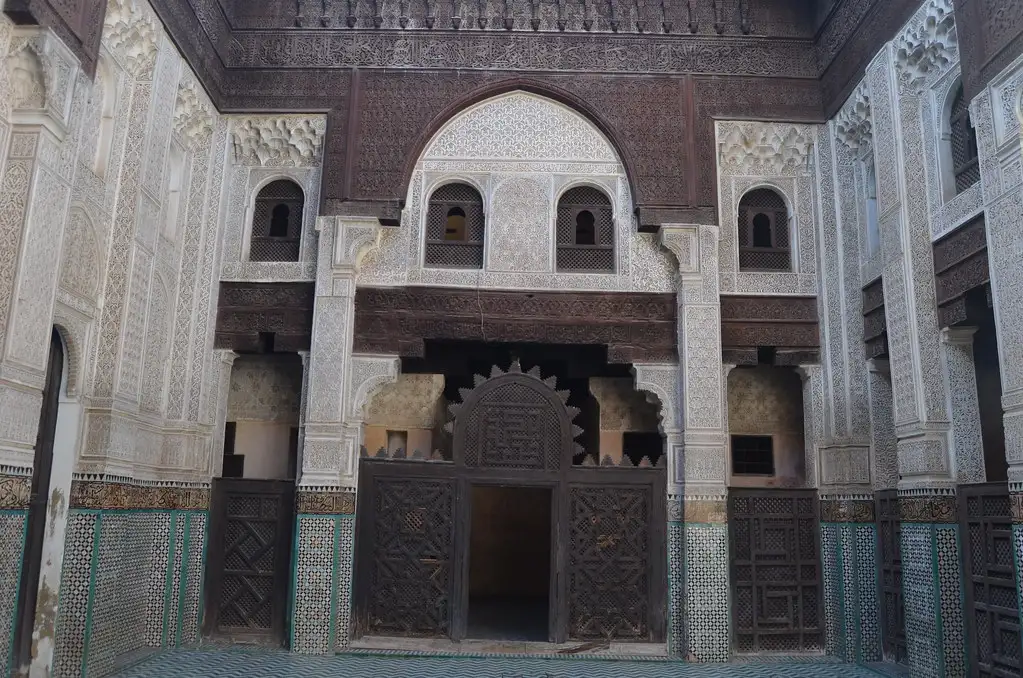
What do you gain by sleeping in the medina?
The medina makes sense if your Meknes plans revolve around wandering rather than ticking off sights between trains. Place el-Hedim sits at the old city's southern edge, facing Bab Mansour across the square; the lanes leading north take you into the commercial medina. A room within comfortable walking reach of this area puts the Dar Jamaï Museum, market streets and the approaches to the imperial quarter into a practical sightseeing circuit. You can go out early, return for a rest and leave again without negotiating a taxi each time.
That convenience depends on the actual doorway, not the word “medina” in a listing. A house several turns inside a narrow lane feels very different from accommodation near a vehicle-accessible edge. Ask the host which square or gate a taxi should use and how far you will carry your bags from there. Meknes generally feels less labyrinthine than Fes, but a map pin can still land you on the wrong side of a wall or suggest a lane that is awkward with luggage.
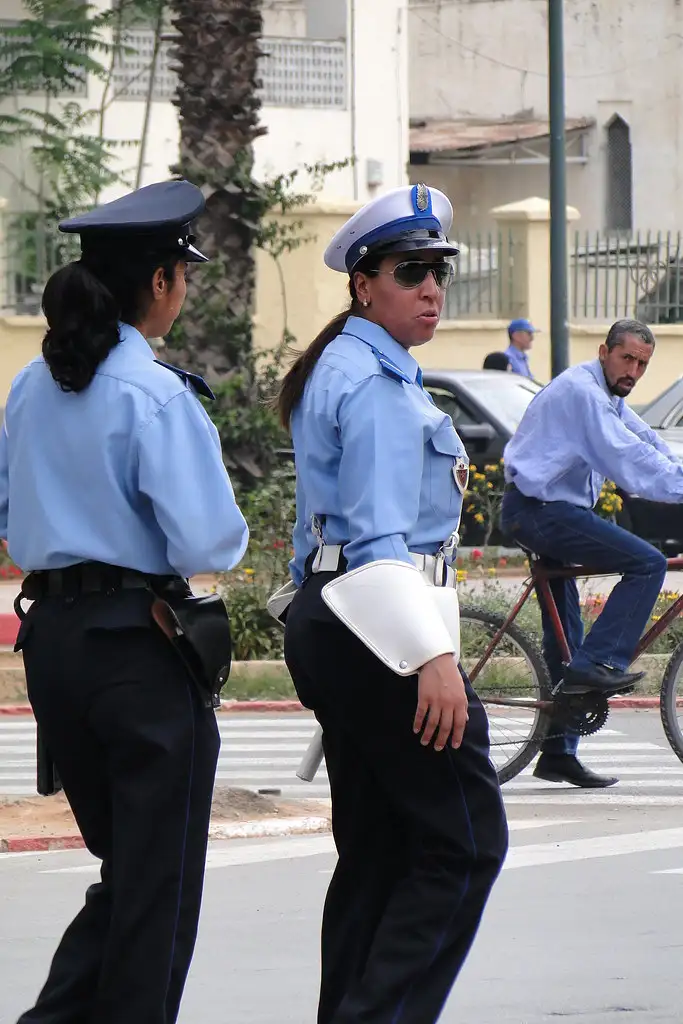
When is the Ville Nouvelle the easier choice?
The Ville Nouvelle lies east of the old city, with the area around Avenue Mohammed V providing a useful reference point for accommodation, cafés and everyday services. Streets are broader, addresses are usually easier for drivers to reach, and conventional hotels are more common than courtyard houses. This is the straightforward choice for a late arrival, a large suitcase or a stay built around onward rail travel. It also gives travelers coming from a Fes riad a different sort of evening: less navigation, more ordinary city life.
Do not read “central Meknes” as “beside the historic sights.” Central can mean the modern commercial centre. From accommodation around Avenue Mohammed V, reaching Place el-Hedim on foot can take roughly half an hour or longer, depending on your starting point and pace. The route is a city walk involving traffic, crossings and changes in level, not a continuous sightseeing promenade. In warm weather, taking a petit taxi to the old-city edge and spending your walking energy there is often the more pleasant arrangement.
Which Meknes station should you use from Fes?
Meknes has two railway stations that can cause confusion: Meknès and Meknès Al Amir Abdelkader. Al Amir Abdelkader is generally the more convenient of the two for the central Ville Nouvelle and is closer to the medina, while the station named simply Meknès lies farther east. Neither delivers you into the old city. Before buying your ticket from Fes, check which station your chosen service serves and compare it with your accommodation's location. The journey itself is short enough that the station-to-room transfer can feel like a substantial part of the trip.
For a medina stay, plan on a taxi followed by a walk rather than trying to turn arrival into sightseeing with your bags. Have the accommodation name, telephone number and agreed drop-off point saved offline; an address in Arabic can help. Petit taxis are suited to journeys within the city, subject to space for passengers and luggage. Ask for the meter, and settle any proposed alternative fare before setting off. Carry small-denomination dirhams rather than expecting a driver to change a large note.
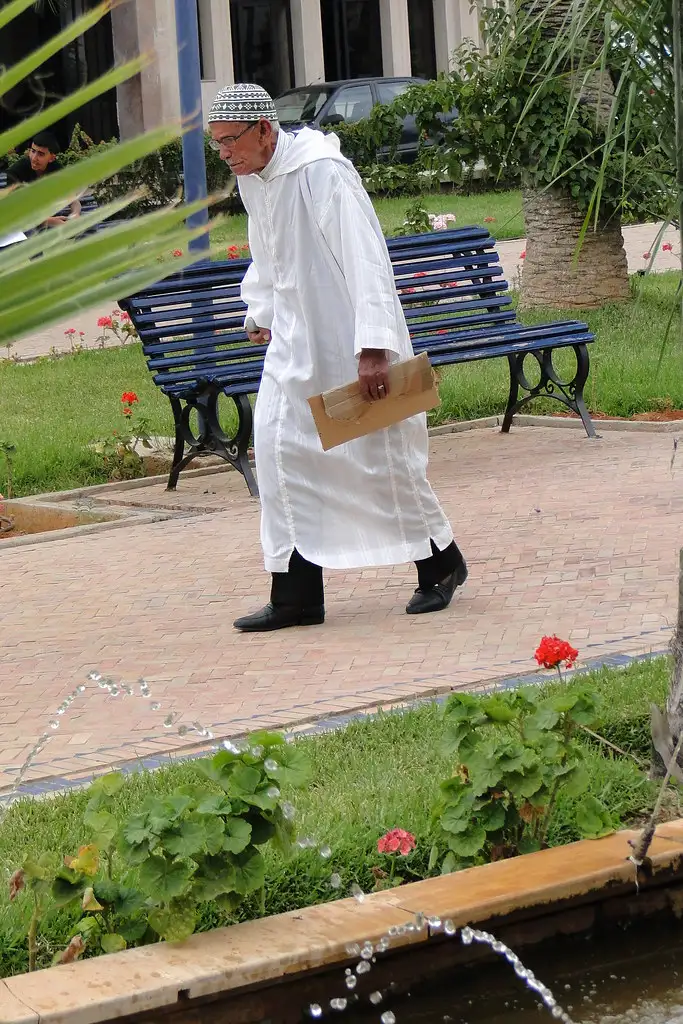
How much luggage handling and walking should you expect?
A wheeled case is not impossible in the medina, but uneven paving, narrow passages and occasional steps make a short walk feel longer. Door-to-door taxi access should never be assumed for a riad. Request a meeting at the drop-off point if the route is complicated, and arrange any luggage help through your accommodation, including the charge. An unsolicited offer to lead you through the lanes is not automatically a favour; you can decline and telephone your host instead.
For reduced mobility, the property matters as much as the neighbourhood. Historic houses may have steep stairs, rooms opening off different levels and breakfast served on a roof terrace. A modern hotel may be easier, but pavements, entrance steps and lifts still need specific questions. Ask about a step-free route from vehicle to room, not simply whether the building is “accessible.” Summer heat adds another constraint: do longer walks early, leave time for a midday break and avoid packing the old city and imperial sites into one uninterrupted outing.
Where is more convenient after dark?
Stay in the medina if your ideal evening is a walk around Place el-Hedim followed by a short return to your room. The square and surrounding commercial streets provide a livelier setting than the quieter residential lanes deeper inside. Meknes should not be approached as a smaller version of Marrakech's evening spectacle, though. Activity changes with the day and season, and a lane full of shops in the afternoon can be shuttered later. Learn your route home in daylight and save the entrance location rather than relying entirely on turn-by-turn directions.
The Ville Nouvelle generally makes casual dinner planning easier, with cafés and restaurants along its main streets and simpler vehicle access afterward. In either area, ask about meal availability if you expect to eat at your accommodation. During Ramadan, daytime food options can be reduced and evenings become busier after the fast is broken; arranging dinner helps avoid arriving hungry during the transition. Friday can also bring slower trading and temporary closures around prayer time. Keep some flexibility instead of treating every afternoon as interchangeable.
How should you plan one or two nights after Fes?
For one night focused on the historic city, a medina property near an accessible edge usually gives the most useful balance: a manageable transfer, an afternoon exploring and another walk before departure. Allow at least half a day for the medina and nearby imperial area without rushing, and longer if you want museums and extended stops. A guide helps if you want interpretation of the city's imperial history or assistance finding particular workshops; you do not need one simply to walk between the main landmarks. Ask before photographing artisans or their work, and dress modestly around religious sites.
For an early onward train, bulky bags or a second day devoted to Volubilis and Moulay Idriss, a vehicle-accessible Ville Nouvelle hotel can simplify logistics. Those places are outside Meknes, so they require separate transport planning rather than an extension of your city walk. An organised excursion suits travelers who want the transfers handled; a guide at Volubilis is useful for understanding ruins that are not self-explanatory. Before leaving for the day, arrange luggage storage and allow time to collect bags before heading to the correct railway station.
A place to start
Experiences in Meknes
Browse current activities and check the route, meeting point, inclusions and cancellation terms before booking. This is a search, not a personally reviewed tour.
Plan the next step
Activities in Meknes
Browse current GetYourGuide and Viator listings for Meknes. Compare the route, meeting point, inclusions and cancellation terms before booking.
Disclosure: these are GetYourGuide and Viator partner links. If you book through them, Real Morocco Guide may earn a commission at no extra cost to you. Listings, prices and reviews come from the providers, not from us. How we work
Also on GetYourGuide
Plan your time
Before you go
Choose what matters most
Use the chapters above to decide what you want to see, then check current access and travel arrangements.
When comparing
Allow for the full journey
Compare meeting points, time on the road and time at the destination, not only the advertised duration.
Before paying
Confirm the details
Read the current provider listing for inclusions, accessibility needs and cancellation terms.
More ways to explore
Choose between exploring independently and comparing guided experiences. Search results are not selected or reviewed tours; confirm all details with the provider.
Explore independently
Use the planning notes above, then verify transport, access and opening details directly before setting out.
Compare guided options
Check what each listing actually includes, the meeting point and how much free time is available.
Explore options ↗Good to know
- Check current transport and access details before leaving.
- Ask the operator about any mobility or dietary needs before booking.
- Keep time in your schedule for changes to the route or weather.
Compare available experiences
Check current inclusions, reviews and cancellation terms with the provider.
Frequently asked questions
Should I book an experience in advance?
It depends on your travel dates and the activity. Check current availability and cancellation rules directly with the provider.
What should I check before reserving?
Confirm the meeting point, what is included, total time commitment, accessibility arrangements and the latest cancellation policy.
Further reading
Background reading, not verification of individual tour listings.
Trusted resources
Official sources worth checking before you travel. We are not affiliated with them.
Keep exploring
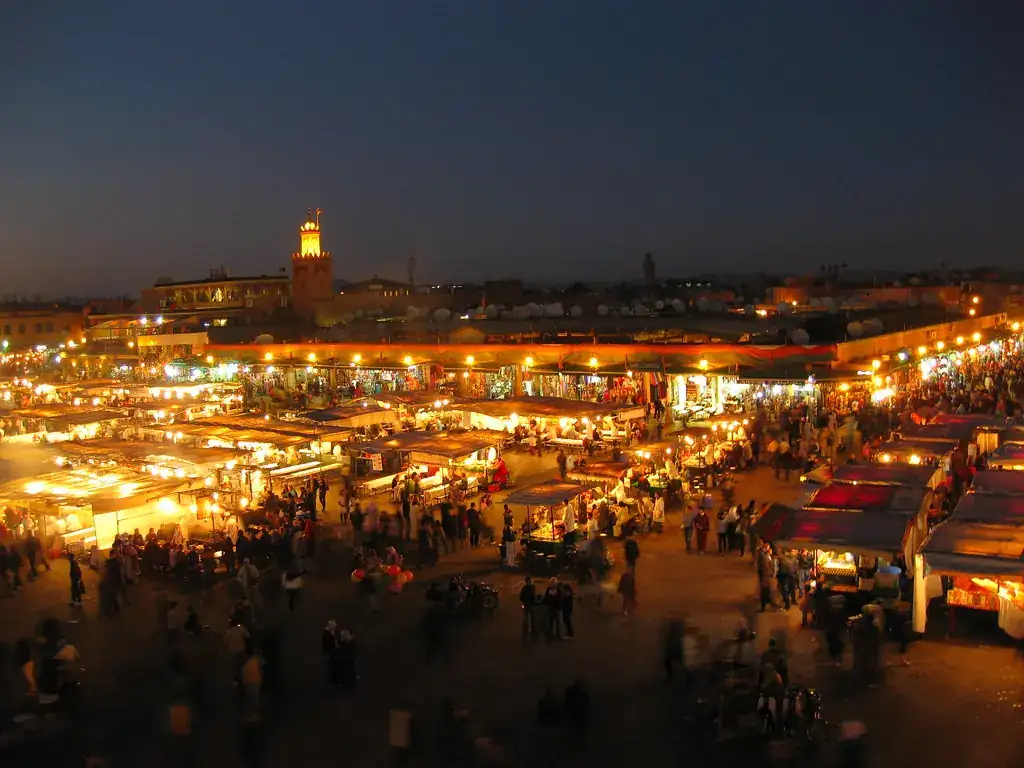
Marrakech · 9 min read
Marrakech Food Tours: What to Taste in the Medina
What to eat in the Marrakech medina, how a tasting walk differs from a cooking class, and how to tell whether a food tour actually leaves Jemaa el-Fna.
Read guide
Merzouga · 9 min read
Merzouga Desert Safari: Planning an Erg Chebbi Stay
How far Merzouga really is, how sunset trips, camp nights and multi-day tours differ, and what to pack for a night in the Erg Chebbi dunes.
Read guide