
Field guide / Morocco · Merzouga · 6 min read
What to Pack for Merzouga Desert Camp
The packing problem in Merzouga is not how to prepare for a vast expedition. It is knowing what leaves the village with you, what the camp actually provides and how cold your tent might feel after dinner. A camel transfer calls for different luggage from a vehicle transfer, while a private bathroom does not necessarily mean reliable hot water. Pack for the journey you have booked, rather than the photographs, and settle the inclusions before you arrive.
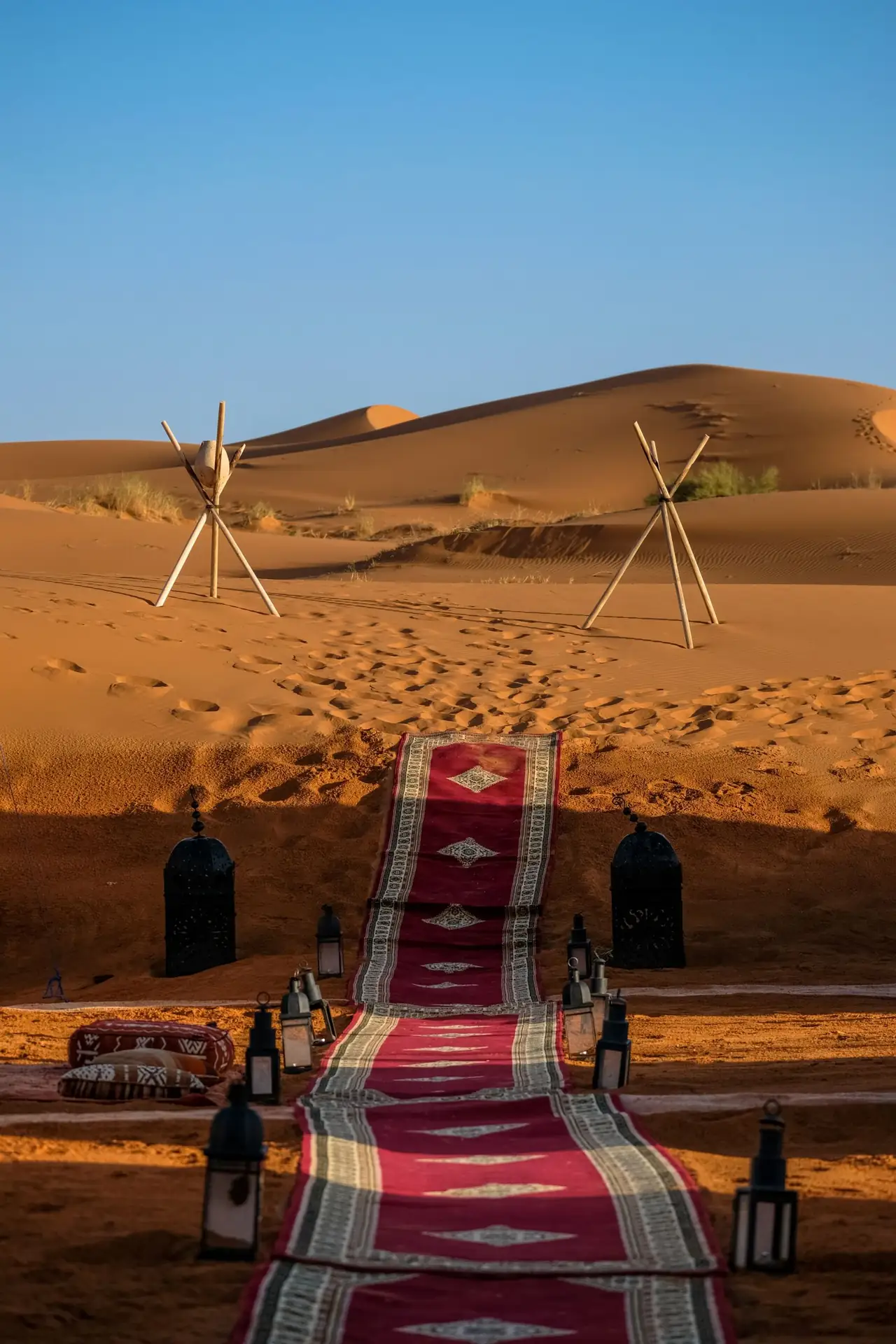
Where is your camp, and how do you get there?
Merzouga village sits beside Erg Chebbi, the dune field that draws most overnight visitors to this part of southeastern Morocco. Hassi Labied is another village along its western edge, north of Merzouga. Camps occupy different positions around the dunes; a booking described simply as “Merzouga” does not tell you where you will sleep. Ask for the meeting point, the camp’s position and the transfer arrangement. A road taxi can reach village accommodation and accessible roadside meeting points, but it cannot replace a suitable vehicle on a sandy camp approach.
The journey here is substantial. From Marrakech, expect a long overland trip across the Atlas and onward through the southeast; from Fes, the approach also takes much of a day. An organized transfer or multi-day tour suits travelers who do not want to arrange these connections themselves, but compare driving time with time actually spent near the dunes. Allow a margin before departure for camp, rather than planning a tight arrival. If camel riding is not suitable for you, arrange a vehicle transfer in advance and ask how far you will still need to walk.
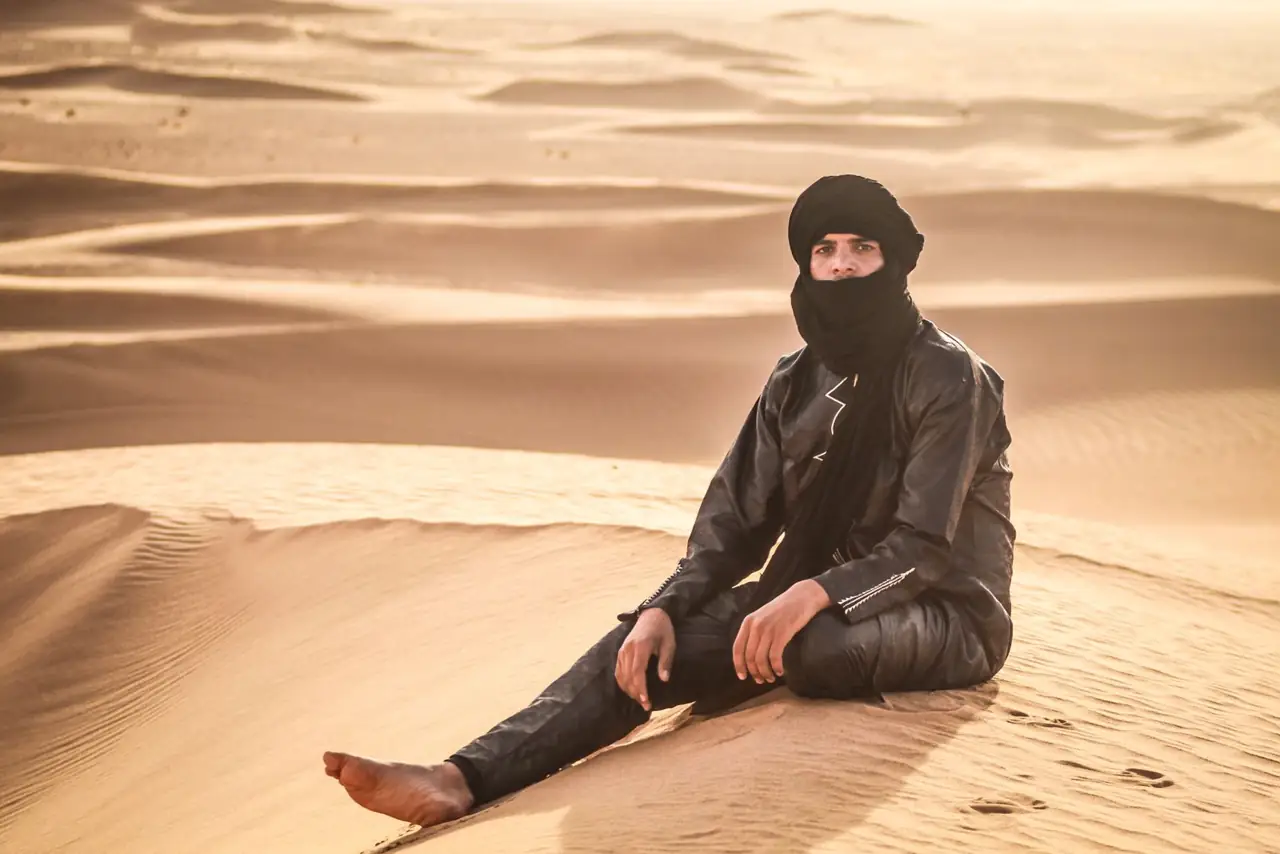
What should go in your overnight bag?
For one night, a small, securely closing backpack is usually more useful than a suitcase. Pack a change of underwear, sleeping clothes, toiletries, medication, warm layers, a headtorch, phone, charging cable and power bank. Add sunscreen, sunglasses, a brimmed hat and a refillable water bottle. Keep your passport, cash and valuables with you in a zipped inner pocket or pouch. A lightweight bag inside the backpack separates dusty clothes; another protects electronics from blowing sand. Leave delicate lenses and unnecessary gadgets behind if you will spend the evening worrying about them.
Ask the operator where your main luggage will stay and whether storage is supervised or locked. Some arrangements leave bags at a village guesthouse; others transport them to camp separately. Do not assume your suitcase travels with your camel. Keep medication, water and your evening layer in the bag that stays with you, not in luggage arriving later. For a longer stay, add clothing sparingly: desert dust is unavoidable, and changing an entire outfit after every walk quickly becomes pointless. A soft-sided bag also handles uneven paths more comfortably than wheeled luggage.
Which clothes work for hot sand and cold nights?
Think in layers rather than “desert clothes.” Loose trousers and a breathable long-sleeved shirt protect against sun and feel more comfortable than exposed skin during a windy ride. In colder months, bring a proper warm jacket, a fleece or wool layer, warm socks and a hat that covers your ears. Thermal sleepwear can be useful: bedding may be generous, but a tent is not necessarily heated. Summer requires a different calculation. Daytime heat can make dune walks exhausting, and nights are not guaranteed to turn cool. Plan activity around the cooler parts of the day.
Wear trainers or light walking shoes that stay firmly on your feet. Soft sand makes even a short climb strenuous, and shoes fill with it; heavy hiking boots are not essential for a typical camp visit. Sandals are handy around camp, but not a sensible default for hot sand or walking after dark. A scarf can cover your neck and help during blowing dust, though you do not need to buy a special desert outfit. Comfortable, reasonably covered clothing also works for village stops. Pack lip balm and moisturizer if dry air tends to bother your skin.
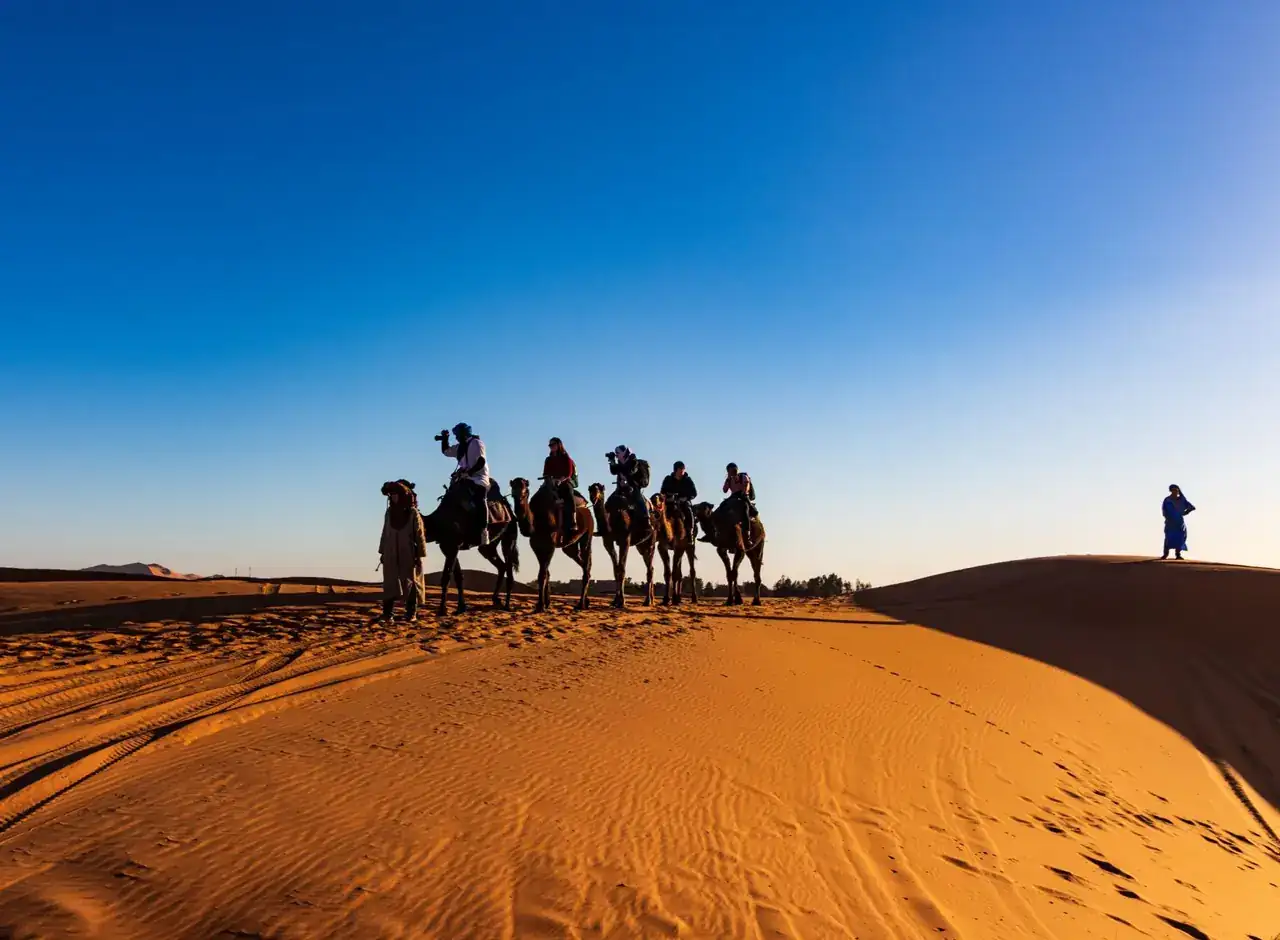
What does the camp price actually include?
Get a written breakdown rather than relying on labels such as “standard” or “luxury.” Your checklist should cover the outward and return transfers, camel ride if wanted, dinner, breakfast, drinking water, bedding, towels, bathroom arrangements and any visitor taxes or local charges. Ask whether the bathroom is inside your tent, shared or in a separate block. Hot water, heating, air-conditioning and power outlets are separate questions. Photographs of a made-up bed tell you little about these practicalities, and a higher category does not make every facility continuous or every extra free.
Food and water deserve particular attention because there may be no convenient shop once you reach camp. Establish how much drinking water is supplied during the transfer and overnight, and carry enough for the journey to the meeting point. Send dietary requirements ahead; a vegetarian preference and a serious allergy require different preparation. Ask about meal timing if you are traveling with children or need food with medication. Sandboarding, longer rides, quad biking and drinks may be extras rather than part of the overnight rate. Carry dirhams for agreed extras and discretionary tips, without relying on card payment at camp.
How comfortable and accessible will the overnight stay be?
The bathroom route matters more than decorative cushions. Someone with limited mobility should request specific details about walking surfaces, steps, doorway widths and the distance between the vehicle drop-off, tent and dining area. Soft sand is difficult for wheelchairs and tiring for people with balance or joint problems. A vehicle transfer reduces the effort but does not, by itself, make a camp accessible. Camel mounting and the rocking ride can also be uncomfortable; declining the ride does not mean giving up the overnight stay.
Bring a headtorch so you can keep both hands free on uneven ground, plus earplugs if you sleep lightly. Some camps have evening music, and nearby guests or vehicle movements may disturb the silence you expected. Electricity and mobile reception depend on the property and location, so download booking details and maps before leaving the village. Travelers who need powered medical equipment should establish the power supply and backup arrangements directly with the camp. Keep essential medicines in their recommended storage conditions, protected from direct sun; a tent or parked vehicle can become very hot.
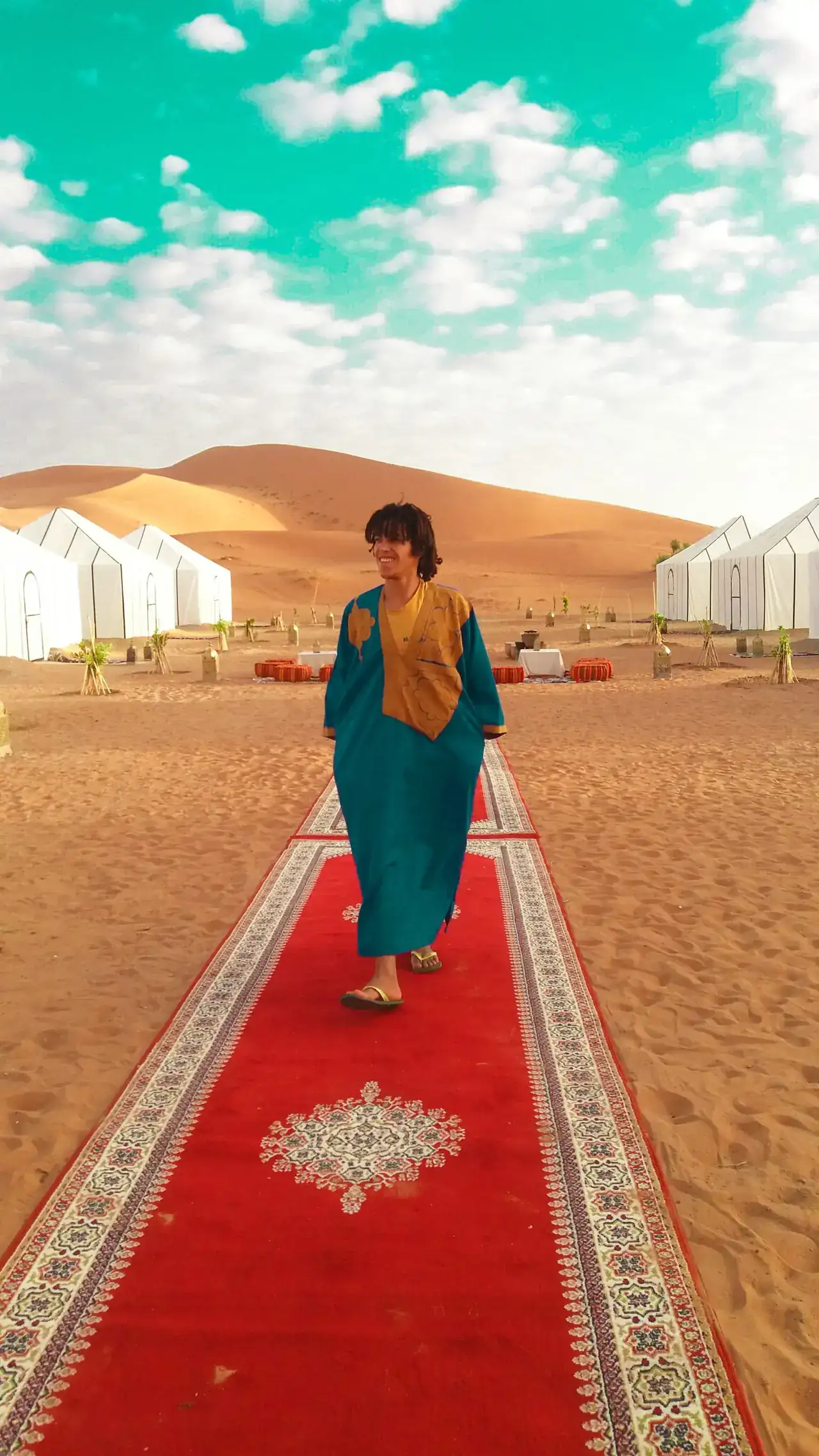
What should you arrange before leaving the village?
Settle the departure point, expected return time and who is responsible for collecting you. This matters if you have onward transport: an advertised sunrise ride is not a precise arrival commitment. During Ramadan, daytime food options and staff routines can differ, so arrange lunch before heading out rather than assuming every village café will serve it. Friday prayer can also affect individual businesses around midday. Buy personal essentials while you have access to shops, and resolve any mismatch between the written booking and a proposed camp substitution before your luggage is loaded.
For a short sunset outing, stay within an agreed area and keep the return route clear. Dune ridges can hide landmarks surprisingly quickly; a guide genuinely helps on longer walks, particularly in wind or fading light. Popular sunset slopes can draw several groups, so ask about the planned walking route if quiet matters to you. Do not wander off alone to escape the crowd without telling anyone. Ask before photographing camel handlers or camp staff, keep a little water for the return journey, and put your shoes somewhere sheltered overnight so they are easy to find before an early start.
A place to start
Experiences in Merzouga
Browse current activities and check the route, meeting point, inclusions and cancellation terms before booking. This is a search, not a personally reviewed tour.
Local operators · Merzouga
Vet before you bookBook with people who live here
These links open live listings from local operators. We have not inspected each one, so compare group size, vehicle, camp type and cancellation terms. Good operators answer questions about the route before you pay.
Desert camp operators
Overnight camel treks and camps run by Berber families near the dunes.
Compare listingsPrivate driver-guides
Multi-day 4x4 routes with a local driver who knows the passes and pistes.
Compare listingsAdventure & off-road
Quad, buggy and guided enduro outings with safety kit included.
Compare listings- Licensed guide or registered agency named in the listing
- Group size and vehicle type stated clearly
- Camp has private or shared toilets: ask which
- Free cancellation at least 24 hours ahead
Driving yourself? Use the desert drive calculator and the Sahara packing planner.
Plan the next step
Activities in Merzouga
Browse current GetYourGuide and Viator listings for Merzouga. Compare the route, meeting point, inclusions and cancellation terms before booking.
Disclosure: these are GetYourGuide and Viator partner links. If you book through them, Real Morocco Guide may earn a commission at no extra cost to you. Listings, prices and reviews come from the providers, not from us. How we work
Also on GetYourGuide
Plan your time
Before you go
Choose what matters most
Use the chapters above to decide what you want to see, then check current access and travel arrangements.
When comparing
Allow for the full journey
Compare meeting points, time on the road and time at the destination, not only the advertised duration.
Before paying
Confirm the details
Read the current provider listing for inclusions, accessibility needs and cancellation terms.
More ways to explore
Choose between exploring independently and comparing guided experiences. Search results are not selected or reviewed tours; confirm all details with the provider.
Explore independently
Use the planning notes above, then verify transport, access and opening details directly before setting out.
Compare guided options
Check what each listing actually includes, the meeting point and how much free time is available.
Explore options ↗Good to know
- Check current transport and access details before leaving.
- Ask the operator about any mobility or dietary needs before booking.
- Keep time in your schedule for changes to the route or weather.
Compare available experiences
Check current inclusions, reviews and cancellation terms with the provider.
Frequently asked questions
Should I book an experience in advance?
It depends on your travel dates and the activity. Check current availability and cancellation rules directly with the provider.
What should I check before reserving?
Confirm the meeting point, what is included, total time commitment, accessibility arrangements and the latest cancellation policy.
Further reading
Background reading, not verification of individual tour listings.
Trusted resources
Official sources worth checking before you travel. We are not affiliated with them.
Keep exploring
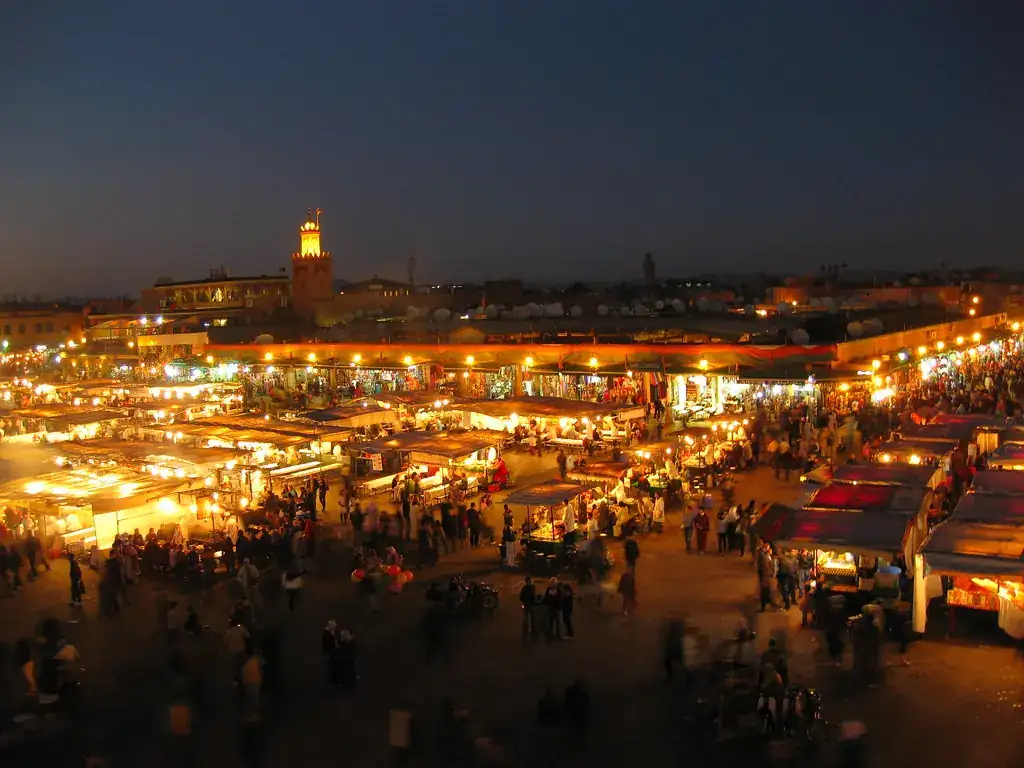
Marrakech · 9 min read
Marrakech Food Tours: What to Taste in the Medina
What to eat in the Marrakech medina, how a tasting walk differs from a cooking class, and how to tell whether a food tour actually leaves Jemaa el-Fna.
Read guide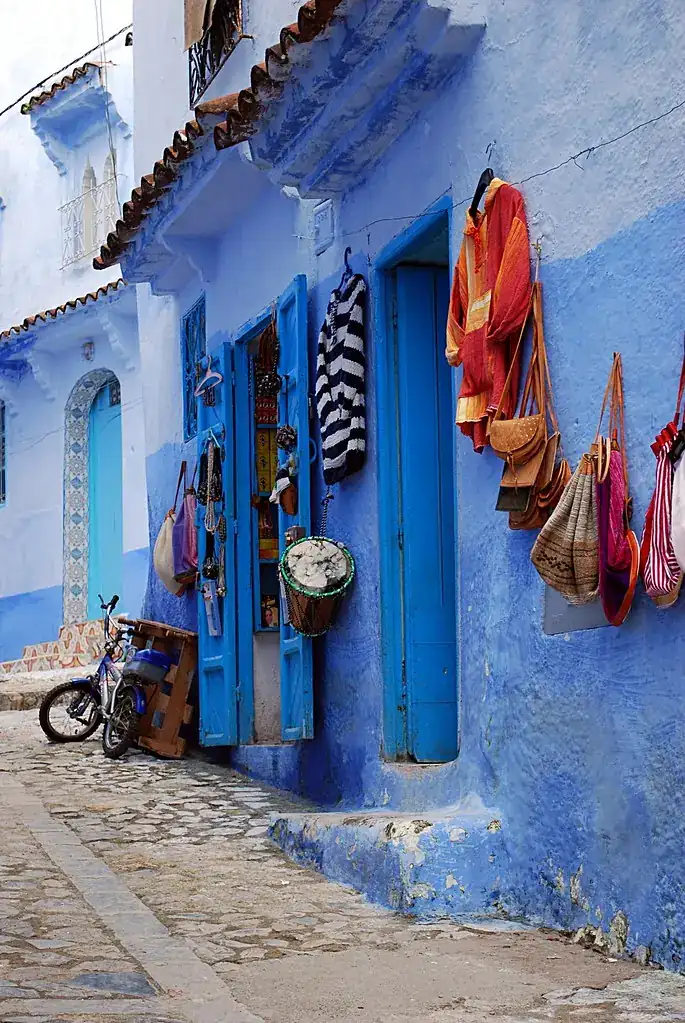
Chefchaouen · 9 min read
Chefchaouen Day Trip: How to See the Blue Medina
Whether Chefchaouen works as a day trip from Fes or Tangier, how much time you really get in the blue medina, and when staying the night is the better call.
Read guide