
Field guide / Morocco · Oujda · 6 min read
Oujda to Fes by Train: How to Plan the Journey
The awkward part of travelling from Oujda to Fes by train is not finding the railway station. It is choosing a departure that leaves you enough time and energy to reach your accommodation at the other end. A ticket to Fes gets you to the modern city, not to the door of a medina riad. Before booking, pin down the current service, understand what your seat includes and work out how you will manage your bags beyond the platform.
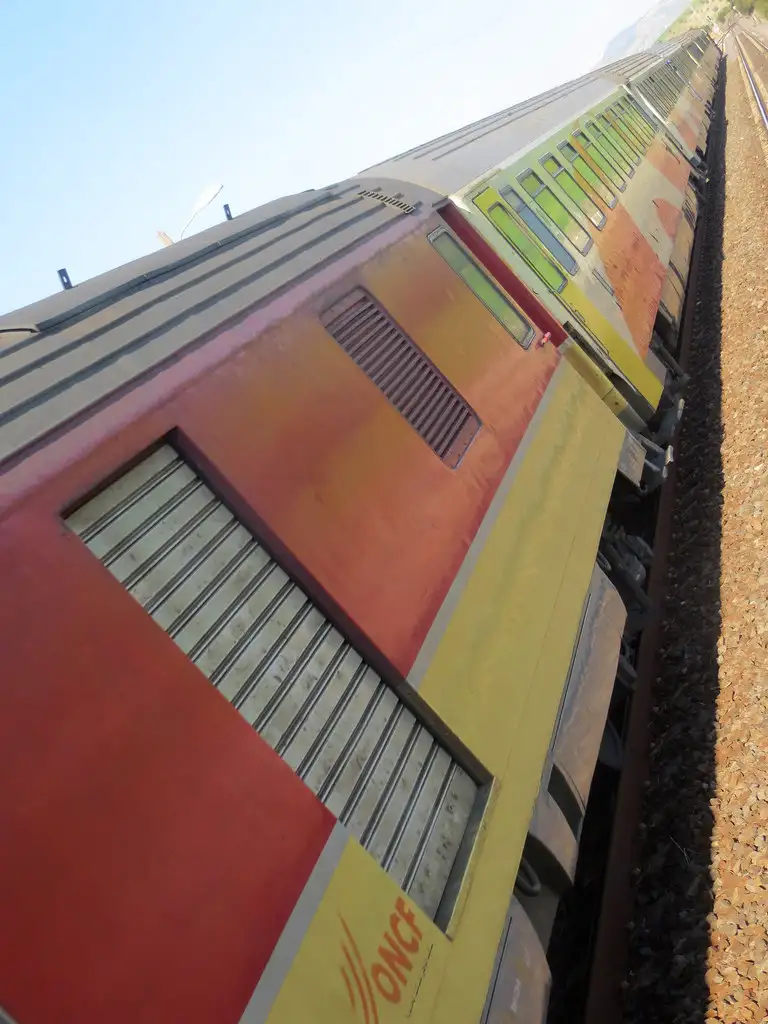
Which Oujda–Fes departure fits your arrival plans?
Start with ONCF’s current timetable for your actual travel date, entering Oujda as the departure station and Fès as the destination. Read the full result rather than relying on a journey time copied from a travel blog: departure and arrival times, any change of train and the total duration all matter. This is a substantial intercity journey across eastern Morocco, heading west through the corridor towards Taourirt and Taza before reaching Fes. Treat it as the main event of your travel day, not something to squeeze between two sightseeing appointments.
Choose backwards from your arrival. A later train may preserve a morning in Oujda, but it can also mean finding a riad entrance after dark, with luggage and a tired phone. If the timetable offers several workable options, daylight arrival is especially helpful for a first stay in Fes el-Bali. Around public holidays and the travel periods surrounding Eid, give yourself more booking lead time. During Ramadan, use the date-specific timetable rather than assuming the usual pattern applies, and ask your accommodation about reception arrangements if you expect to arrive around the sunset meal.

What do the seating options actually include?
Compare the classes offered on the specific departure before paying. Where first and second class are both available, first class generally buys more space and a quieter setting, not a shorter journey. Second class can be perfectly practical if keeping costs down matters more than extra room. Carriage layouts and equipment can differ, so avoid choosing a fare on the assumption that you will get a particular compartment arrangement, power socket or level of air-conditioning. For a long ride, seat certainty and personal space are more useful considerations than the class name alone.
Read the booking details for seat allocation, then look for any coach and seat numbers on the issued ticket. If you are travelling together, see whether the booking places you together; separate purchases make that harder to manage. Compare exchange and refund conditions as well as the headline fare, particularly if this journey follows a flight into Oujda. A more flexible ticket may be more useful than a higher class. Keep an offline copy of the ticket and any required identification accessible, rather than relying on mobile reception at the station.
How much luggage can you comfortably manage?
Read ONCF’s current luggage conditions before booking if you have oversized cases, a bicycle or anything beyond ordinary travel bags. Do not assume that every bulky item can simply travel beside your seat. For normal luggage, plan to carry and stow it yourself, keeping aisles and doors clear. A bag you can lift without help makes boarding considerably easier. Keep documents, medication, money and your phone in a smaller bag close to you, rather than in luggage stored away from your seat.
The harder luggage test often comes in Fes. A large wheeled suitcase is manageable on a station concourse but less pleasant over uneven paving, steps and sloping medina lanes. If your riad is deep inside Fes el-Bali, ask how far it is on foot from the nearest vehicle-accessible meeting point and whether that approach includes stairs. Travellers with reduced mobility should also establish boarding assistance and step-free access arrangements with the operator before purchasing. A first-class ticket does not, by itself, solve the physical demands of boarding or reaching an old-city guesthouse.

How early should you reach Oujda station?
As a planning allowance, aim to be at Oujda station roughly half an hour before departure, with more margin if you need to buy or resolve a ticket. That is a buffer, not an official boarding deadline. Oujda’s medina is compact enough for exploring on foot, but the railway station is a separate destination: do not time your departure from a map pin without accounting for the walk out of your accommodation and your bags. A petit taxi is the straightforward option when luggage or hot weather makes walking unattractive.
Buy drinking water and something easy to eat before boarding rather than building your plan around an onboard food service. In summer, the approach to the station can be hot even when the train itself feels cool; a light layer is useful alongside the water bottle. During Ramadan, daytime food options may be more limited, so arrange supplies ahead. Keep some dirhams in small denominations for local transport and small purchases. Once inside the station, use the departure display and staff directions to find the platform; the destination shown may be the train’s terminus beyond Fes.
Where does the train leave you in Fes?
Fes railway station is in the modern city, west of the historic medina. It is not beside the lanes around the Qarawiyyin or the tanneries, and a booking labelled simply “Fes medina” tells you little about the final transfer. Fes el-Jdid and Fes el-Bali are distinct parts of the old city, with different useful access points. Send your accommodation your train’s scheduled arrival time and request the name of the gate, square or street where a taxi should leave you. Save that location and the property’s phone number offline.
Petit taxis handle trips within the city, but they cannot take you through the narrow pedestrian lanes to every riad door. Use the meter where applicable, or establish the fare before setting off if a fixed price is proposed. For an arranged transfer, ask whether the price includes someone meeting you at the vehicle drop-off and walking you to the property. That detail matters more than a vague promise of a “medina transfer”. Share your luggage count too: several large suitcases may require a different vehicle.
How do you handle the last walk to a medina riad?
Ask for walking directions from a named meeting point, not just a map link. Fes el-Bali’s lanes can be confusing, and the shortest route on a phone may involve steps or an awkward approach with bags. A riad-arranged escort is useful for a late arrival, limited mobility or heavy luggage; you do not need to book a sightseeing guide merely to reach your room. If a porter is involved, settle the charge before handing over your cases and clarify who will pay.
Be cautious of unsolicited claims that your accommodation is closed or that the route is blocked. Call the property rather than following a stranger to an alternative address. For an arrival near Friday midday, or around the Ramadan sunset meal, arrange the meeting time directly with your host because staffing and local activity can pause or shift. Keep your phone charged and your small bag with you during the transfer. Before leaving the taxi, retrieve every item and make sure the person meeting you knows your accommodation’s name.
A place to start
Experiences in Oujda
Browse current activities and check the route, meeting point, inclusions and cancellation terms before booking. This is a search, not a personally reviewed tour.
Plan the next step
Activities in Oujda
Browse current GetYourGuide and Viator listings for Oujda. Compare the route, meeting point, inclusions and cancellation terms before booking.
Disclosure: these are GetYourGuide and Viator partner links. If you book through them, Real Morocco Guide may earn a commission at no extra cost to you. Listings, prices and reviews come from the providers, not from us. How we work
Also on GetYourGuide
Plan your time
Before you go
Choose what matters most
Use the chapters above to decide what you want to see, then check current access and travel arrangements.
When comparing
Allow for the full journey
Compare meeting points, time on the road and time at the destination, not only the advertised duration.
Before paying
Confirm the details
Read the current provider listing for inclusions, accessibility needs and cancellation terms.
More ways to explore
Choose between exploring independently and comparing guided experiences. Search results are not selected or reviewed tours; confirm all details with the provider.
Explore independently
Use the planning notes above, then verify transport, access and opening details directly before setting out.
Compare guided options
Check what each listing actually includes, the meeting point and how much free time is available.
Explore options ↗Good to know
- Check current transport and access details before leaving.
- Ask the operator about any mobility or dietary needs before booking.
- Keep time in your schedule for changes to the route or weather.
Compare available experiences
Check current inclusions, reviews and cancellation terms with the provider.
Frequently asked questions
Should I book an experience in advance?
It depends on your travel dates and the activity. Check current availability and cancellation rules directly with the provider.
What should I check before reserving?
Confirm the meeting point, what is included, total time commitment, accessibility arrangements and the latest cancellation policy.
Further reading
Background reading, not verification of individual tour listings.
Trusted resources
Official sources worth checking before you travel. We are not affiliated with them.
Keep exploring
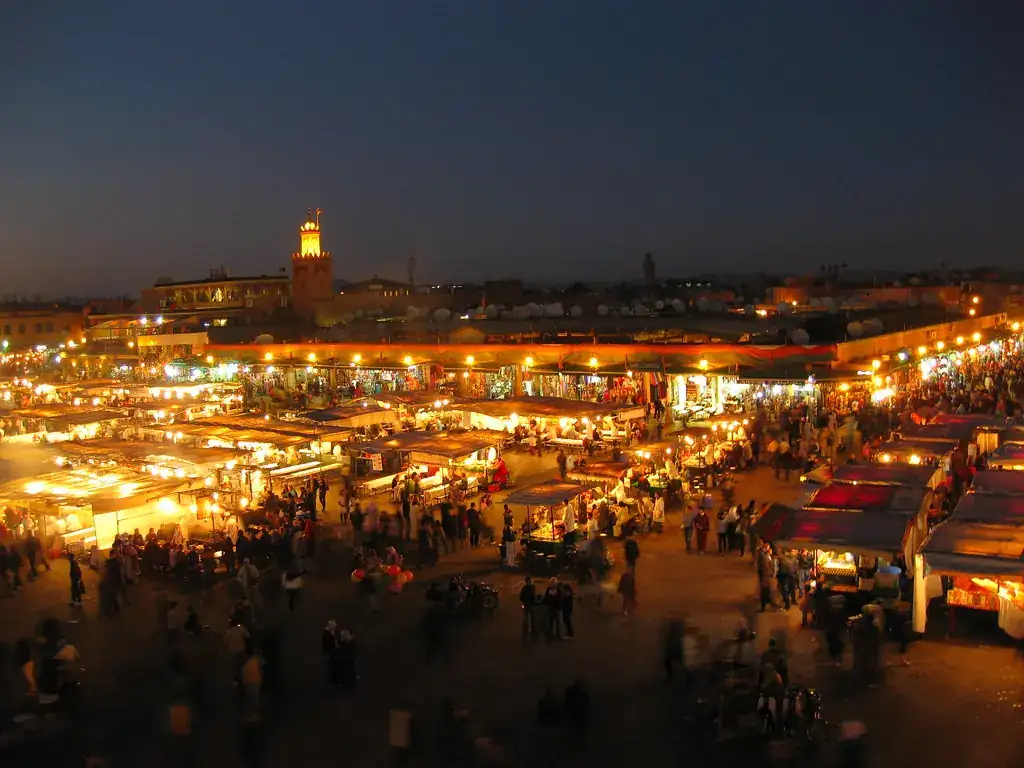
Marrakech · 9 min read
Marrakech Food Tours: What to Taste in the Medina
What to eat in the Marrakech medina, how a tasting walk differs from a cooking class, and how to tell whether a food tour actually leaves Jemaa el-Fna.
Read guide
Merzouga · 9 min read
Merzouga Desert Safari: Planning an Erg Chebbi Stay
How far Merzouga really is, how sunset trips, camp nights and multi-day tours differ, and what to pack for a night in the Erg Chebbi dunes.
Read guide