
Field guide / Morocco · Rabat · 6 min read
Planning a Visit to Chellah in Rabat
Before setting off for Chellah, establish how entry is working on your travel dates and choose a time when you will be comfortable walking outdoors. This is not a shaded museum visit you can slip into the hottest part of the day. The site sits outside Rabat’s medina, with exposed paths, changes in level and archaeological areas that reward a slower pace. A little planning makes the difference between enjoying the ruins and spending the visit looking for shade or wondering how to get back.
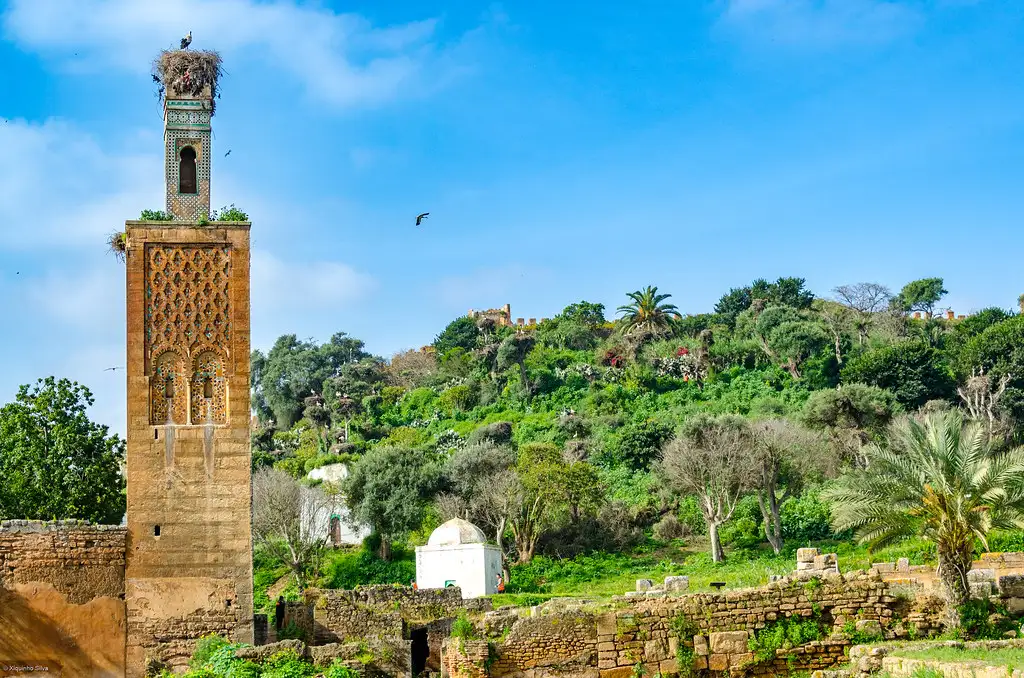
How do you find current opening hours and ticket arrangements?
Start with the current visitor information issued by Chellah’s management, rather than the opening hours attached to an old travel article or a map listing. Look for the opening window, last admission, ticket categories and any notice about restricted areas. Establish whether tickets are sold at the entrance, online, or through both channels, and whether a timed reservation applies. Restoration work or special programming can affect the visit, so a ticket listing alone may not tell you which parts of the site are accessible.
If the information is unclear, ask your accommodation to contact the site or help you interpret a recent announcement in French or Arabic. During Ramadan, pay particular attention to published visiting hours rather than assuming the usual timetable applies. Friday is not automatically a closure day, though prayer and lunch can change the rhythm of nearby services. Keep some dirhams for admission if needed and for transport; do not make your plan depend entirely on card payment. Anyone claiming outside that you need a separate permit or their assistance to enter should direct you to the official ticket point.
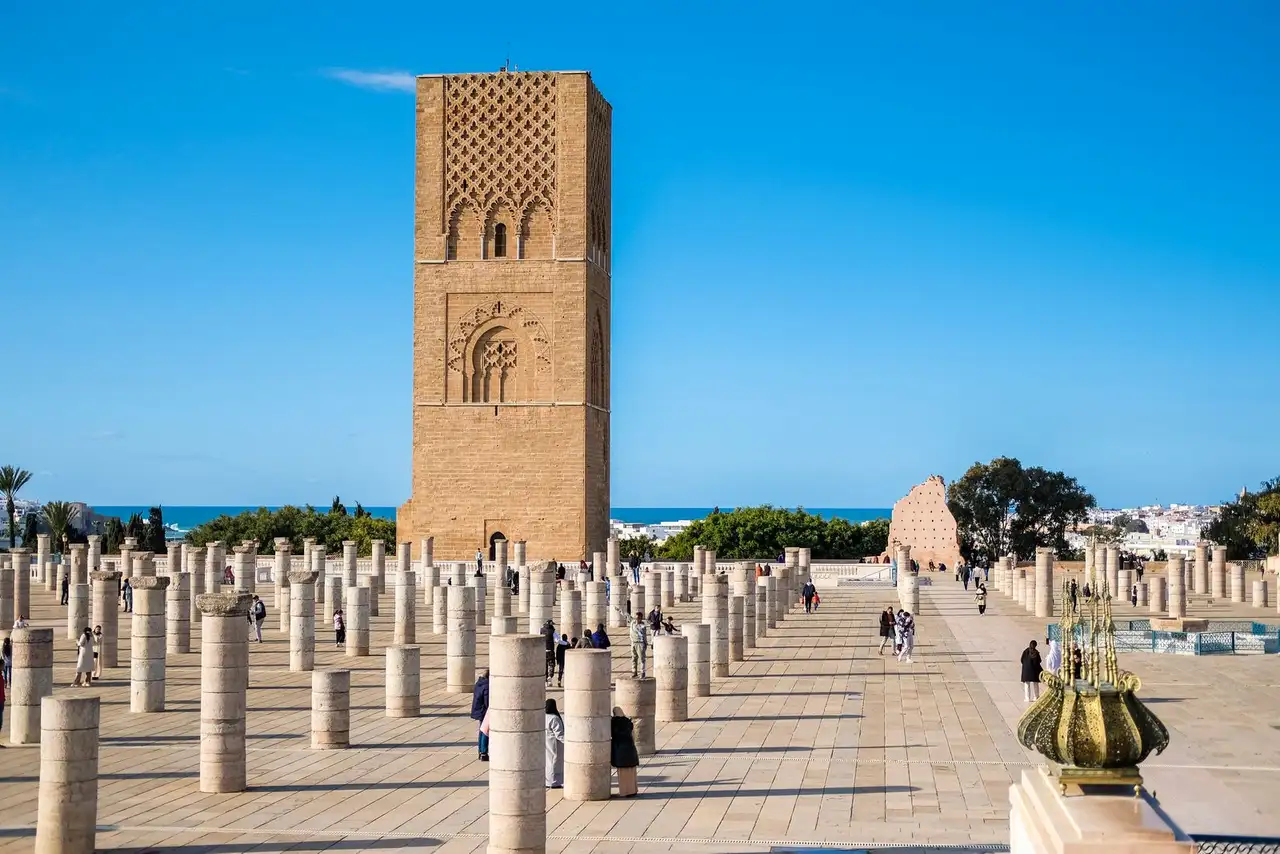
Where is Chellah, and what is the easiest way to reach it?
Chellah lies southeast of Rabat’s medina, outside the historic city walls and inland from the Atlantic waterfront. It is not beside the Kasbah of the Udayas, despite the two often appearing together on sightseeing itineraries. Rabat Ville station and the central avenue Mohammed V area are more useful reference points for planning the approach. Walking from central Rabat is possible for someone accustomed to urban walking, but treat it as a separate stretch of the outing, not a short stroll between adjacent monuments. Broad roads and exposed sections make the journey less appealing in strong sun.
A blue petit taxi is usually the simplest option from the centre. Give Chellah as the destination, ask for the meter, and settle any uncertainty before moving off. The tram does not deliver you to the entrance, so it is rarely the most direct choice for this particular visit. Taxis can take you to the public approach, not around the ruins; the visit itself is on foot. For the return, have your accommodation’s name or address saved. If you need a dependable pickup, arrange one rather than assuming a taxi will be waiting immediately outside.
How much time should you allow inside?
Allow roughly an hour and a half to two hours as a planning estimate, rather than a promised visit duration. That leaves room to pause, read the available interpretation and take photographs without hurrying between remains. Someone with a strong interest in archaeology may want longer; someone sensitive to heat may prefer a shorter circuit. Add the journey separately. Booking lunch or a train too closely after admission turns an otherwise relaxed site into a clock-watching exercise.
Chellah contains remains associated with ancient Sala and a later Islamic funerary complex. Understanding that these belong to different periods makes the layout much easier to read. A guide genuinely helps if you want to distinguish the layers, understand fragmentary structures or place the site within Rabat’s wider history. Independent visitors who mainly want to explore the setting may be happy with the interpretation provided. If hiring a guide, establish the language, duration, price and what the service includes before starting; a guided visit should not be presented as a compulsory condition of entry.
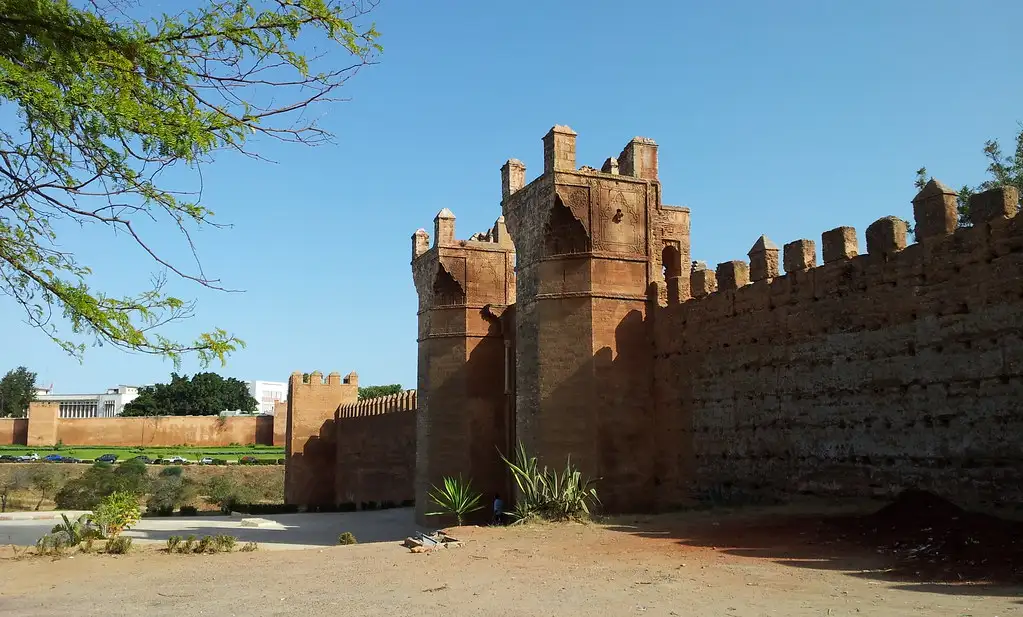
What is the walking like in warm weather?
Rabat’s Atlantic position can make the air feel gentler than in Morocco’s inland cities, but direct sunshine still matters. Plan for outdoor exposure, not continuous shade. An earlier visit, or a later one with enough time before last admission, is generally more comfortable than walking through the middle of a hot day. Carry drinking water from the outset rather than relying on refreshment availability inside. A brimmed hat, sunscreen and lightweight, breathable clothes are more useful here than a carefully styled sightseeing outfit.
Wear shoes with grip and enough support for uneven ground. Paths, steps and changes in surface call for attention, especially when you are looking up at architecture or birds rather than at your feet. After rain, take extra care on damp stone and earth. Build in pauses before anyone becomes overheated, particularly with children or older companions. Atlantic breezes can also make a late visit feel cool once you stop moving, so a light layer can earn its place in your bag outside the hottest weather.
Is Chellah suitable for visitors with limited mobility?
Do not interpret access through the main entrance as a guarantee of an accessible circuit. Archaeological terrain can involve steps, slopes and irregular surfaces, and a route comfortable for an ambulant visitor may be difficult with a wheelchair or walking aid. Ask the site specifically about the current step-free route, the surfaces it covers, accessible toilets and whether there is somewhere to rest. Those details are more useful than a general assurance that the site is accessible.
A taxi reduces the approach effort but cannot remove the walking inside. For a visitor with limited stamina, plan a selective visit rather than trying to cover every visible corner. Families should also be realistic about pushchairs on rough sections; carrying a child may be easier in places, but adds effort in the heat. Keep children away from drops and fragile remains. If anyone in your group needs frequent seating or immediate access to indoor cooling, avoid making Chellah the longest stop of the day.
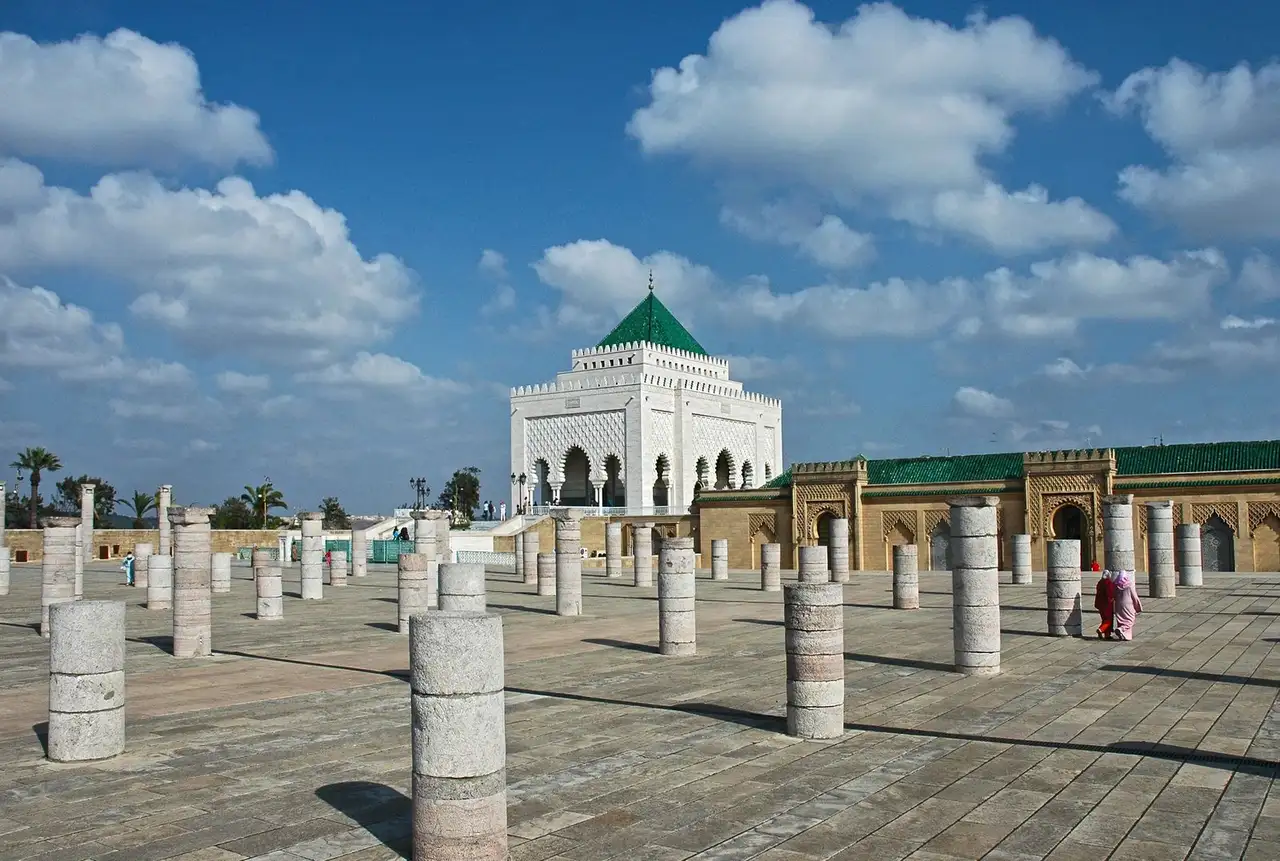
What should you know about photographs and the rest of the day?
Chellah is an archaeological and funerary setting, not a climbing ground. Stay on permitted routes, respect barriers and avoid standing on remains for photographs. Comfortable, reasonably modest clothing suits both the sun and the character of the site; it need not be elaborate. Ask before photographing staff or other visitors closely. Storks are associated with Chellah and can be a memorable part of the setting, but keep your distance from nests and do not feed wildlife. If a group gathers at a narrow viewpoint, move on and return rather than squeezing past people on uneven ground.
For a manageable day, combine Chellah with a meal or indoor break in central Rabat, then choose another area rather than trying to walk every major sight in succession. Hassan Tower and the Mohammed V Mausoleum lie farther north, while the medina and Kasbah of the Udayas take you toward the Bou Regreg mouth and ocean. These are separate stops with travel between them. During Ramadan, daytime food options may be reduced and the period before sunset can complicate transport, so carry water for the outing and leave a generous margin for the journey back.
A place to start
Experiences in Rabat
Browse current activities and check the route, meeting point, inclusions and cancellation terms before booking. This is a search, not a personally reviewed tour.
Plan the next step
Activities in Rabat
Browse current GetYourGuide and Viator listings for Rabat. Compare the route, meeting point, inclusions and cancellation terms before booking.
Disclosure: these are GetYourGuide and Viator partner links. If you book through them, Real Morocco Guide may earn a commission at no extra cost to you. Listings, prices and reviews come from the providers, not from us. How we work
Also on GetYourGuide
Plan your time
Before you go
Choose what matters most
Use the chapters above to decide what you want to see, then check current access and travel arrangements.
When comparing
Allow for the full journey
Compare meeting points, time on the road and time at the destination, not only the advertised duration.
Before paying
Confirm the details
Read the current provider listing for inclusions, accessibility needs and cancellation terms.
More ways to explore
Choose between exploring independently and comparing guided experiences. Search results are not selected or reviewed tours; confirm all details with the provider.
Explore independently
Use the planning notes above, then verify transport, access and opening details directly before setting out.
Compare guided options
Check what each listing actually includes, the meeting point and how much free time is available.
Explore options ↗Good to know
- Check current transport and access details before leaving.
- Ask the operator about any mobility or dietary needs before booking.
- Keep time in your schedule for changes to the route or weather.
Compare available experiences
Check current inclusions, reviews and cancellation terms with the provider.
Frequently asked questions
Should I book an experience in advance?
It depends on your travel dates and the activity. Check current availability and cancellation rules directly with the provider.
What should I check before reserving?
Confirm the meeting point, what is included, total time commitment, accessibility arrangements and the latest cancellation policy.
Further reading
Background reading, not verification of individual tour listings.
Trusted resources
Official sources worth checking before you travel. We are not affiliated with them.
Keep exploring
Marrakech · 9 min read
Marrakech Food Tours: What to Taste in the Medina
What to eat in the Marrakech medina, how a tasting walk differs from a cooking class, and how to tell whether a food tour actually leaves Jemaa el-Fna.
Read guide
Merzouga · 9 min read
Merzouga Desert Safari: Planning an Erg Chebbi Stay
How far Merzouga really is, how sunset trips, camp nights and multi-day tours differ, and what to pack for a night in the Erg Chebbi dunes.
Read guide