
Field guide / Morocco · Rabat · 6 min read
Rabat Kasbah and Coast Day Plan
The awkward part of planning a day around Rabat’s Kasbah is deciding how much coastline to add. The map makes everything look close, but steps, exposed paths and Atlantic wind can turn a gentle wander into a tiring outing. Keep the Kasbah of the Oudayas as your anchor, then choose between the riverfront and the ocean according to the weather and your energy. Allow roughly half a day for an unhurried visit with a meal, or most of a day if you want a longer coastal walk. There is no need to march through every stop.

Where should you start the walk?
Approach from the medina side and aim for Bab Oudaia, the monumental gateway on the landward side of the Kasbah. The medina lies south of the fortress; the Bou Regreg river mouth and Atlantic shore frame its other sides. This gives you a useful mental map before entering the narrow lanes. From central Rabat, walking through or alongside the medina makes a natural approach, though shopping detours can easily swallow the morning. Save serious browsing for later if the coast is your priority.
A petit taxi is useful if you are staying farther away or want to spare your legs. Ask for the Kasbah des Oudayas and expect to get out on an accessible road outside the walls, not beside a particular café inside. Much of the pleasure here is on foot, and the lanes are not a door-to-door taxi environment. Start in the morning for gentler temperatures and a quieter wander. Weekends and pleasant afternoons tend to bring more people to the viewpoints and beach approaches.
How much time does the Kasbah need?
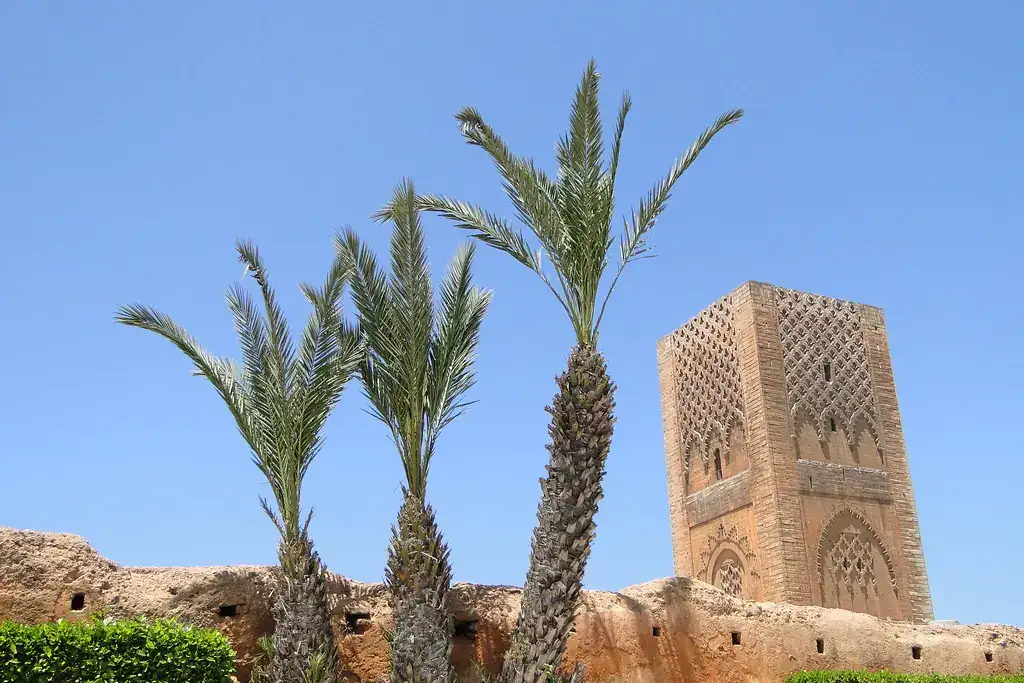
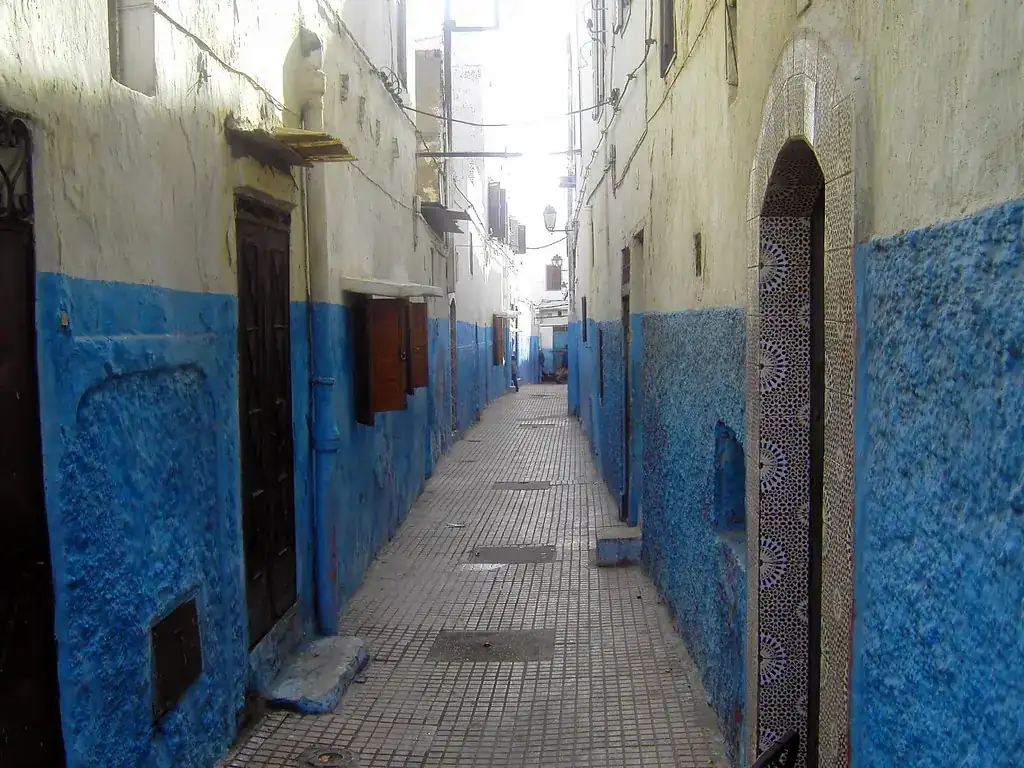
Give the Kasbah around an hour to an hour and a half before adding a long café stop. Begin near the gateway, follow the main lane inward and take short side turns rather than trying to cover every passage. White walls, blue-painted lower sections and heavy doorways give the streets their character, but this is also a residential neighbourhood. A passage that looks inviting may simply lead towards someone’s home. Keep voices low, leave doorways clear and ask before photographing residents or making a person the subject of your picture.
Work towards the open viewpoint over the river mouth, where the geography becomes clearer: Salé is across the Bou Regreg, the river runs inland, and the Atlantic opens beyond the entrance. A guide is not essential for this compact walk. One can genuinely help if you want architectural and historical context rather than just a pleasant route, especially if you also plan to explore the medina. For a guided visit, settle the scope and price beforehand. You need not accept an unsolicited escort or follow someone claiming that your intended lane is closed.
Fit the gardens and a tea stop around access
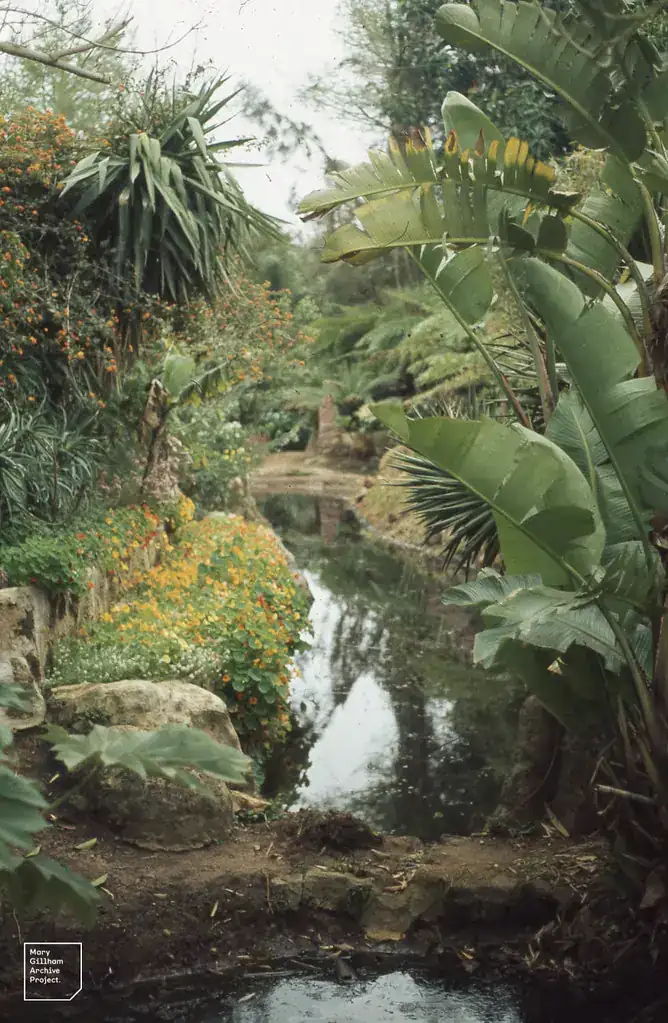
The Andalusian Gardens sit within the Kasbah complex and make a useful sheltered pause after the brighter, more exposed lanes. Treat them as a change of pace, not another sight to rush through. Their paths can give you a break from the wind, although shade depends on where you sit and the time of day. Access arrangements and opening hours can change, so check current hours if the gardens or the nearby Oudayas museum are central to your plans. Otherwise, keep enough flexibility to move on without disrupting the day.
A tea stop around the Kasbah works well before descending towards the water. Choose a seat for its shelter as much as its view; a breezy terrace can feel surprisingly cool outside summer. Ask to see prices before ordering where no menu is displayed, and carry small-denomination cash rather than assuming a small café accepts cards. Clothing that covers shoulders and reaches around the knee is a considerate choice for the residential lanes. Comfortable shoes matter more than dressing for photographs: paving can be uneven, and smooth surfaces become slippery when wet.
Riverfront or Atlantic beach: which should come next?
The riverfront is the gentler-feeling option, with views across to Salé and activity along the Bou Regreg. The ocean side is more exposed, with sand, surf and a stronger sense of open coastline. They are close enough to combine, but moving between the high Kasbah lanes and the shore involves a descent and, depending on your return route, a climb back up. Use a mapped public exit and established paths rather than assuming every gap in the walls leads down. Allow another hour or two for either waterfront, including pauses.
Rabat Beach lies below the Kasbah on the Atlantic side of the river mouth. It is an easy place to stop and watch the water, but a beach visit does not have to mean swimming. Surf and currents can make conditions unsuitable even when the sand is busy. Follow local safety instructions and keep clear of slippery rocks and wave-washed edges. If the wind is lifting sand or the sea looks rough, retreat to the river-facing side or a sheltered café. The coastal extension is optional, not a test of commitment.
Where do lunch, Friday and Ramadan fit?
For lunch, heading back towards the medina usually gives you more choice than insisting on a sea-facing table. Rue des Consuls is a useful landmark on the medina side near the Kasbah, particularly if you want to combine the return with craft shopping. Do not assume every attractive waterfront spot serves a full meal; some are better suited to tea, coffee or a snack. Pick somewhere with a clear menu and enough customers to suggest steady turnover. Keep the meal relaxed, then decide whether your legs still want more coast.
Friday can shift the rhythm around midday prayers: some businesses pause, streets near mosques become busier, and lunch service may be less predictable. Avoid standing in mosque entrances, and remember that a mosque in the Kasbah is not automatically open to non-Muslim visitors. During Ramadan, daytime food choices can narrow and opening patterns change, while the period before sunset can bring hurried traffic and closures as people prepare to break their fast. Arrange your own water and a simple snack before starting, and eat discreetly away from prayer spaces.
How can you shorten the day or avoid difficult ground?
For a shorter outing, keep the gateway, a manageable stretch of Kasbah lanes and one viewpoint, then return for lunch without descending to the beach. For a longer day, extend west along the Atlantic-facing waterfront only while the weather remains comfortable. Carry water, sun protection and a light layer; clear skies do not cancel the wind. In wet weather, cut back on steep lanes and exposed shoreline walking. Families should leave extra time for steps and keep children close near traffic, drops and the water’s edge.
Wheelchair users and travellers with limited mobility should not treat this as a reliably step-free circuit. Cobbles, gradients, narrow passages and stepped connections can interrupt an otherwise short route. A road-accessible drop-off followed by a limited visit may be more workable than linking the upper Kasbah to the shore. For the journey back, return to a road where taxis can stop safely rather than searching inside the lanes. Keep your accommodation’s name and address saved on your phone, and retain enough cash for the ride.
A place to start
Experiences in Rabat
Browse current activities and check the route, meeting point, inclusions and cancellation terms before booking. This is a search, not a personally reviewed tour.
Plan the next step
Activities in Rabat
Browse current GetYourGuide and Viator listings for Rabat. Compare the route, meeting point, inclusions and cancellation terms before booking.
Disclosure: these are GetYourGuide and Viator partner links. If you book through them, Real Morocco Guide may earn a commission at no extra cost to you. Listings, prices and reviews come from the providers, not from us. How we work
Also on GetYourGuide
Plan your time
Before you go
Choose what matters most
Use the chapters above to decide what you want to see, then check current access and travel arrangements.
When comparing
Allow for the full journey
Compare meeting points, time on the road and time at the destination, not only the advertised duration.
Before paying
Confirm the details
Read the current provider listing for inclusions, accessibility needs and cancellation terms.
More ways to explore
Choose between exploring independently and comparing guided experiences. Search results are not selected or reviewed tours; confirm all details with the provider.
Explore independently
Use the planning notes above, then verify transport, access and opening details directly before setting out.
Compare guided options
Check what each listing actually includes, the meeting point and how much free time is available.
Explore options ↗Good to know
- Check current transport and access details before leaving.
- Ask the operator about any mobility or dietary needs before booking.
- Keep time in your schedule for changes to the route or weather.
Compare available experiences
Check current inclusions, reviews and cancellation terms with the provider.
Frequently asked questions
Should I book an experience in advance?
It depends on your travel dates and the activity. Check current availability and cancellation rules directly with the provider.
What should I check before reserving?
Confirm the meeting point, what is included, total time commitment, accessibility arrangements and the latest cancellation policy.
Further reading
Background reading, not verification of individual tour listings.
Trusted resources
Official sources worth checking before you travel. We are not affiliated with them.
Keep exploring
Marrakech · 9 min read
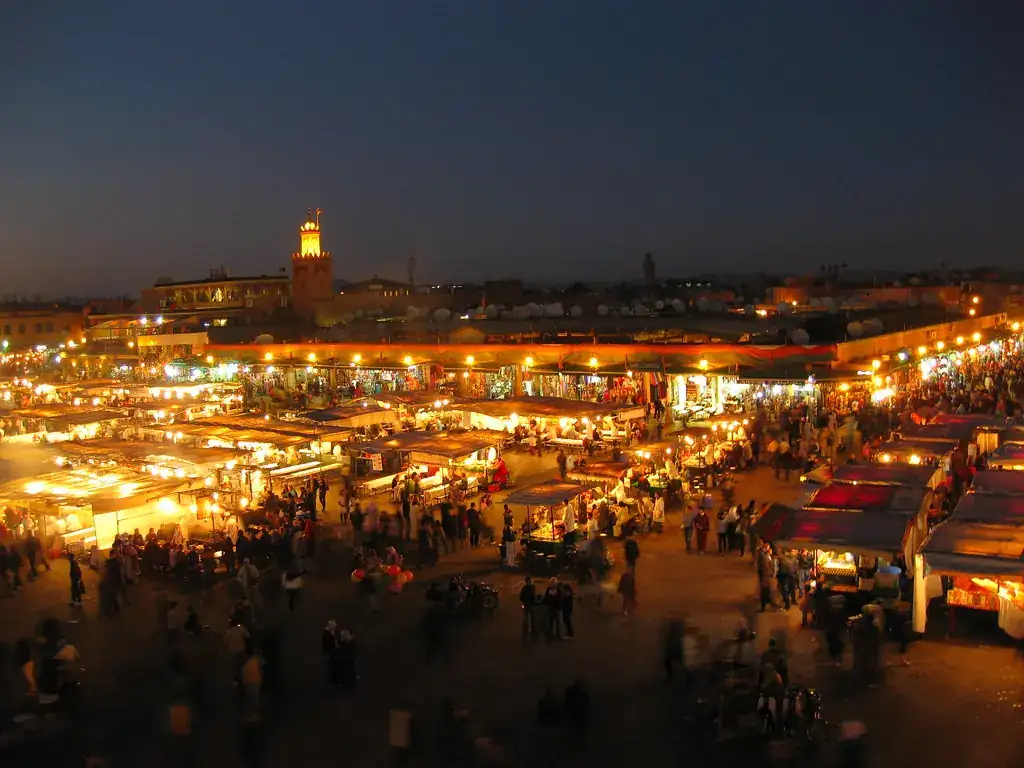
Marrakech Food Tours: What to Taste in the Medina
What to eat in the Marrakech medina, how a tasting walk differs from a cooking class, and how to tell whether a food tour actually leaves Jemaa el-Fna.
Read guide
Merzouga · 9 min read
Merzouga Desert Safari: Planning an Erg Chebbi Stay
How far Merzouga really is, how sunset trips, camp nights and multi-day tours differ, and what to pack for a night in the Erg Chebbi dunes.
Read guide