
Field guide / Morocco · Sidi Ifni · 6 min read
A Walking Route Through Sidi Ifni
The main decision on a walk through Sidi Ifni is when to go down to the beach. The older town stands above the Atlantic, so a short-looking stroll on a map can involve steps, a sloping approach and a climb back for lunch. Start around Place Hassan II, explore the civic buildings and adjoining streets, then follow the sea-facing edge before deciding whether to descend. Allow roughly three to four hours with a meal and plenty of pauses; keep longer beach wandering separate. This is a walk for looking closely, not covering ground quickly.
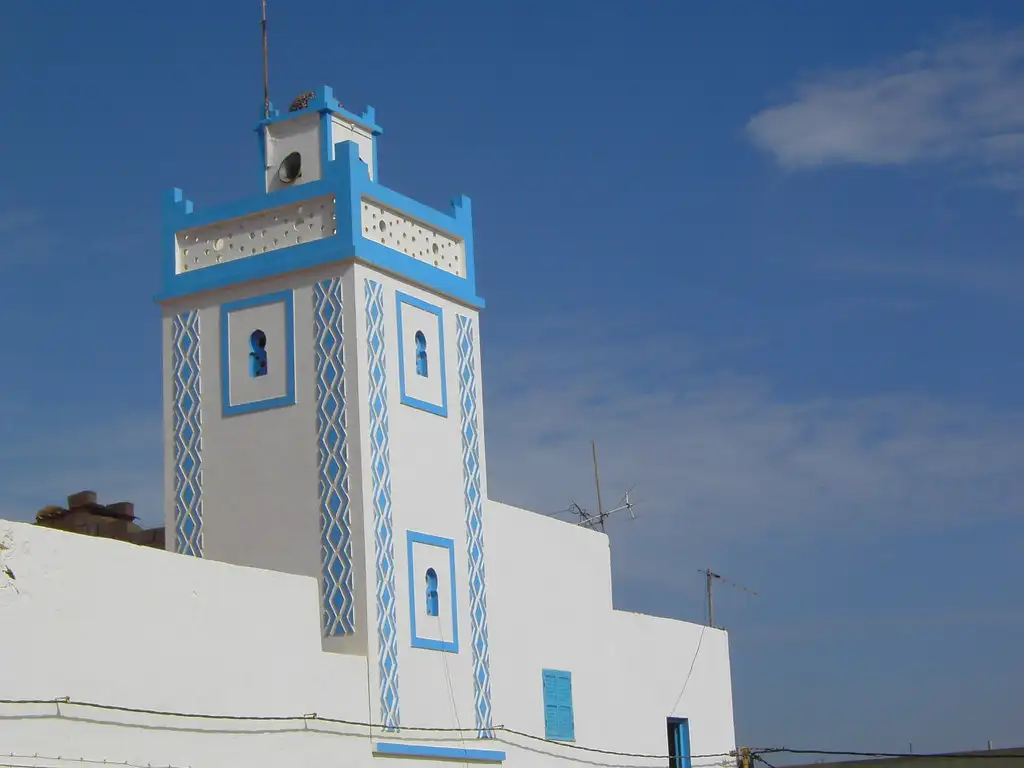
Start at Place Hassan II, before heading towards the sea
Place Hassan II makes a useful starting point because the architecture is gathered around an open, readable space. Unlike a Moroccan medina, this part of Sidi Ifni has a planned street layout: there is no reason to hire someone simply to find the way. The square and surrounding civic quarter retain buildings from the period of Spanish administration. Look for rounded corners, restrained geometric decoration and pale façades picked out in blue. Their appeal lies as much in the arrangement of streets and open space as in any single building.
Walk around the square first, then take a short loop through the adjoining streets rather than making immediately for the water. The former church, now associated with public administration, helps explain the square’s earlier civic role. Treat these buildings primarily as exterior sights: an attractive doorway does not imply visitor access. Give working entrances room, and avoid photographing officials, security staff or sensitive government premises. If architectural history is your main interest, a knowledgeable local guide can add context, but establish that they actually cover the Spanish-era town rather than offering only a general excursion.
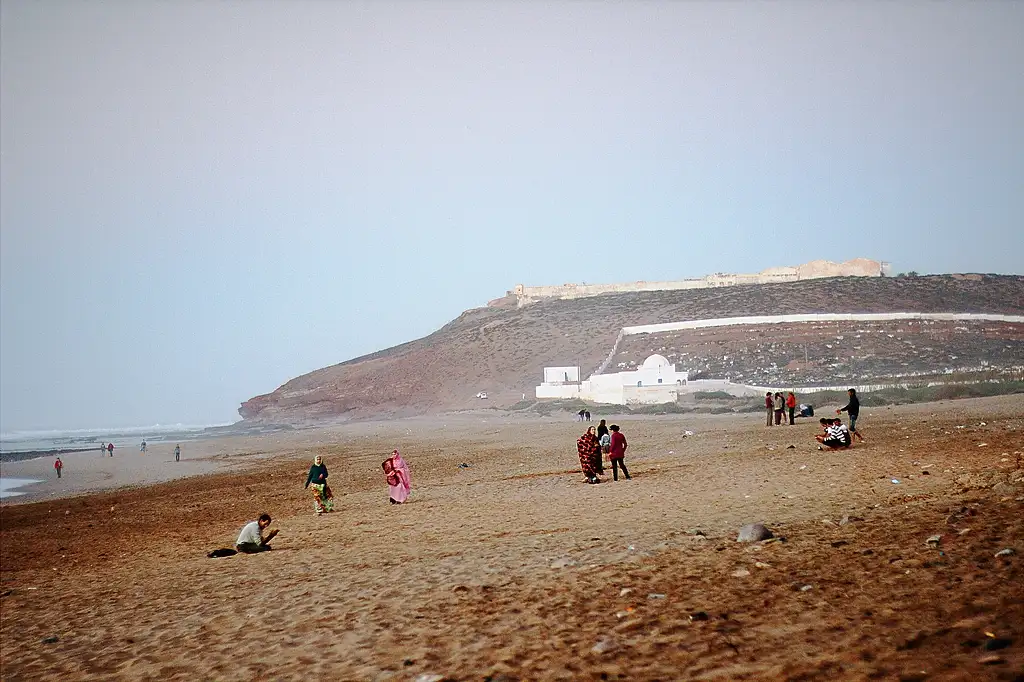
Read the architecture between the square and the cliff
From the square, work towards the ocean through the neighbouring streets. This is a compact area, so use the sea-facing edge as your reference rather than trying to follow an elaborate turn-by-turn itinerary. Sidi Ifni’s older buildings are often described collectively as Art Deco, though the streets contain a mixture of styles and later alterations. Notice shaded entrances, balconies, curved façades and the contrast between maintained public buildings and weathered private properties. Atlantic exposure is hard on plaster and metalwork; worn surfaces are part of what you see, not proof that a building is abandoned.
The former Spanish consulate and the lighthouse are useful architectural landmarks to look out for in the coastal quarter, but neither should be treated as a guaranteed interior visit. Keep your route on public streets and paths. A phone map helps identify the landmarks, although it may not distinguish a usable pedestrian connection from a wall, stairway or inaccessible plot. Wear shoes with grip rather than beach flip-flops. Even before the descent, broken paving and abrupt kerbs can make this more tiring than the town’s modest scale suggests.
Follow the cliff-top edge for the widest views
Once you reach the sea-facing edge, pause before choosing a descent. From above, the relationship between town and beach becomes clear: the civic quarter occupies the higher ground, while the sand and shoreline sit below it. Follow the public promenade and adjoining streets for changing views along the coast. The fishing port lies south of the central town; it is a separate working area, not the inevitable next stop on a short central walking circuit. You do not need to reach it to understand Sidi Ifni’s connection to the sea.
This stretch is exposed. A light layer is useful even on a warm day, and a hat needs to stay on in the wind. Coastal haze can soften the view, while bright gaps in the cloud make the white buildings surprisingly dazzling. Late afternoon can bring gentler light, but allow enough daylight for any beach descent and return. Keep back from unprotected edges and do not cross barriers for a photograph. The town generally feels less pressured than Morocco’s major sightseeing centres; local evening walkers and holiday visitors can still make the seafront noticeably livelier.
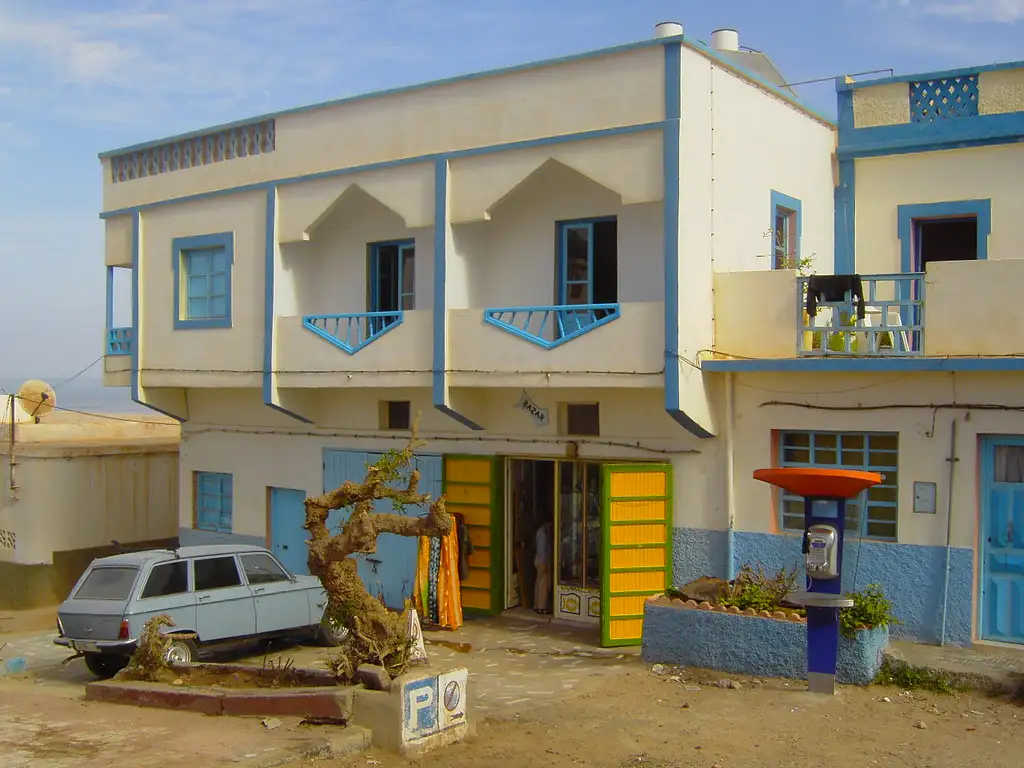
Should you go down to the beach?
For a beach visit, use an established public staircase or road approach, not a track that appears to shortcut the cliff. Before descending, identify how you will come back: steps can be manageable downhill and quite a different proposition after walking on sand. Ask your accommodation which central access is currently usable if you have not seen the route yourself, since damage or works can affect coastal paths. The beach below town is a worthwhile place for a short shoreline walk, but the Atlantic here should not be treated as a sheltered swimming pool. Breaking surf and currents deserve caution.
Anyone with limited mobility should consider keeping this walk on the upper streets and viewpoints. Even there, pavements are not consistently step-free, and a wheelchair user may need assistance around kerbs or damaged surfaces. Taxis can use vehicle streets, not stairways, pedestrian-only sections or sand. If you want transport after a beach visit, agree on a road-accessible meeting point rather than asking vaguely for pickup ‘at the beach’. A vehicle may reduce the climb, but it cannot guarantee level access all the way to the shoreline.
Come back into town for fish and a market detour
Return to the upper town for lunch, then turn inland from the seafront towards the everyday shopping streets and market area. This gives the walk a useful change of pace: civic façades and ocean views give way to groceries, produce and ordinary errands. For a meal, look for a straightforward restaurant serving fish rather than assuming every place beside the water has the day’s catch. Ask what is available and how it will be cooked. Grilled or fried fish, bread and a salad make a sensible walking lunch without turning the stop into a lengthy occasion.
Establish the price before ordering, particularly if fish is priced by weight, and ask what comes with it. Carry dirhams in small notes; a modest café or market stall may not accept cards. Keep bags clear of narrow passages and ask before photographing vendors or their displays. There is no need to approach every conversation as a scam, but an unsolicited offer to arrange lunch or transport is still an offer of a service: settle the cost before accepting. For a quieter break, move a street or two away from the most exposed seafront terraces.
Plan the return around wind, prayer and daylight
Finish the circuit by returning towards Place Hassan II through the town streets, leaving room for a coffee rather than adding a distant attraction. Legzira is outside Sidi Ifni and belongs in a separate outing with transport; it is not the next beach along a casual town walk. For this route, independent travellers rarely need a guide. The more useful preparation is knowing your accommodation’s position relative to the upper town, especially if you will have to climb again at the end.
During Ramadan, daytime meal choices can be reduced, so arrange your lunch plan with your accommodation and carry water discreetly. Friday midday prayer can also interrupt the rhythm of small businesses; avoid making one particular restaurant essential to the walk. Ordinary modest town clothing works well, with beachwear reserved for the beach. Before setting off, save your accommodation’s location and carry enough cash for a meal and a possible taxi. If you descend late in the day, return by the established access while you can still see the steps and paving clearly.
A place to start
Experiences in Sidi Ifni
Browse current activities and check the route, meeting point, inclusions and cancellation terms before booking. This is a search, not a personally reviewed tour.
Plan the next step
Activities in Sidi Ifni
Browse current GetYourGuide and Viator listings for Sidi Ifni. Compare the route, meeting point, inclusions and cancellation terms before booking.
Disclosure: these are GetYourGuide and Viator partner links. If you book through them, Real Morocco Guide may earn a commission at no extra cost to you. Listings, prices and reviews come from the providers, not from us. How we work
Also on GetYourGuide
Plan your time
Before you go
Choose what matters most
Use the chapters above to decide what you want to see, then check current access and travel arrangements.
When comparing
Allow for the full journey
Compare meeting points, time on the road and time at the destination, not only the advertised duration.
Before paying
Confirm the details
Read the current provider listing for inclusions, accessibility needs and cancellation terms.
More ways to explore
Choose between exploring independently and comparing guided experiences. Search results are not selected or reviewed tours; confirm all details with the provider.
Explore independently
Use the planning notes above, then verify transport, access and opening details directly before setting out.
Compare guided options
Check what each listing actually includes, the meeting point and how much free time is available.
Explore options ↗Good to know
- Check current transport and access details before leaving.
- Ask the operator about any mobility or dietary needs before booking.
- Keep time in your schedule for changes to the route or weather.
Compare available experiences
Check current inclusions, reviews and cancellation terms with the provider.
Frequently asked questions
Should I book an experience in advance?
It depends on your travel dates and the activity. Check current availability and cancellation rules directly with the provider.
What should I check before reserving?
Confirm the meeting point, what is included, total time commitment, accessibility arrangements and the latest cancellation policy.
Further reading
Background reading, not verification of individual tour listings.
Trusted resources
Official sources worth checking before you travel. We are not affiliated with them.
Keep exploring
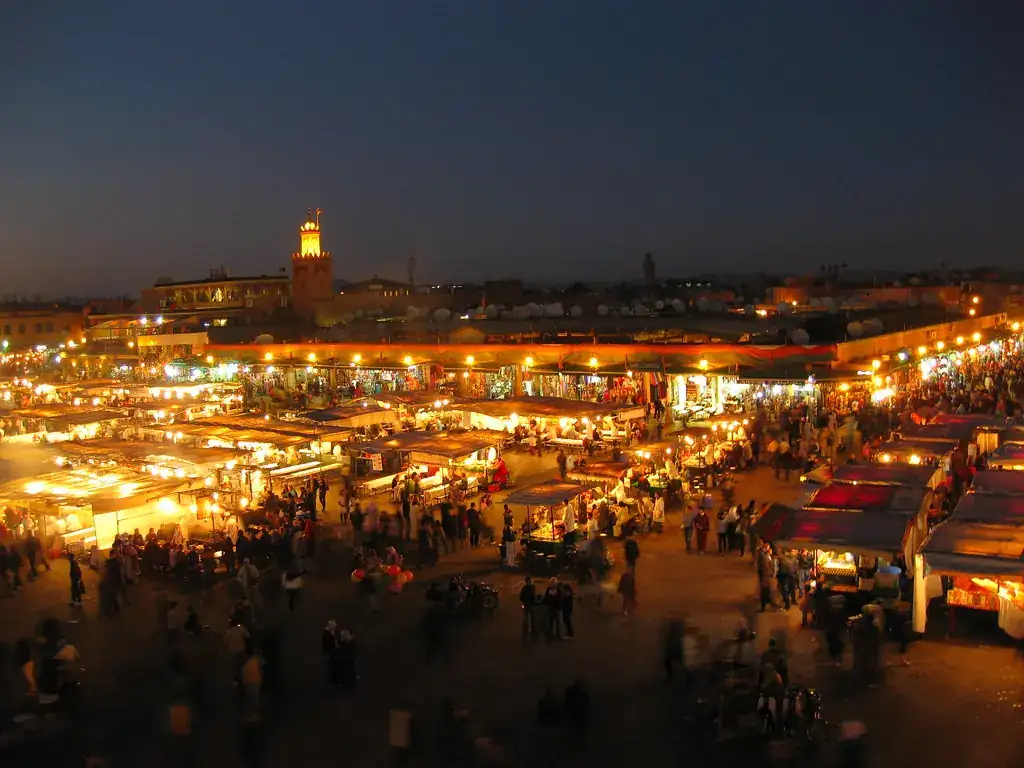
Marrakech · 9 min read
Marrakech Food Tours: What to Taste in the Medina
What to eat in the Marrakech medina, how a tasting walk differs from a cooking class, and how to tell whether a food tour actually leaves Jemaa el-Fna.
Read guide
Merzouga · 9 min read
Merzouga Desert Safari: Planning an Erg Chebbi Stay
How far Merzouga really is, how sunset trips, camp nights and multi-day tours differ, and what to pack for a night in the Erg Chebbi dunes.
Read guide