
Field guide / Morocco · Taghazout · 6 min read
Taghazout Surf Trip Planning
Two surf lessons in Taghazout can look identical on a booking page and deliver very different days. One might mean a small group, suitable boards and a beach chosen for that morning’s conditions; another might involve a crowded patch of whitewater and more waiting than coaching. For Taghazout surf trip planning, compare what happens between leaving your accommodation and getting back—not just the advertised lesson length. Your ability, the swell and the tide should shape the day, rather than a famous surf-break name.
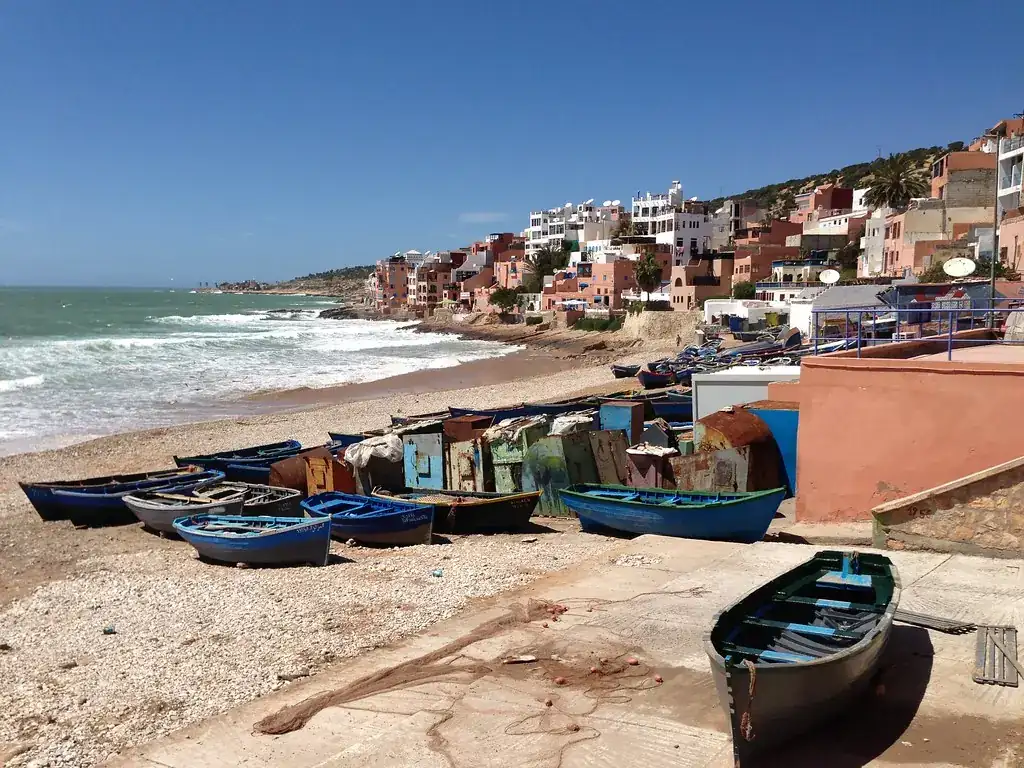
Should you stay in Taghazout or Tamraght?
Taghazout sits on the Atlantic coast north of Agadir, with surf breaks spread along the coast rather than gathered on one convenient beach. Anchor Point lies just north of the village; the sandy stretches around Taghazout Bay and Tamraght are to the south. Staying in central Taghazout puts cafés, rental shops and the village waterfront within walking reach. It does not guarantee that your lesson will happen outside your door. A school willing to drive to a more suitable beach is often more useful than one promising a particular spot.
Tamraght, farther south toward Agadir, makes another practical base, especially if your accommodation includes beach transport. Parts of it climb the hillside: a room described as near the sea may involve a sloping walk and a road crossing. Taghazout itself has uneven lanes, steps and sandy approaches. Taxis can reach road-accessible meeting points, not every guesthouse doorway or beach setup. If stairs or carrying a board are difficult, ask for the actual route from your room to the pickup point, including whether the vehicle has space for your equipment.
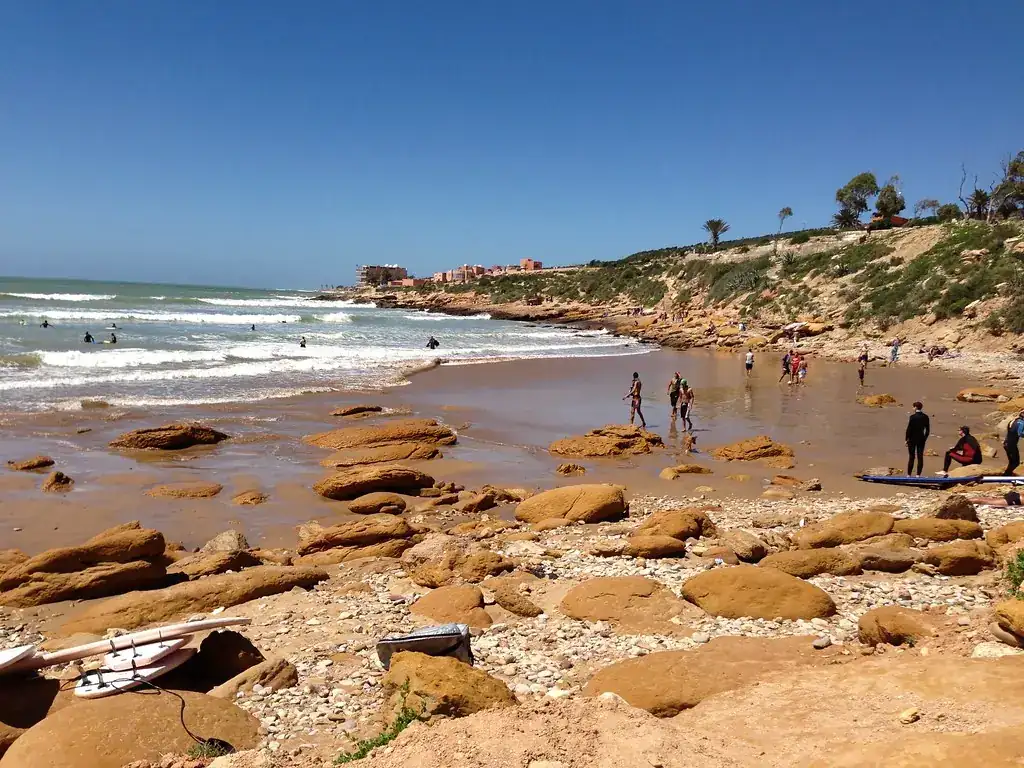
What does a surf lesson actually include?
Start with the number of learners per instructor and how groups are divided. Someone practising their first pop-up needs different coaching from a surfer learning to catch unbroken waves. Ask how much time is spent receiving instruction, rather than simply having access to a board. A full-day outing may include transfers, changing, a beach briefing, lunch and independent practice. That can suit a relaxed holiday, but it is not the same as continuous supervised teaching. Keep most of the day free if the school is selecting a beach beyond the village.
A useful instructor explains currents, entry and exit points, and what to do after a wipeout before sending you out. Ask who supervises the group during practice periods and what happens if conditions become unsuitable. Small-group lessons work well for friends at a similar level; private coaching can help when confidence, fitness or a particular technical problem needs individual attention. A surf guide is a different service, generally more useful to competent surfers seeking suitable breaks. Guiding should include local judgment about conditions and etiquette, not merely transport to a recognisable lineup.
Which board and wetsuit should you accept?
For most first lessons, a stable soft-top board is more useful than a short, sleek board that looks good under an arm. The right size depends on your build, balance and experience, so the rental counter should involve a conversation. Look over the rails, deck and fins before leaving. Point out existing damage and understand the damage policy, particularly with hard boards. Inspect the leash and its attachments too. A leash is essential equipment, but it does not replace swimming ability or make an unsuitable break safe.
Wetsuit fit matters more than a familiar logo. A loose neck or gaping lower back lets water flush through; a suit so tight that paddling feels restricted is no bargain either. Atlantic water can feel cool even under bright sunshine, and the appropriate thickness changes with the season and your tolerance. Ask what sizes and thicknesses are available for your dates. Boots can be useful at rocky breaks, but needing them is not a reason to take a beginner onto reef. Bring sun protection and drinking water even on hazy days.
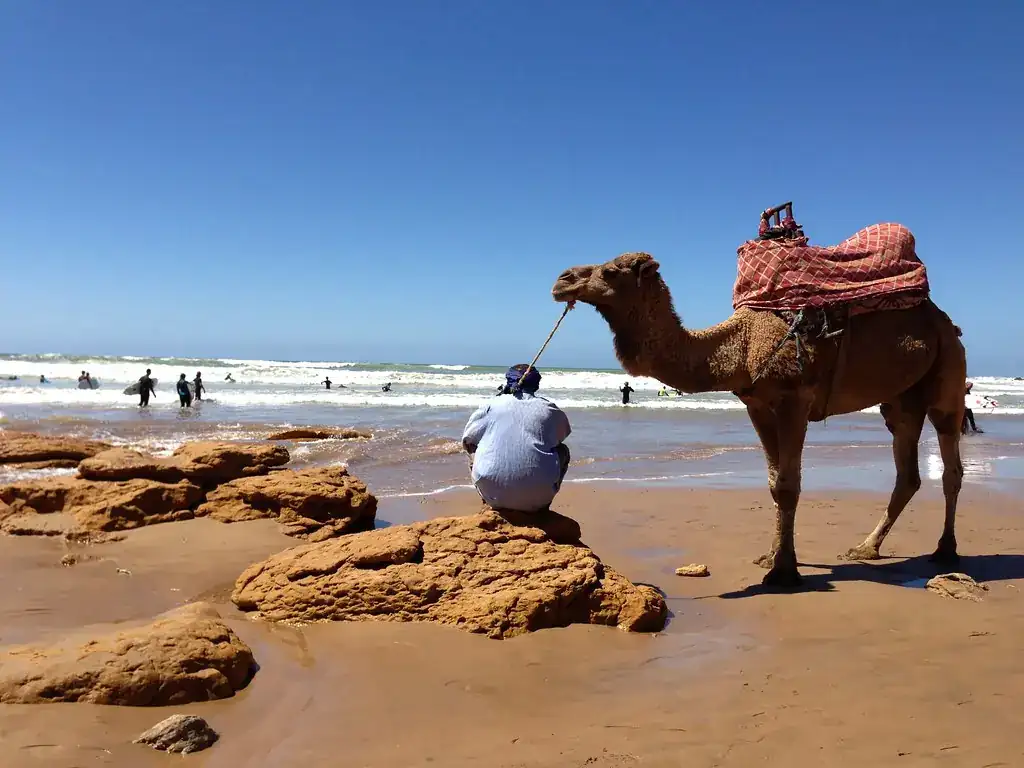
How do you judge a beach beyond its reputation?
Anchor Point is known for its right-hand point wave, not as a default place for a first lesson. Rocks, entry and exit decisions, powerful surf and an experienced lineup can make a celebrated break the wrong classroom. Schools often use sandy beaches around the bay or toward Tamraght for beginners, depending on conditions. Sand does not automatically mean safety: beach breaks can have rip currents, heavy shorebreak and waves that close out. Ask why the chosen beach suits your level that day. The explanation should refer to the water in front of you.
Tide can change how a wave breaks and how easily you enter or leave; wind can turn manageable water messy. The cooler months generally bring more consistent Atlantic swell, while summer often has smaller waves, though neither season guarantees beginner-friendly conditions. Afternoon wind can be a reason to start earlier, not a promise that every morning will be calm. Watch crowding too. Several schools sharing the same whitewater create collision risks. After heavy rain, runoff is another reason to seek current local advice about water quality rather than assume clear-looking water is clean.
Is a surf package better value than separate bookings?
Compare the whole arrangement: accommodation, airport transfer, daily beach transport, instruction, equipment, meals and any photography. A package can suit a first-time visitor who wants those moving parts handled, particularly without a car. Independent bookings give you more freedom to rest, change instructors or skip a poor surf day. Neither format guarantees better teaching. Ask how unsuitable conditions and cancellations are handled before paying, and whether a substitute activity is optional. Yoga or a sightseeing trip may be enjoyable, but it is not equivalent to the surf coaching you booked.
Give yourself several possible surf days rather than pinning the trip on one session. Fatigue matters: repeated paddling and carrying a board can leave a beginner less capable the following morning. For independent rentals, agree on the return time, permitted beaches and transport arrangements. Local taxis do not all have suitable board-carrying space, so arrange that when booking. Carry some cash for small purchases and transport, and agree taxi fares before setting off. A low headline price deserves a closer look if beach transfers or necessary equipment are charged separately.
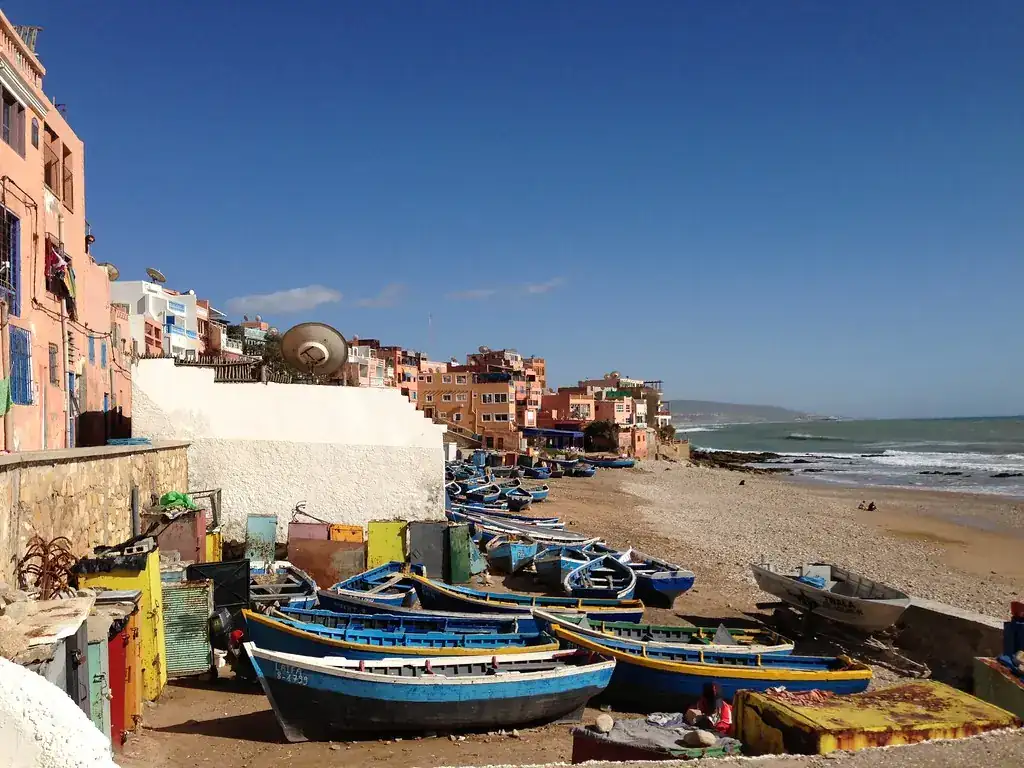
What should you plan around off the beach?
Taghazout’s surf scene is informal, but the village is not an extension of the changing area. Swimwear belongs on the beach; put on a shirt and shorts or a dress before heading through residential lanes and into shops. Ask before photographing people, particularly close-up, and avoid blocking working fishing areas with boards or bags. Leave valuables at your accommodation where possible. A beach transfer with other learners is convenient, but a pile of unattended bags is not secure storage; ask what provision the school makes for phones, keys and money.
During Ramadan, some daytime food options and working patterns change, while evenings may become livelier around the breaking of the fast. Friday prayers can also affect individual businesses and staff availability. Arrange meal and pickup times with your provider rather than assuming a fixed routine. Keep water and a snack available for the return journey, especially after a tiring session. Before entering the sea, know the agreed exit point and the signal for returning to shore. If you cannot identify your instructor or understand where the group is meant to stay, resolve that on the sand.
A place to start
Experiences in Taghazout
Browse current activities and check the route, meeting point, inclusions and cancellation terms before booking. This is a search, not a personally reviewed tour.
Plan the next step
Activities in Taghazout
Browse current GetYourGuide and Viator listings for Taghazout. Compare the route, meeting point, inclusions and cancellation terms before booking.
Disclosure: these are GetYourGuide and Viator partner links. If you book through them, Real Morocco Guide may earn a commission at no extra cost to you. Listings, prices and reviews come from the providers, not from us. How we work
Also on GetYourGuide
Plan your time
Before you go
Choose what matters most
Use the chapters above to decide what you want to see, then check current access and travel arrangements.
When comparing
Allow for the full journey
Compare meeting points, time on the road and time at the destination, not only the advertised duration.
Before paying
Confirm the details
Read the current provider listing for inclusions, accessibility needs and cancellation terms.
More ways to explore
Choose between exploring independently and comparing guided experiences. Search results are not selected or reviewed tours; confirm all details with the provider.
Explore independently
Use the planning notes above, then verify transport, access and opening details directly before setting out.
Compare guided options
Check what each listing actually includes, the meeting point and how much free time is available.
Explore options ↗Good to know
- Check current transport and access details before leaving.
- Ask the operator about any mobility or dietary needs before booking.
- Keep time in your schedule for changes to the route or weather.
Compare available experiences
Check current inclusions, reviews and cancellation terms with the provider.
Frequently asked questions
Should I book an experience in advance?
It depends on your travel dates and the activity. Check current availability and cancellation rules directly with the provider.
What should I check before reserving?
Confirm the meeting point, what is included, total time commitment, accessibility arrangements and the latest cancellation policy.
Further reading
Background reading, not verification of individual tour listings.
Trusted resources
Official sources worth checking before you travel. We are not affiliated with them.
Keep exploring

Marrakech · 9 min read
Marrakech Food Tours: What to Taste in the Medina
What to eat in the Marrakech medina, how a tasting walk differs from a cooking class, and how to tell whether a food tour actually leaves Jemaa el-Fna.
Read guide
Merzouga · 9 min read
Merzouga Desert Safari: Planning an Erg Chebbi Stay
How far Merzouga really is, how sunset trips, camp nights and multi-day tours differ, and what to pack for a night in the Erg Chebbi dunes.
Read guide