
Field guide / Morocco · Tangier · 6 min read
Tangier Medina Day Plan
The tricky part of a day in Tangier is not finding the medina. It is linking its lanes, the hilltop Kasbah and the waterfront without repeatedly climbing the same hill. Start around the Grand Socco, work through the old city, then leave the seafront for later. This Tangier medina day plan allows time for a museum, lunch and café stops without turning every alley into an assignment. Give it most of a day; with only a few hours, choose either the Kasbah or a longer waterfront walk rather than rushing both.
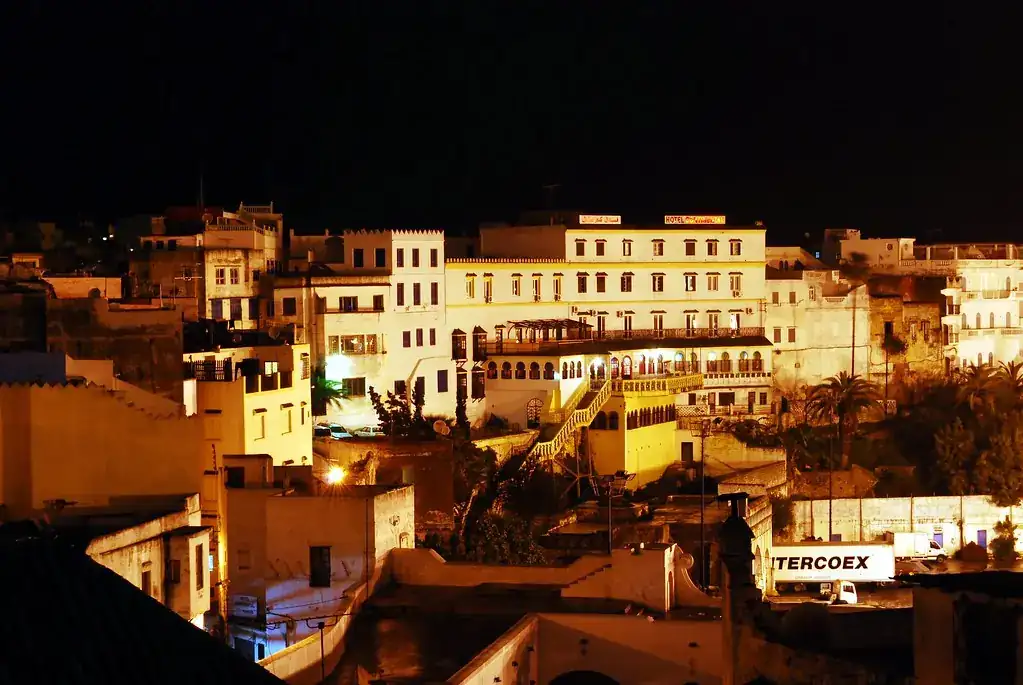
Where should you start, and how do you get there?
The Grand Socco is the simplest starting point. This broad square sits at the meeting of the medina and the newer city, with the Cinéma Rif providing an easy landmark. Before entering the lanes, get your bearings: the Petit Socco is inside the old city, the Kasbah occupies higher ground, and the port lies below the medina’s seaward edge. You are moving through a hillside neighbourhood, not a level grid. A route that looks short on a phone may involve steps and a surprisingly stiff climb.
Ask a taxi to drop you at the Grand Socco rather than giving it an address deep inside the medina. Vehicles reach some perimeter roads and entrances, but many lanes are pedestrian-only or too narrow for ordinary taxis. From Tanger Ville railway station, a taxi saves your walking energy for the old city. Travelling by ferry needs more attention: Tanger Ville port is beside central Tangier, while Tanger Med is well outside the city and requires a separate transfer. Do not build your day around the assumption that the two are interchangeable.
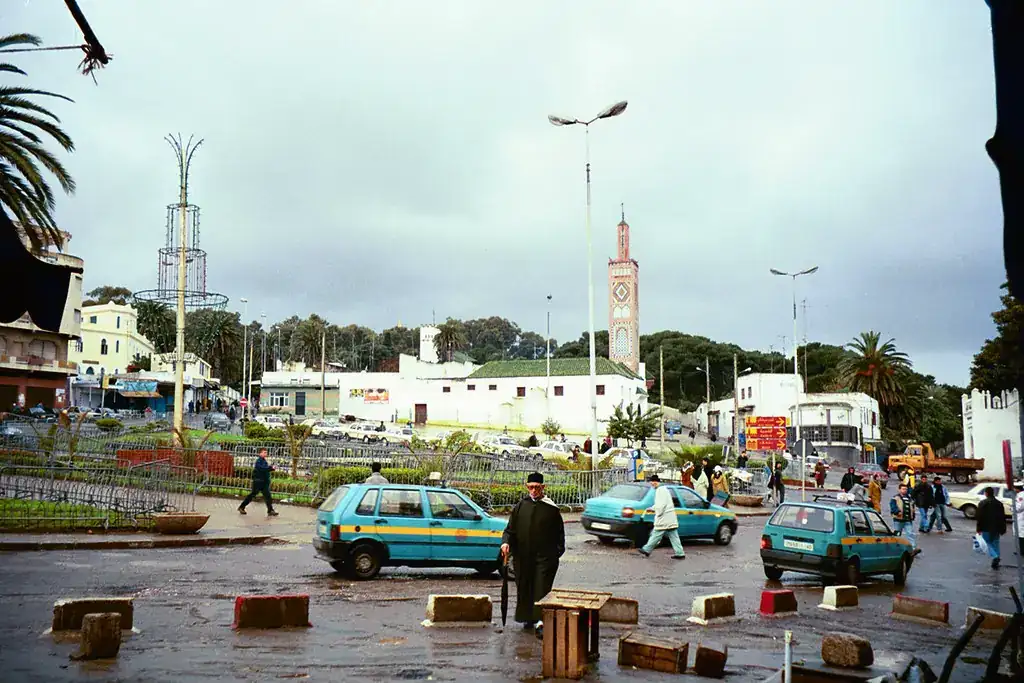
Morning lanes: Grand Socco to Petit Socco
Begin in the morning, once shops are starting to open, rather than expecting the commercial lanes to be fully awake at dawn. Follow Rue Siaghine towards the Petit Socco, allowing yourself small detours without trying to cover the entire medina. This is a working neighbourhood as well as a visitor area: bread shops, household goods and everyday errands share space with souvenir displays. Stand aside when deliveries come through, and avoid stopping across a narrow passage to study your map. The Petit Socco makes a useful first café pause and a place to reset your bearings.
For an indoor stop, the Tangier American Legation Museum is in the lower medina, a detour from this route rather than part of the Kasbah above. It suits travellers interested in Tangier’s international connections; allow roughly an hour if you enjoy reading displays. Check current opening hours before arranging the day around it. Otherwise, spend that time exploring the surrounding lanes. Friday congregational prayers can change the pace around mosques, with some businesses pausing or opening later. Leave room for that rhythm instead of treating every closed door as a wasted stop.
How much climbing does the Kasbah involve?
From the Petit Socco area, turn uphill towards the Kasbah. Expect sloping lanes, uneven paving and occasional steps; allow twenty to thirty minutes at an unhurried pace, longer with browsing or wrong turns. The reward is a clearer sense of Tangier’s position above the Strait of Gibraltar. On clear days, views reach towards Spain, but haze can erase the distant shore. Keep looking at the nearby details too: doorways, small squares and the changing angles between white walls. Not every attractive passage is a through-route, and some lead directly to homes.
The Kasbah Museum gives the upper medina a worthwhile focus if you want more than a viewpoint. Choose this or the American Legation for a relaxed day; fitting in both leaves less time for wandering and the sea. A licensed guide is useful for historical context or for visitors who find repeated navigation decisions tiring. You do not need one simply to cross the medina. For reduced mobility, the Kasbah’s slopes and surfaces are a real constraint: arrange a drop-off near an accessible perimeter entrance and ask about step-free access at any museum you intend to enter.
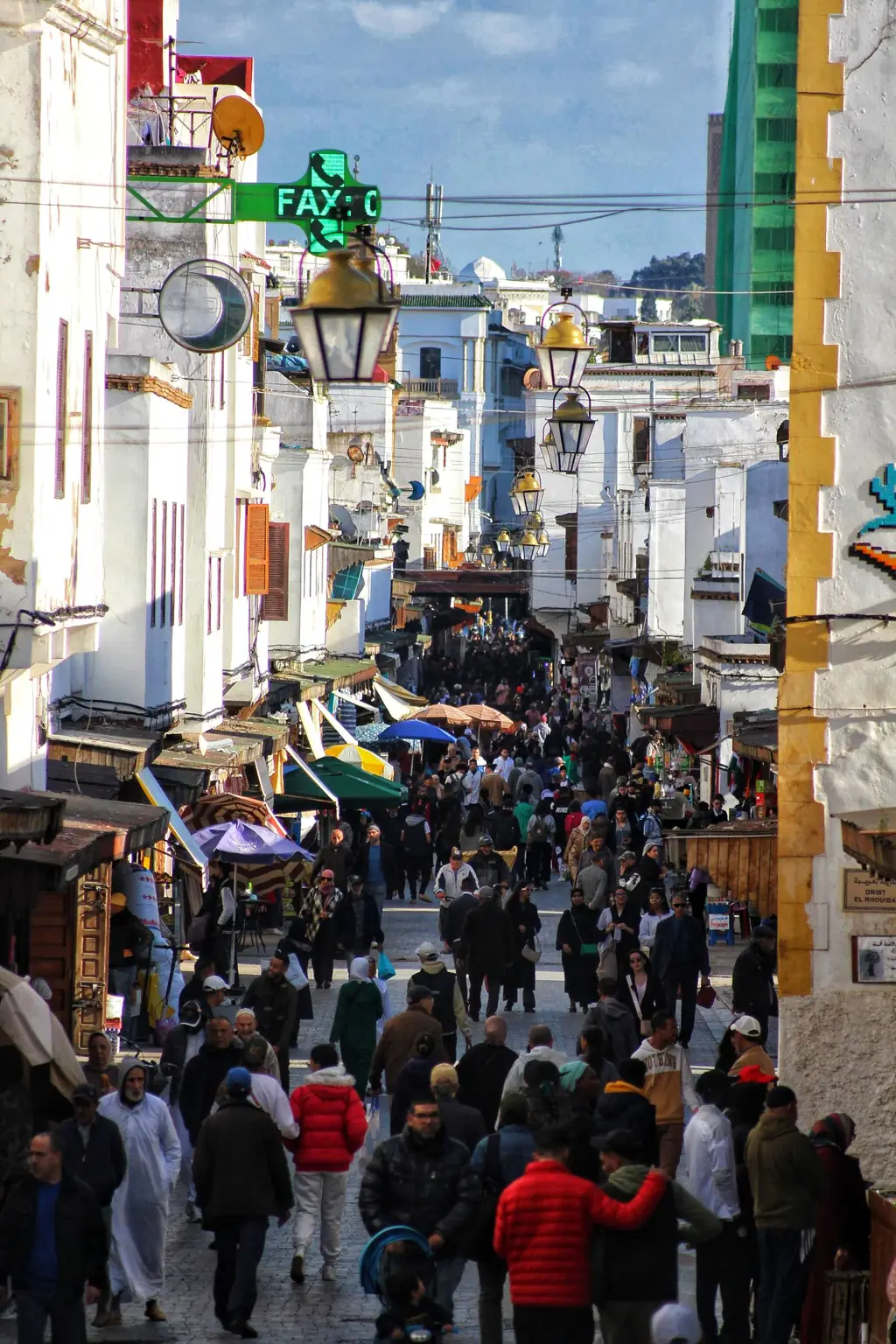
Where should lunch and a café stop fit?
Eat before heading down to the waterfront if you find somewhere appealing in the medina or around its edges. Grilled fish, a cooked dish or a sandwich can all make a sensible lunch; you need not turn the meal into a lengthy restaurant expedition. Where fish is priced by weight, establish the total and what comes with it before ordering. Carry dirhams in smaller notes for cafés, modest restaurants and small purchases. Card payment is not something to assume in the lanes, and a large note can complicate an otherwise simple transaction.
Café Hafa is often folded into medina itineraries, but it lies west of the Kasbah, beyond the old city’s core. Treat it as an optional extension, not a stop on the direct descent towards the port. Its terraced setting involves steps, and popular periods can mean waiting for a suitable seat. During Ramadan, daytime food options may be fewer, especially away from visitor-oriented places. Plan lunch deliberately, and allow for the lull around sunset when people break their fast. The city’s later evening rhythm may be livelier than its afternoon one.
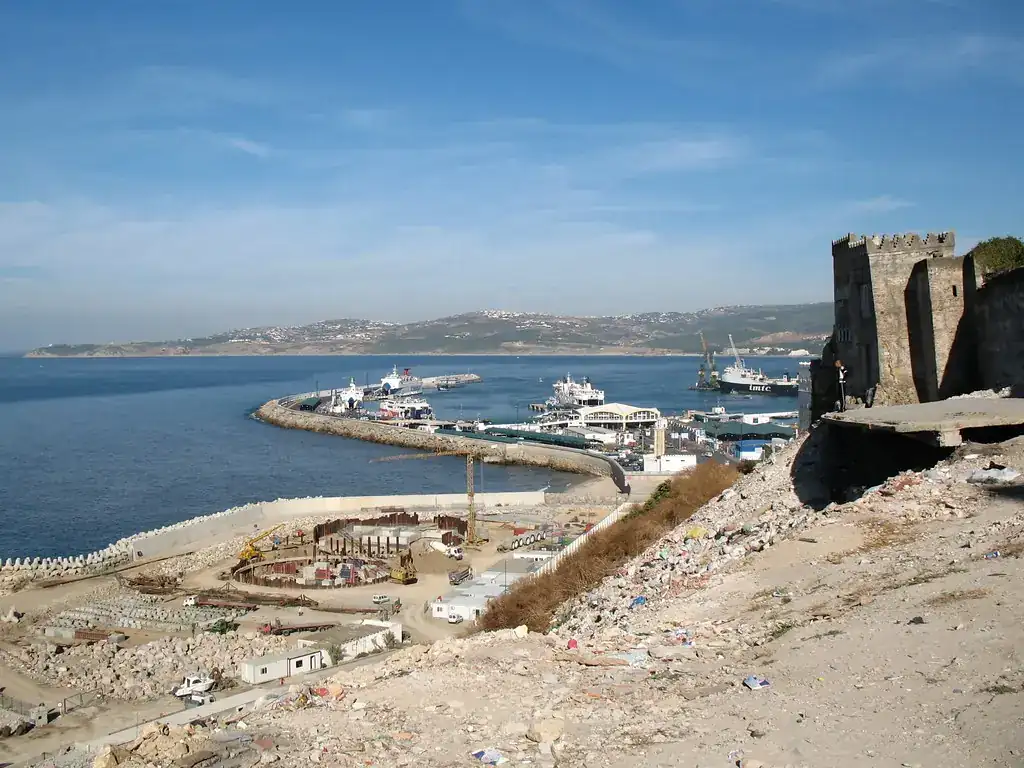
Which waterfront walk makes sense after the medina?
From the upper old city, work downhill towards the port side, using a mapped route rather than following every apparent shortcut. Once outside the lanes, continue towards the marina and the bayfront promenade. These are distinct from the enclosed ferry facilities: follow public pavements and signed pedestrian access rather than aiming through a port gate. The contrast is immediate. The medina compresses your view into doorways and corners; the waterfront opens it across the bay. Walk as far along the corniche as your energy allows, then use a taxi instead of making the return distance an obligation.
Late afternoon is pleasant for this stretch, though Tangier’s wind can make the seafront feel cooler than sheltered medina lanes. Bring a light layer, even when the day begins warm, and sun protection for the exposed promenade. In wet weather, smooth paving and medina steps can become slippery. The bayfront is generally an easier walking environment than the old city, but crossings, kerbs and access between levels still matter for wheelchair users. Allow at least an hour for a leisurely waterfront section, with more time if you want to sit by the beach.
What should you know before entering the lanes?
Wear shoes with grip and clothing comfortable for steps, sun and a conservative residential setting. Ask before photographing people, particularly shopkeepers at close range, and do not point a camera through open domestic doors. Around mosque entrances, give worshippers space; do not assume a religious building admits non-Muslim visitors. Download an offline map before starting. GPS can drift between close walls, so use the Grand Socco, Petit Socco and Kasbah as anchor points rather than obeying every turn instruction.
Unsolicited directions sometimes become an attempt to sell guiding or steer you into a shop. A polite refusal is enough; you do not owe someone a fee for advice you never requested. If you hire a guide, agree the duration, price and whether shopping stops are included before setting off. Keep your phone and wallet secure in crowded passages. For the ride back, walk to an accessible road at the medina edge or along the waterfront, and establish the taxi fare basis before departure.
A place to start
Experiences in Tangier
Browse current activities and check the route, meeting point, inclusions and cancellation terms before booking. This is a search, not a personally reviewed tour.
Plan the next step
Activities in Tangier
Browse current GetYourGuide and Viator listings for Tangier. Compare the route, meeting point, inclusions and cancellation terms before booking.
Disclosure: these are GetYourGuide and Viator partner links. If you book through them, Real Morocco Guide may earn a commission at no extra cost to you. Listings, prices and reviews come from the providers, not from us. How we work
Also on GetYourGuide
Plan your time
Before you go
Choose what matters most
Use the chapters above to decide what you want to see, then check current access and travel arrangements.
When comparing
Allow for the full journey
Compare meeting points, time on the road and time at the destination, not only the advertised duration.
Before paying
Confirm the details
Read the current provider listing for inclusions, accessibility needs and cancellation terms.
More ways to explore
Choose between exploring independently and comparing guided experiences. Search results are not selected or reviewed tours; confirm all details with the provider.
Explore independently
Use the planning notes above, then verify transport, access and opening details directly before setting out.
Compare guided options
Check what each listing actually includes, the meeting point and how much free time is available.
Explore options ↗Good to know
- Check current transport and access details before leaving.
- Ask the operator about any mobility or dietary needs before booking.
- Keep time in your schedule for changes to the route or weather.
Compare available experiences
Check current inclusions, reviews and cancellation terms with the provider.
Frequently asked questions
Should I book an experience in advance?
It depends on your travel dates and the activity. Check current availability and cancellation rules directly with the provider.
What should I check before reserving?
Confirm the meeting point, what is included, total time commitment, accessibility arrangements and the latest cancellation policy.
Further reading
Background reading, not verification of individual tour listings.
Trusted resources
Official sources worth checking before you travel. We are not affiliated with them.
Keep exploring
Marrakech · 9 min read
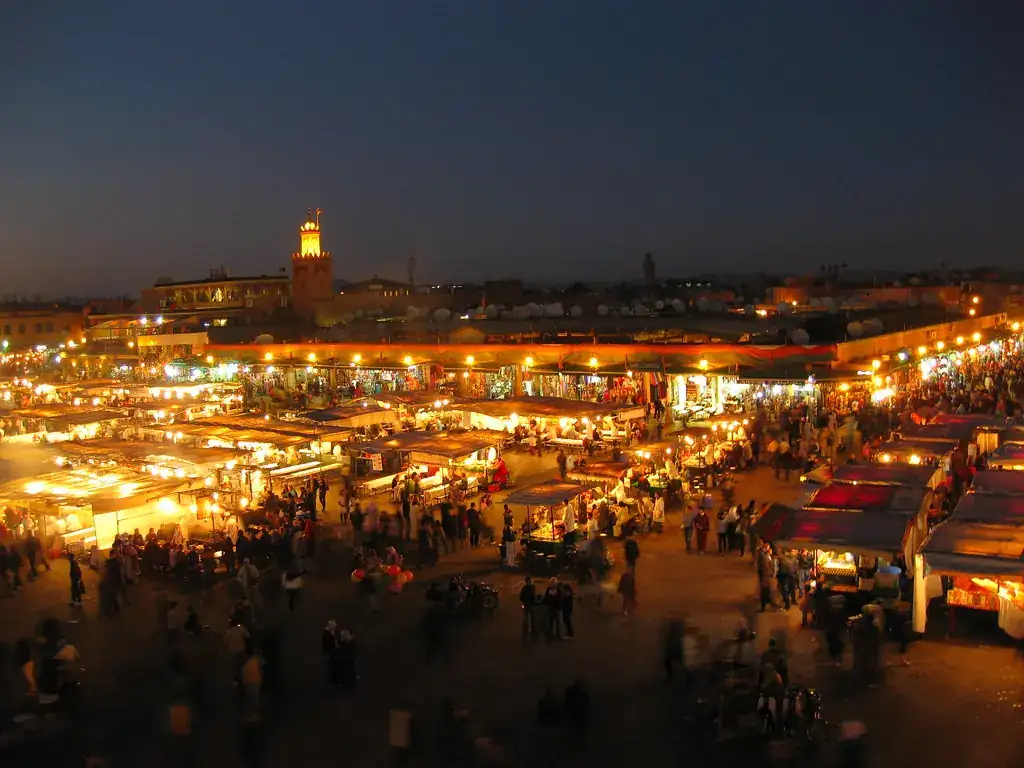
Marrakech Food Tours: What to Taste in the Medina
What to eat in the Marrakech medina, how a tasting walk differs from a cooking class, and how to tell whether a food tour actually leaves Jemaa el-Fna.
Read guide
Merzouga · 9 min read
Merzouga Desert Safari: Planning an Erg Chebbi Stay
How far Merzouga really is, how sunset trips, camp nights and multi-day tours differ, and what to pack for a night in the Erg Chebbi dunes.
Read guide