
Field guide / Morocco · Taroudant · 6 min read
Taroudant Souk Visit Planning
The trick to enjoying Taroudant’s souks is not trying to cover every lane. Come with a loose route, time to sit down and permission to leave without buying anything. The walled city is manageable for an unhurried walk, but heat, passing motorbikes and the small negotiations of shopping can make a tightly packed itinerary feel tiring. Allow a half-day for the central squares and market lanes, rather than squeezing them between a drive and lunch.
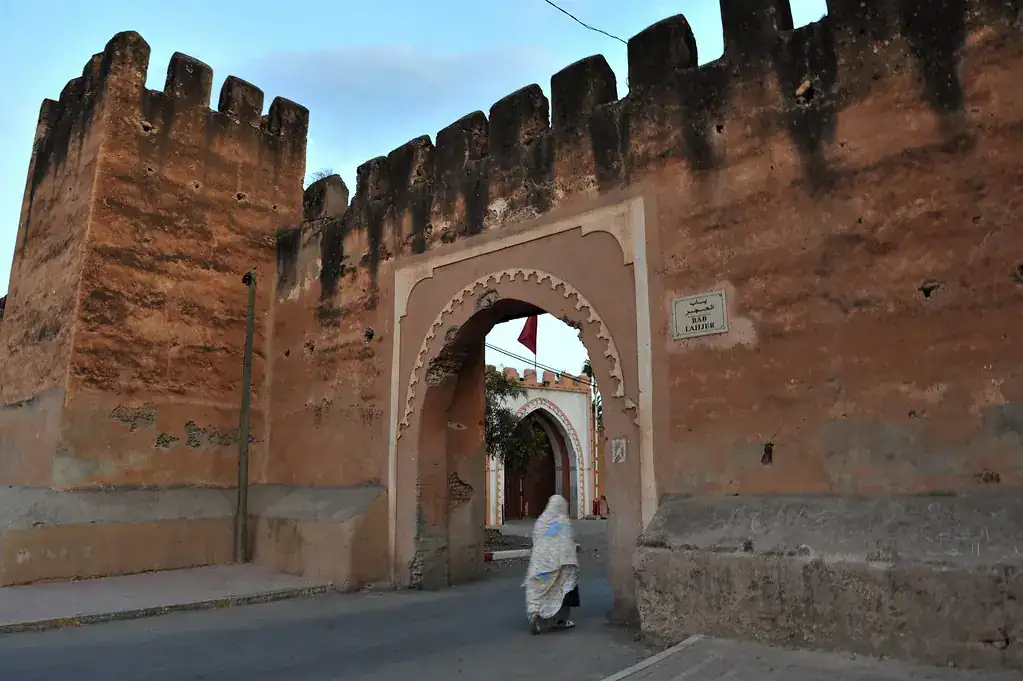
How should you shape a walk around Assarag and Talmoklate?
Place Assarag is a useful starting point: an open square within the walls, with cafés where you can get your bearings before entering the denser shopping streets. Place Talmoklate is another central reference point, linked to Assarag through the surrounding commercial lanes. Think of the two squares as anchors rather than stops on a rigid circuit. Explore the lanes between and around them, returning to an open space whenever you want a breather. Walking the whole perimeter of the ramparts is a separate outing, not a necessary addition to a souk visit.
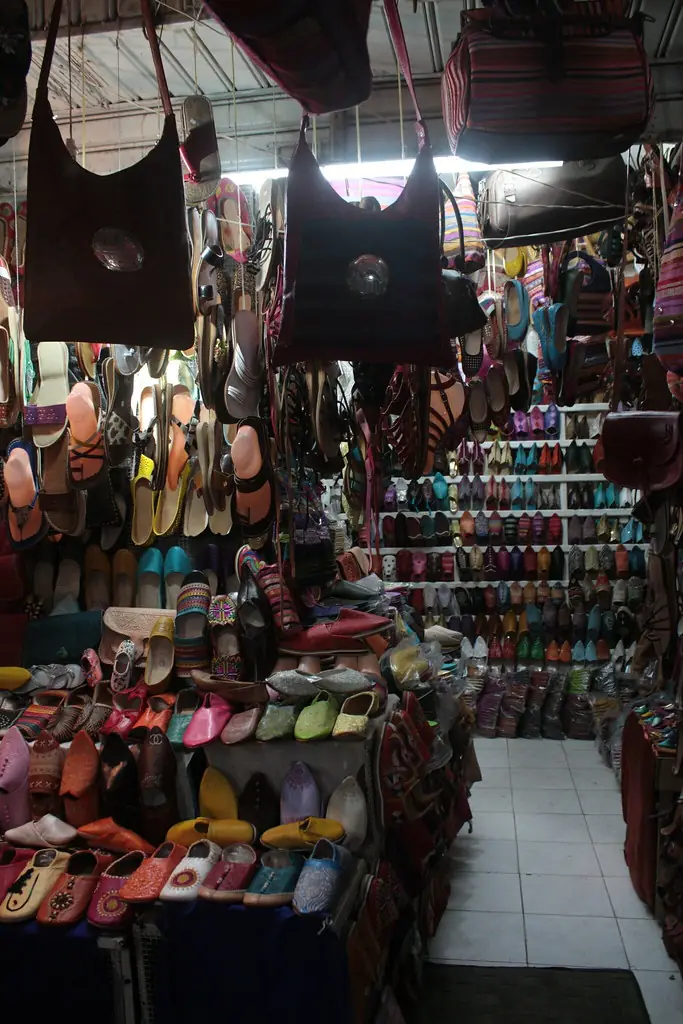
Maps and travel descriptions may distinguish an Arab souk from a Berber souk, but those labels are less useful on foot than noticing what each stretch sells. Household goods, clothing, food and craft items sit within a working shopping district, not a neatly curated visitor attraction. Start with the ordinary shops before looking closely at leatherwork, jewellery or baskets. There is no need to track down every named market entrance; your Taroudant souk visit planning can be as simple as saving both squares on an offline map and marking your accommodation.
When is the walk most comfortable?
A morning visit usually gives you a more comfortable walking temperature, though arriving extremely early can mean finding shutters down. Later afternoon can also work, especially if you want to sit in Assarag as activity gathers towards evening. Taroudant lies inland in the Souss Valley; do not assume the mild air of Agadir will follow you here. In hotter months, exposed squares and stretches beside the walls can feel demanding. Carry water, use sun protection and build in a proper seated break rather than treating shade as something you will eventually find.
Friday can bring pauses around communal prayers, with individual traders following different routines. During Ramadan, daytime food options may be reduced and shopping activity can shift later; the period just before the sunset meal is not a good time for a lengthy bargaining session. Ask your accommodation about the rhythm during your stay rather than relying on fixed souk hours. Crowding is uneven: a lane that feels quiet can suddenly tighten around a delivery, a busy stall or passing traffic. Keep your route flexible.
How do you browse and bargain without making it awkward?
A greeting does more work than a rehearsed bargaining technique. Say hello, look first, and ask before handling fragile objects or unfolding stacked textiles. Looking is not a promise to buy, although asking a seller to bring out numerous alternatives naturally signals stronger interest. For a craft item without a marked price, ask the price and decide what it is worth to you before making a counteroffer. There is no reliable rule that the right price is half the opening figure. Keep the exchange friendly, and do not agree on a figure unless you intend to purchase.
Everyday groceries and small practical purchases are not automatically bargaining opportunities. Follow the seller’s stated pricing rather than turning every transaction into a contest. Carry dirhams in smaller notes and coins; card payment is not something to assume in small stalls. If you are buying jewellery described as silver, leather described as handmade, or a supposedly old object, ask specific questions about material and production. A verbal assurance is not independent proof. For an expensive purchase, take time to compare and request a receipt describing the item.
What should you wear, and when should you ask for a photo?
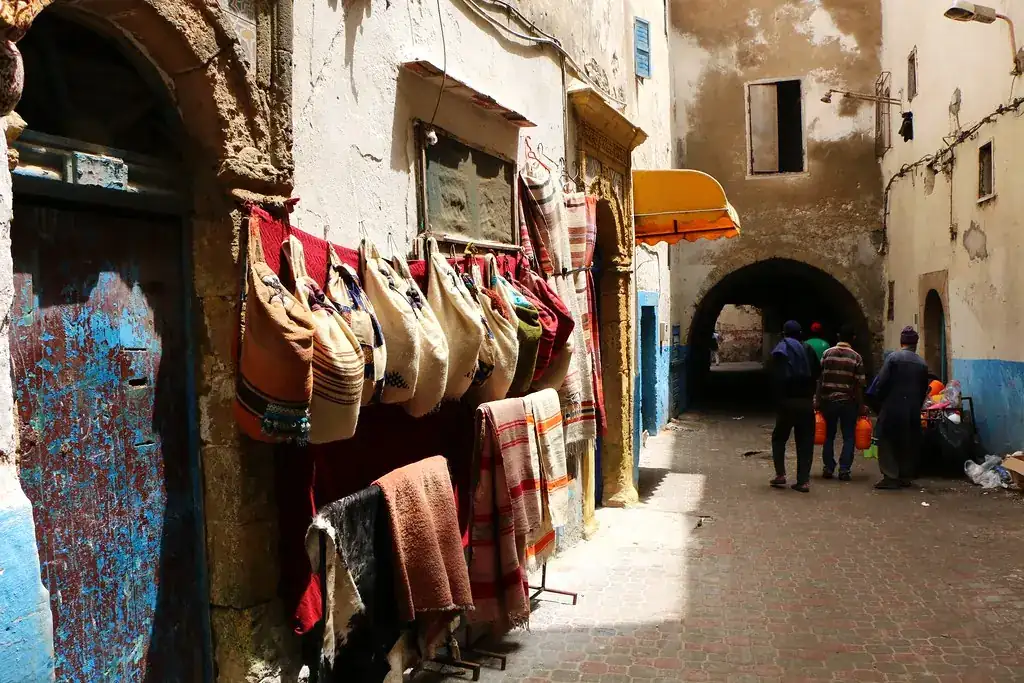
Light, loose clothing that covers shoulders and reaches below the knee is a considerate, practical choice for the market. You do not need special clothing to walk the souks, and women do not need to cover their hair for an ordinary city visit. Comfortable shoes matter more than dressing for photographs: surfaces can be uneven, with thresholds, drains and narrow patches that require attention. Keep your bag closed and your phone secure in crowded stretches, without approaching every interaction as a threat.
Ask before photographing a trader, customer or workshop activity, and accept a refusal immediately. Buying something does not buy permission to photograph the seller. For children, seek a parent’s permission and avoid making them the focus of casual street photography. If someone offers to lead you to a shop or show you a workshop, establish whether payment is expected before following. Unsolicited directions can become a sales detour; a polite refusal is enough. If you are genuinely lost, ask a shopkeeper for the way back to Assarag rather than accepting an undefined tour.
Do you need a guide, and how accessible are the souks?
An independent wander suits travellers who enjoy browsing and do not need detailed explanations of every object. A licensed guide is more useful if you want help discussing materials with craftspeople, have limited time, or find repeated shopping exchanges tiring. Agree on the duration, fee and focus beforehand, including whether you want any shop visits. A guide can help with communication and context, but should not be treated as an independent valuer of jewellery or antiques.
The central walk is generally more about uneven surfaces and obstacles than steep climbing. Narrow passages, parked vehicles, raised shop entrances and occasional steps can still make wheelchair or stroller access difficult. A shorter outing based around the squares and broader connecting streets may be more comfortable than pursuing every covered lane. Taxis cannot reliably reach individual stalls: some streets admit vehicles, while tighter market passages require walking. Anyone with limited mobility should arrange a specific accessible drop-off and collection point with their driver or accommodation.
Getting there and keeping the return journey simple
From Agadir, Taroudant is a substantial inland excursion rather than a quick extension of a beach walk. Allow roughly an hour and a half or more each way by road, depending on your starting point and traffic; shared transport can add waiting and transfer time. If visiting for the day, leave enough room for lunch and a rest instead of adding several distant stops. Staying overnight makes it easier to split your walking between the cooler parts of the day.
Before leaving your accommodation or vehicle, save its location and the name of the nearest gate or square. For a taxi pickup, choose a place the driver can actually reach, not a shop deep inside the market. Establish the fare or charging arrangement before setting off. Keep return-transport money separate from your shopping budget, and carry purchases securely enough to leave your hands free in narrow lanes. If using shared transport back to Agadir, ask locally about current departure arrangements before beginning your walk.
A place to start
Experiences in Taroudant
Browse current activities and check the route, meeting point, inclusions and cancellation terms before booking. This is a search, not a personally reviewed tour.
Plan the next step
Activities in Taroudant
Browse current GetYourGuide and Viator listings for Taroudant. Compare the route, meeting point, inclusions and cancellation terms before booking.
Disclosure: these are GetYourGuide and Viator partner links. If you book through them, Real Morocco Guide may earn a commission at no extra cost to you. Listings, prices and reviews come from the providers, not from us. How we work
Also on GetYourGuide
Plan your time
Before you go
Choose what matters most
Use the chapters above to decide what you want to see, then check current access and travel arrangements.
When comparing
Allow for the full journey
Compare meeting points, time on the road and time at the destination, not only the advertised duration.
Before paying
Confirm the details
Read the current provider listing for inclusions, accessibility needs and cancellation terms.
More ways to explore
Choose between exploring independently and comparing guided experiences. Search results are not selected or reviewed tours; confirm all details with the provider.
Explore independently
Use the planning notes above, then verify transport, access and opening details directly before setting out.
Compare guided options
Check what each listing actually includes, the meeting point and how much free time is available.
Explore options ↗Good to know
- Check current transport and access details before leaving.
- Ask the operator about any mobility or dietary needs before booking.
- Keep time in your schedule for changes to the route or weather.
Compare available experiences
Check current inclusions, reviews and cancellation terms with the provider.
Frequently asked questions
Should I book an experience in advance?
It depends on your travel dates and the activity. Check current availability and cancellation rules directly with the provider.
What should I check before reserving?
Confirm the meeting point, what is included, total time commitment, accessibility arrangements and the latest cancellation policy.
Further reading
Background reading, not verification of individual tour listings.
Trusted resources
Official sources worth checking before you travel. We are not affiliated with them.
Keep exploring
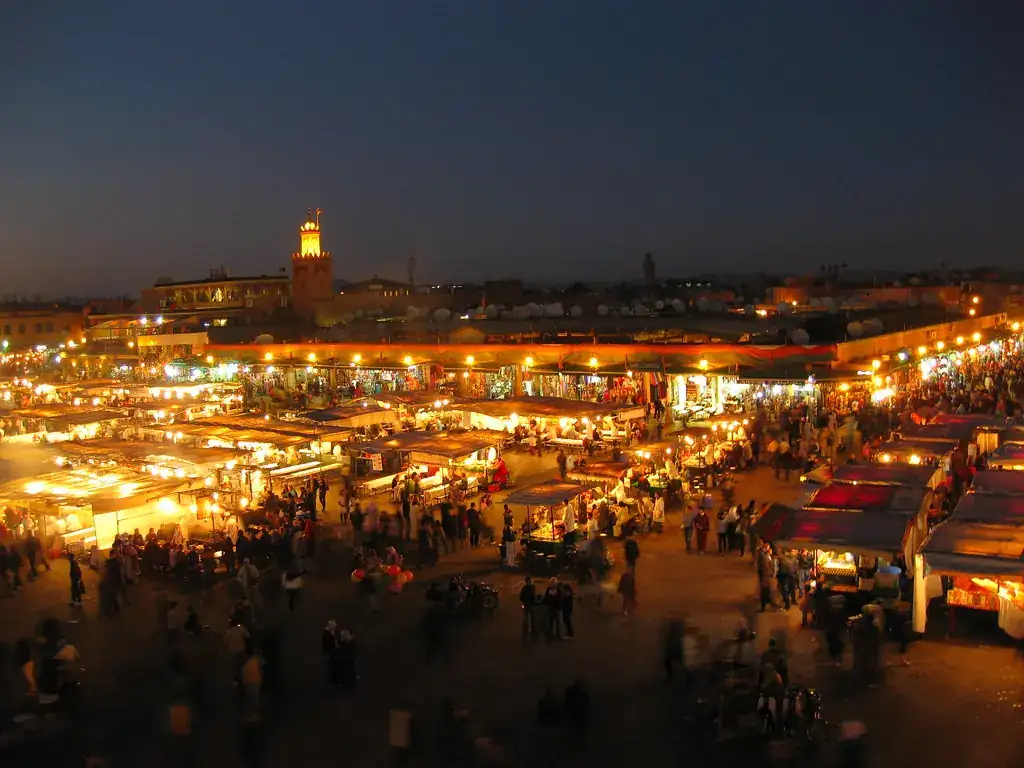
Marrakech · 9 min read
Marrakech Food Tours: What to Taste in the Medina
What to eat in the Marrakech medina, how a tasting walk differs from a cooking class, and how to tell whether a food tour actually leaves Jemaa el-Fna.
Read guide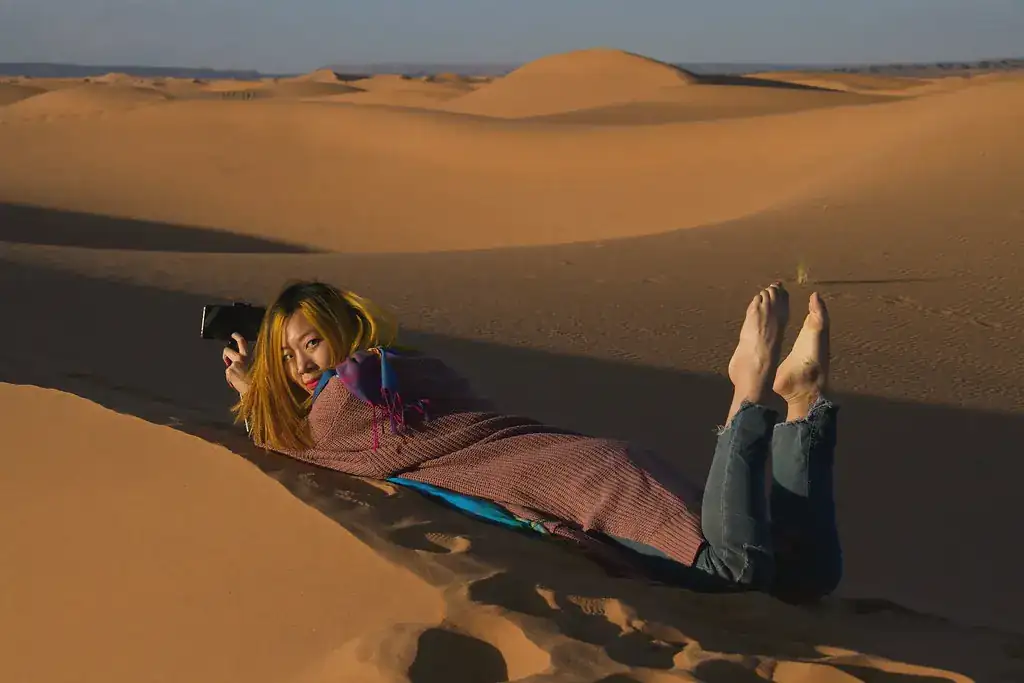
Merzouga · 9 min read
Merzouga Desert Safari: Planning an Erg Chebbi Stay
How far Merzouga really is, how sunset trips, camp nights and multi-day tours differ, and what to pack for a night in the Erg Chebbi dunes.
Read guide