
Field guide / Morocco · Tiznit · 6 min read
Shopping for Silver Jewelry in Tiznit
A heavy bracelet, a darkened surface and a confident explanation do not tell you how much silver a piece contains. That is the real challenge of shopping for silver jewelry in Tiznit: enjoying the choice without mistaking appearance or a seller’s description for evidence. The town is associated with silver jewelry and Amazigh ornament, but each purchase still deserves its own questions. Allow time to compare, decide what you need documented and be prepared to leave a beautiful piece behind if the answers do not support the price.

Where should you start shopping in Tiznit?
Tiznit lies inland from Morocco’s Atlantic coast, south of Agadir. From Agadir, treat it as a substantial day outing rather than a quick shopping detour; allow roughly a couple of hours each way by road, depending on your starting point and traffic. The old town, enclosed by its distinctive earth-toned walls, is the focus for jewelry shopping. Place du Méchouar makes a useful orientation point, with shops and market lanes nearby. Ask for the jewelry souk rather than expecting every craft shop to specialize in silver.
Give yourself at least two or three hours in the medina if you want to compare pieces rather than buy from the first tray. Much of the walking is relatively level, but uneven paving, shop thresholds and narrow passages can complicate access for wheelchair users or anyone with limited mobility. Taxis can serve accessible streets and squares, not every lane or shop doorway. Agree on a recognizable pickup point. Morning can be more comfortable in hot weather, though opening patterns vary; ask locally about Friday prayer breaks and altered Ramadan shopping hours.
What exactly is the seller calling silver?
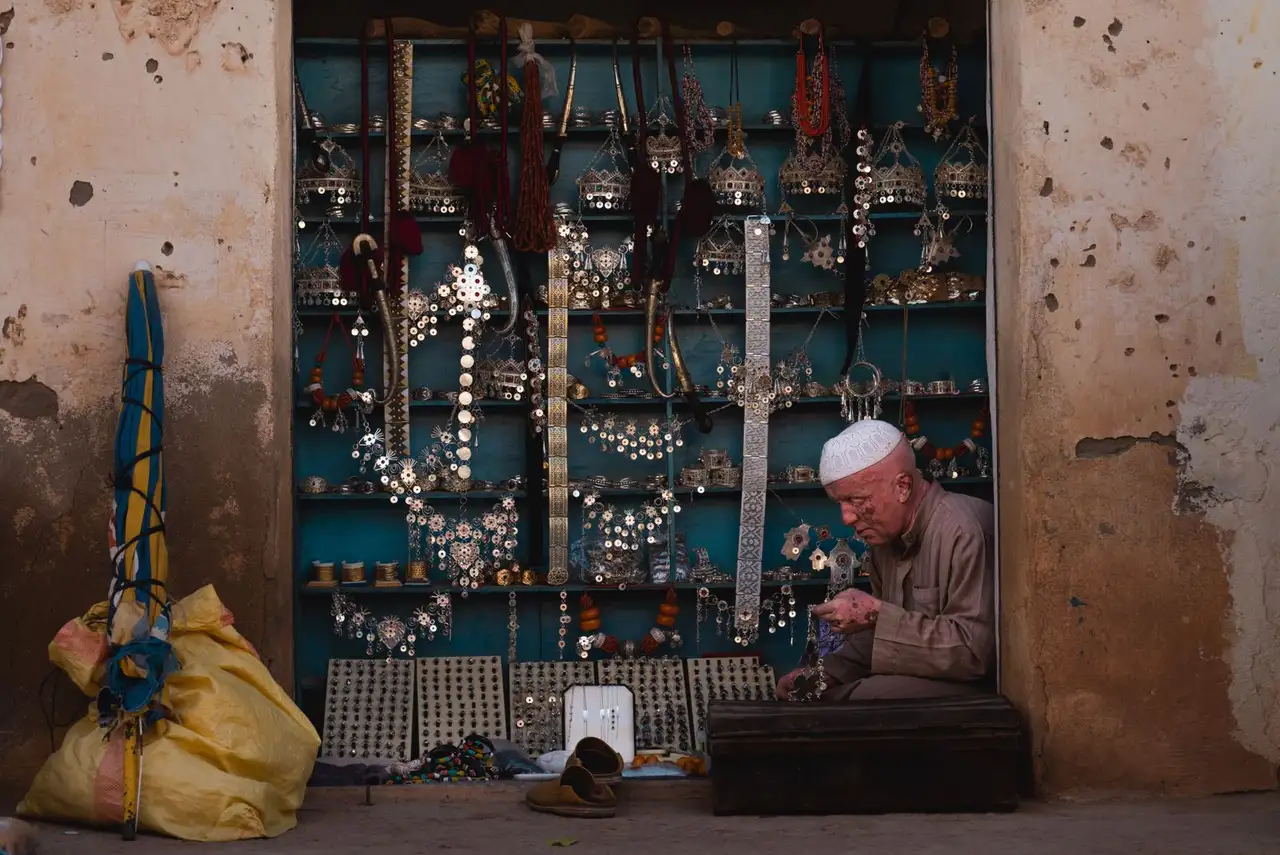
Start with the material, not the discount. Ask whether the piece is silver alloy throughout, silver-plated base metal or another metal entirely, then ask what fineness the seller claims. A number such as 925 denotes a claimed proportion of silver; a stamped number alone is not independent proof. The French word argent is useful, but follow it with a precise question about metal content. A vague answer such as ‘traditional silver’ tells you little about composition. If the explanation keeps changing, stop negotiating.
Separate the metal question from the decoration. Ask whether colored elements are stones, glass, resin or enamel, and whether the seller knows if any stones have been treated. White metal, red beads and dark recesses can produce a convincing traditional look without establishing either age or materials. A magnet is not a silver test: many non-silver metals are also nonmagnetic, and clasps can contain different components. Do not scratch or chemically test stock yourself. For an expensive purchase, ask whether independent testing can be arranged before payment and what its limits would be.
How can you judge workmanship without claiming authenticity?
Turn the piece over. Look at the back, edges, hinges and fastening, not just the decorated face. Run a fingertip gently along surfaces that will touch your skin; rough joins and sharp wire ends matter more in daily use than a persuasive story. Open and close a clasp several times with permission. On a hinged bracelet, look for alignment and excessive movement. On earrings, consider weight, matching fittings and how comfortably the pair will hang. Good workmanship is something you can inspect, even when composition remains uncertain.
Ask what was made by hand and what was cast, assembled or finished in the workshop. These processes can coexist in one object. Small irregularities do not prove hand manufacture, just as a neat repeated pattern does not automatically mean poor quality. Tiznit’s association with Amazigh jewelry also needs careful interpretation: a familiar form or motif does not establish where a particular piece was made. If local manufacture matters to you, ask who made it and where. Seeing work underway is informative, but it does not authenticate every item in the display.
Are you buying an old piece or an old-looking one?
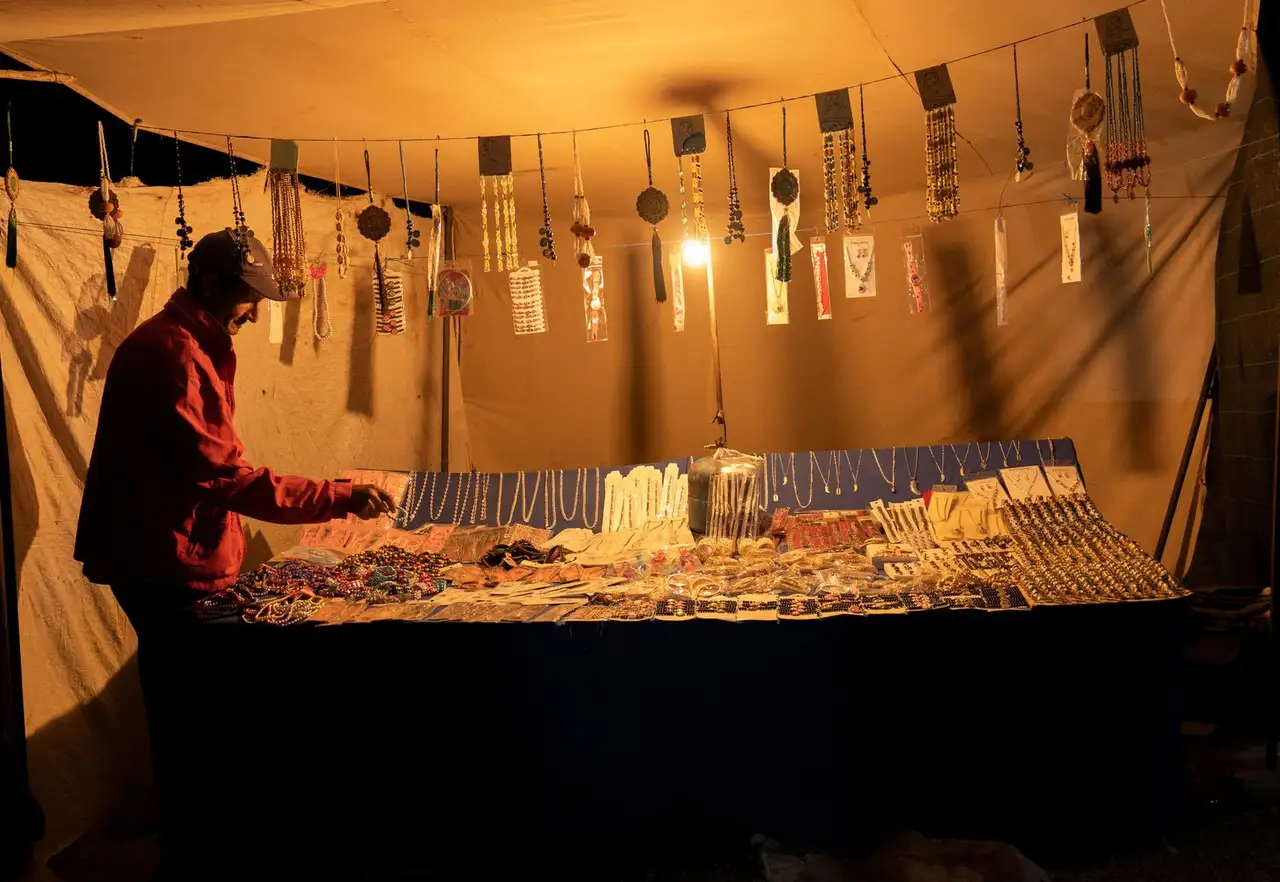
Treat age, origin and metal content as three separate claims. A newly made bracelet can contain silver; an old ornament can include replacement parts or non-silver components. Dark patina may result from wear, storage or deliberate finishing. Ask whether the object is newly made, previously worn, repaired or assembled using older elements. For a piece described as antique, request whatever provenance is available rather than accepting a style name or family story as documentation.
This distinction matters particularly with substantial cuffs, pendants and fibula-style ornaments, whose visual impact can overshadow practical questions. Ask about soldered repairs, replaced pins and missing or substituted decorative elements. Buy a contemporary piece because you like its design if that is enough for you; there is no need to pay an age premium without supporting evidence. If a purchase genuinely appears to be an antiquity or cultural object, obtain current advice on Moroccan export requirements before paying. A shop receipt does not itself establish that export is permitted.
How should you compare prices and bargain?
Ask the seller to explain the price before proposing your own. Is the piece priced by total weight, by claimed silver content or as a finished design? If weight forms part of the calculation, ask to see it weighed in grams and establish whether that weight includes stones, beads or other components. The price of finished jewelry also reflects labor, design, overheads and the seller’s margin. A bullion price on your phone cannot tell you the fair retail price of a complex bracelet.
Compare broadly similar objects across a few shops: similar size, claimed fineness, construction and condition. Then negotiate on the piece you actually want, keeping the conversation unhurried. Bundling several items can obscure individual prices, so request a separate amount for each. Cash is useful, but establish card availability before committing and avoid displaying a large reserve of notes. Be cautious about pressure built around an expiring price or an alleged rarity. You do not owe a purchase because someone has brought out several trays or offered tea.
What should be written on the receipt before you leave?
For a meaningful purchase, request a dated receipt identifying the shop and describing the individual item. Ask for the seller’s claimed silver fineness, the weight if it influenced the price, the materials of significant decorative elements and the amount paid in Moroccan dirhams. Any promise about age, origin, repairs or returns should be recorded clearly rather than left verbal. A receipt preserves what was represented; it is not an assay certificate. Photograph the piece and any marks with permission so that the document can be connected to the object.
If language makes these details difficult, a guide or interpreter can help with technical questions and written terms. Agree on their fee and ask about shop commissions beforehand; translation does not amount to authentication. Ask permission before photographing craftspeople or workshop interiors, and dress comfortably but respectfully for the medina rather than as for the beach. Before departure, try the fastening once more, collect any resizing agreement in writing and get the shop’s contact details. Ask for care instructions suited to the whole piece, since abrasive polishing and silver dips can damage some decorative materials or finishes.
A place to start
Experiences in Tiznit
Browse current activities and check the route, meeting point, inclusions and cancellation terms before booking. This is a search, not a personally reviewed tour.
Plan the next step
Activities in Tiznit
Browse current GetYourGuide and Viator listings for Tiznit. Compare the route, meeting point, inclusions and cancellation terms before booking.
Disclosure: these are GetYourGuide and Viator partner links. If you book through them, Real Morocco Guide may earn a commission at no extra cost to you. Listings, prices and reviews come from the providers, not from us. How we work
Also on GetYourGuide
Plan your time
Before you go
Choose what matters most
Use the chapters above to decide what you want to see, then check current access and travel arrangements.
When comparing
Allow for the full journey
Compare meeting points, time on the road and time at the destination, not only the advertised duration.
Before paying
Confirm the details
Read the current provider listing for inclusions, accessibility needs and cancellation terms.
More ways to explore
Choose between exploring independently and comparing guided experiences. Search results are not selected or reviewed tours; confirm all details with the provider.
Explore independently
Use the planning notes above, then verify transport, access and opening details directly before setting out.
Compare guided options
Check what each listing actually includes, the meeting point and how much free time is available.
Explore options ↗Good to know
- Check current transport and access details before leaving.
- Ask the operator about any mobility or dietary needs before booking.
- Keep time in your schedule for changes to the route or weather.
Compare available experiences
Check current inclusions, reviews and cancellation terms with the provider.
Frequently asked questions
Should I book an experience in advance?
It depends on your travel dates and the activity. Check current availability and cancellation rules directly with the provider.
What should I check before reserving?
Confirm the meeting point, what is included, total time commitment, accessibility arrangements and the latest cancellation policy.
Further reading
Background reading, not verification of individual tour listings.
Trusted resources
Official sources worth checking before you travel. We are not affiliated with them.
Keep exploring
Marrakech · 9 min read
Marrakech Food Tours: What to Taste in the Medina
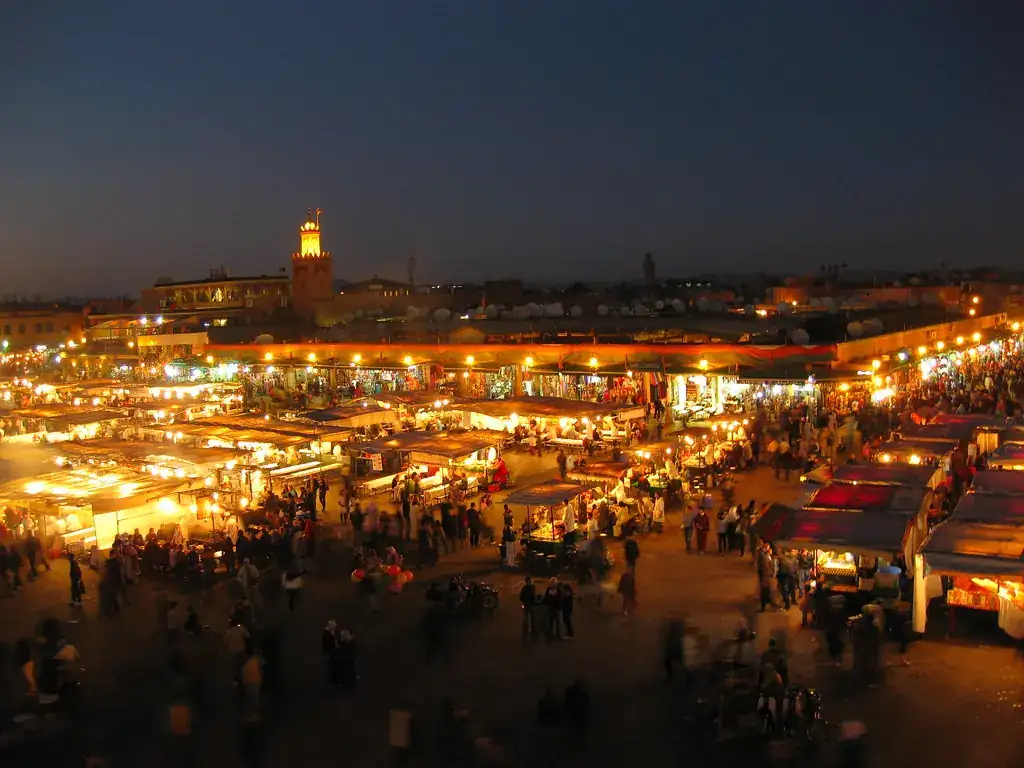
What to eat in the Marrakech medina, how a tasting walk differs from a cooking class, and how to tell whether a food tour actually leaves Jemaa el-Fna.
Read guide
Merzouga · 9 min read
Merzouga Desert Safari: Planning an Erg Chebbi Stay
How far Merzouga really is, how sunset trips, camp nights and multi-day tours differ, and what to pack for a night in the Erg Chebbi dunes.
Read guide